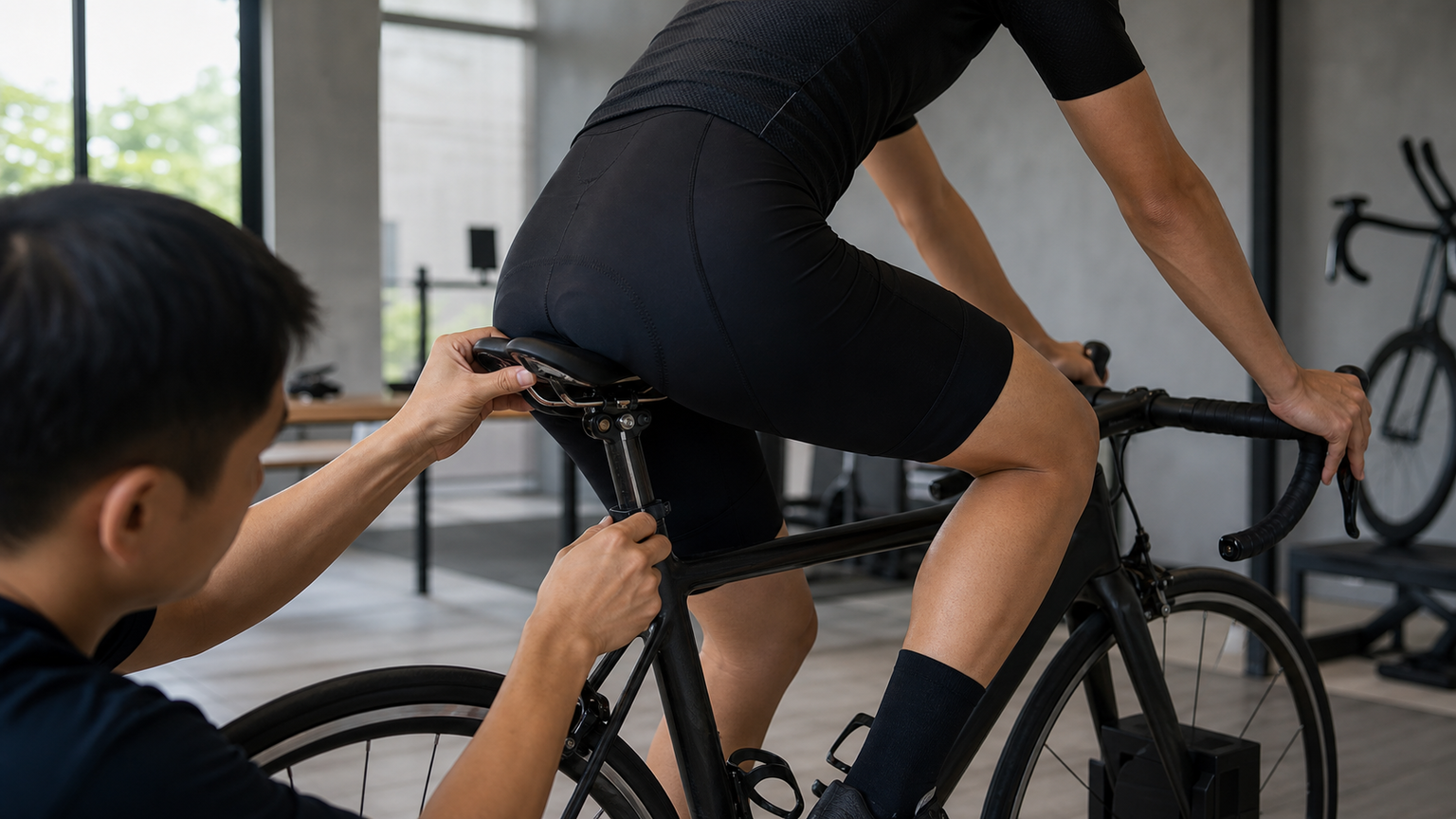
Introduction
Genital numbness is a common yet rarely discussed health issue in the cycling world. Whether male or female, the feeling of genital numbness after long rides should not be dismissed as normal. Research indicates that pressure from the bicycle saddle on the genital area can affect local blood circulation and nerve transmission, and long-term accumulation poses potential health risks that require serious attention and management.
Causes of Genital Numbness
While riding, most body weight is concentrated on the sit bones and the perineum in front of them. When the saddle’s shape, firmness, and width do not match the rider’s pelvic anatomy, the blood vessels and nerves in the perineum are subjected to sustained pressure.
| Pressure Factor | Affected Area | Main Risk |
|---|---|---|
| Saddle too narrow | Sit bones lack adequate support, weight shifts toward the center | Long-term compression of perineal blood vessels |
| Saddle nose tilted up | Nose presses against the underside of the pubic arch | Direct nerve compression, rapid numbness |
| Saddle tilted forward too much | Rider constantly slides forward | Wrists compensate for support, increasing upper-body strain |
| Saddle too high | Pelvis rocks side to side | Repeated friction on the perineum, aggravating irritation |
Key Parameters for Saddle Selection
When choosing a suitable saddle, the following core factors should be considered:
Measuring Pelvic Width
Saddle width should correspond to the ischial tuberosity width of the pelvis. Measurement method:
- Sit on a piece of cardboard or memory foam in a slightly forward-leaning position that simulates the riding posture
- Stand up and check the distance between the two impressions left by the sit bones
- The saddle’s effective support width should be 20–30 mm wider than this measurement
Many cycling brands (such as Specialized, Selle Italia, etc.) offer sit bone width measurement services, and it is recommended to have this done before purchasing a new saddle.
Central Relief Designs (Cut-out vs. Channel)
For perineal pressure issues, various designs are available on the market:
- Full Cut-out: Completely removes the central portion of the saddle, directly eliminating perineal pressure, suitable for those with severe pressure symptoms
- Center Channel: Lowers the central height while retaining the saddle’s structure, striking a balance between comfort and support
- Flat Design: Suitable for riders whose pelvic width perfectly matches the saddle width and whose sit bones can be fully supported
No single saddle suits everyone; test riding is the most effective way to choose a saddle.
The Importance of Pelvic Tilt Angle
The absolute height and tilt of the saddle directly determine how the pelvis rests on it:
- Saddle level or tilted slightly forward 0–2 degrees: Pelvis is stable, sit bones are effectively supported, and perineal pressure is minimized
- Saddle nose too high (tilted back): Forward sliding tendency is reduced, but pressure on the nose increases, potentially worsening numbness
- Saddle nose too low (excessive forward tilt): Rider constantly slides forward, increasing pressure on both wrists and the perineum
When adjusting the saddle angle, it is recommended to make fine adjustments in 2-degree increments and ride at least 50 km after each adjustment to observe changes in symptoms.
Improving Riding Habits
In addition to saddle choice and angle, riding habits are also important:
- Regularly change riding position: Stand and pedal periodically during long rides (several times every 20–30 minutes) to restore blood circulation in the perineum
- Wear appropriate cycling shorts: High-quality chamois pads in cycling shorts can distribute pressure and reduce friction; seamless designs with moderately thick padding are recommended
- Apply chamois cream: Apply to the perineal area before long rides to reduce friction-related irritation
Practical Advice
- If genital numbness occurs during a ride, adjust your riding position immediately or take a short break off the bike; do not ignore it and continue riding
- If genital numbness persists for more than 30 minutes after riding without relief, or if erectile dysfunction (in men) or vaginal dryness and discomfort (in women) occurs, seek medical evaluation
- Male riders with chronic prostate issues should be especially careful in saddle selection and consult a urologist
- Do not ride wearing regular cotton underwear; wear cycling shorts directly to avoid additional friction from seams
Conclusion
Genital numbness is a solvable problem, not an inevitable part of cycling. With proper saddle selection, pelvic width measurement, and appropriate adjustments to riding habits, the vast majority of riders can find a comfortable and safe solution. Do not delay addressing the issue out of embarrassment; early improvement will allow you to enjoy the freedom of riding on Taiwan’s sunny cycling routes for years to come.
Related Reading
- Perineal Numbness: The Impact of Saddle Design on Perineal Pressure and Improvement Strategies
- Cycling Saddle Soreness: The Science of Perineal Compression and Saddle Selection
- Saddle Pressure and Perineal Nerve Damage: A Complete Prevention Guide for Cyclists
- Urinary Tract Health in Cycling: Preventive Measures for Saddle Pressure and Numbness
靠單車減肥35公斤 心得分享與整理
7 年前
#公路車 #Fitting 靠人工智慧APP 幫你調整單車
6 年前
Nepest NOVA 碳條輪組:輕量、空力、舒適一次滿足!/ 公路車 / CT Yeh
7 個月前
摔車後補裝備: 好市多新款單車安全帽& Specialized Romin 北高整路屁股都不痛的坐墊 | 一千元居然有MIPS | CT Yeh | 公路車
4 年前
一日北高/長距離團騎 常見問題補充篇 / 組團或跟團的眉角 / 壯車友容易被瘦車友慢性拉爆 / 原來屁股痛可能是這個原因...? / 風場配速法 / 公路車 / CT Yeh
2 年前
多到選擇障礙... 換個單車把帶想一個小時 / BTP / 編織&軟木特有材質超吸睛! / 公路車 / CT Yeh
1 年前
高雄綠園道鐵路自行車道 / 外地人能輕鬆駕馭 還是整路崩潰? / 2025 全線開通 春節實地探索一次!(附GPS連結)/ 公路車 / CT Yeh
1 年前
單車胎壓觀察到的有趣現象,SRAM Quarq TyreWiz 2.0 無內胎胎壓計 / 裝了有哪些幫助? / Tubeless / 公路車 / CT Yeh
1 年前