Introduction
Regular cycling offers numerous benefits for heart health: lowering blood pressure, improving blood lipids, strengthening myocardial contractility, and reducing the risk of cardiovascular disease. However, exercise itself can also act as a trigger for heart disease, particularly during high-intensity riding. Every year in Taiwan, there are cases of sudden death during exercise, some of which result from undiagnosed heart disease being triggered by high-intensity exertion. This does not mean cycling is dangerous, but rather reminds us that proper cardiac health assessment is what ensures the benefits of exercise outweigh the risks.
Which Groups Need Pre-Exercise Cardiac Evaluation
| Group | Primary Risk | Recommended Evaluation Method |
|---|---|---|
| Men over 40, women over 50, starting high-intensity training for the first time | Potential coronary artery disease | Exercise ECG (Exercise Stress Test) |
| Those with a family history of heart disease (first-degree relative with a heart attack before age 55) | Hereditary heart disease | Resting ECG + Echocardiogram |
| Those with poorly controlled metabolic syndrome (hypertension, hyperglycemia, hyperlipidemia) | Accelerated atherosclerosis | Exercise ECG + Echocardiogram |
| Those who have experienced chest pain, syncope, or extremely irregular heartbeat | Structural heart disease, arrhythmia | Cardiology referral for evaluation |
| Those previously diagnosed with heart disease who wish to return to exercise | Depends on the condition | Individual assessment by a cardiologist |
The causes of sudden death in young athletes (under 40) differ from those in middle-aged and older populations, with congenital structural heart abnormalities being more common:
- Hypertrophic Cardiomyopathy (HCM): Thickened ventricular walls impair diastolic function; it is the most common cause of sudden death in young athletes
- Arrhythmogenic Right Ventricular Cardiomyopathy (ARVC): Structural abnormality of the right ventricle that can easily trigger fatal arrhythmias during high-intensity exercise
- Anomalous Origin of the Coronary Artery: Congenital abnormal coronary artery course that causes myocardial ischemia during exercise
The Significance of the Exercise ECG (Exercise Stress Test)
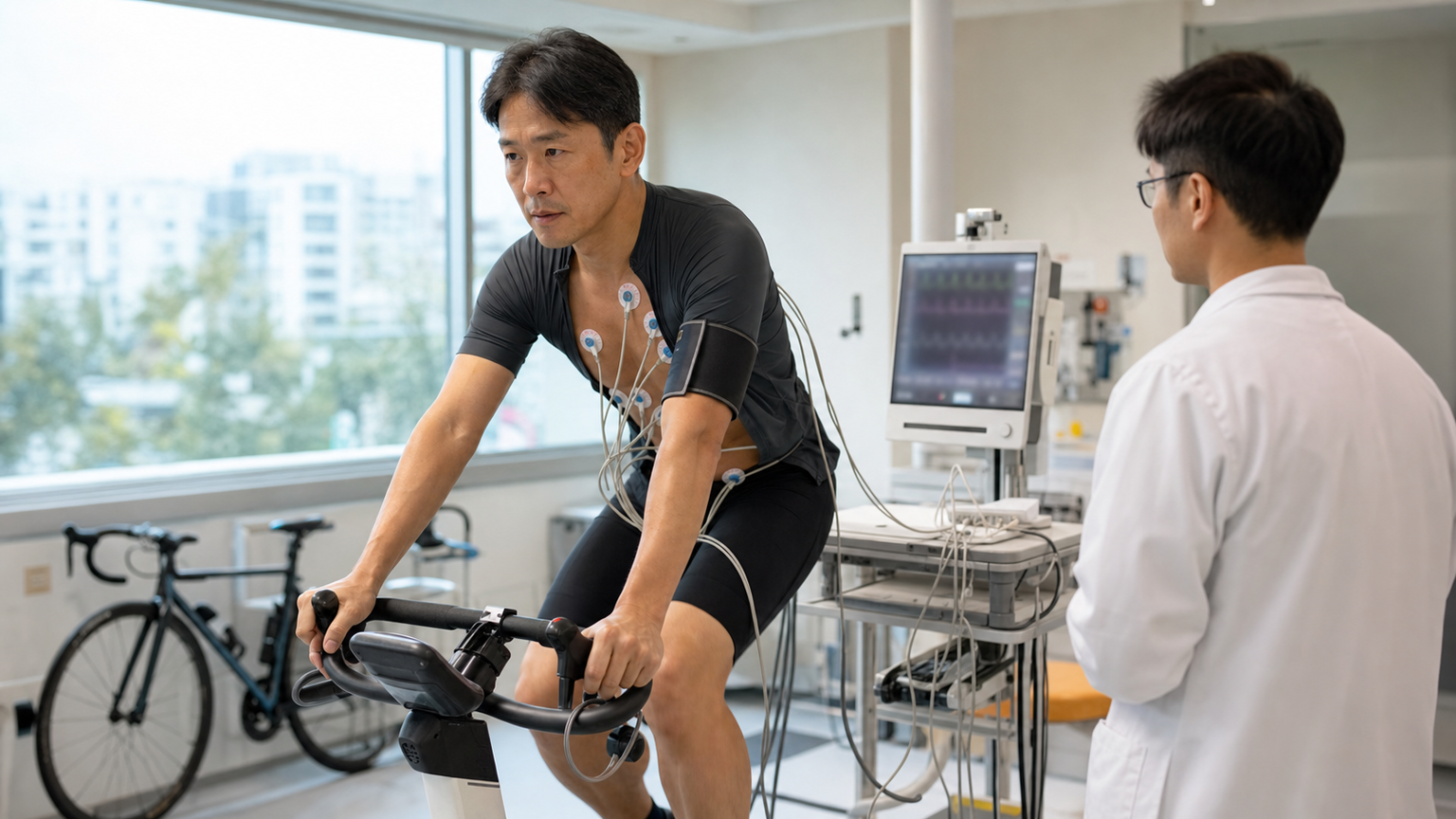
A resting ECG only captures the heart’s electrical activity at rest, and many cardiac problems only become apparent when exercise induces an increased heart rate. The exercise ECG has the subject gradually increase intensity on a treadmill or stationary bike while ECG changes are monitored:
- ST-segment depression: Suggests inadequate myocardial blood supply, possibly indicating coronary artery stenosis
- Exercise-induced arrhythmias: Such as frequent premature ventricular contractions or ventricular tachycardia
- Abnormal blood pressure response: Blood pressure that rises too high or fails to rise properly during exercise
- Maximal heart rate and power assessment: Understanding the current training ceiling of cardiac function
Cardiac Warning Symptoms to Watch for While Riding
If any of the following symptoms occur during or after riding, stop exercising immediately and seek medical evaluation:
- Chest tightness, stabbing pain, or a burning sensation, especially if it radiates to the left shoulder, jaw, or arm
- Sudden severe shortness of breath during riding (disproportionate to the intensity)
- Sudden rapid heartbeat that feels irregular (palpitations), persisting for more than a few minutes
- Dizziness, blurred vision, or a feeling of near-fainting
- Excessive fatigue after a ride (requiring far more recovery time than usual)
If these symptoms occur during the same ride, stop immediately. If symptoms do not resolve within 5 minutes, call for emergency assistance (119).
Heart Health Maintenance for Cyclists
Regular Health Check-ups
- Undergo an annual general health check-up that includes a resting ECG
- After age 40, an echocardiogram is recommended (to assess ventricular wall thickness and valve function)
- Those with cardiovascular risk factors (smoking, metabolic syndrome, family history) should discuss with a cardiologist whether an exercise stress test is needed
Heart Rate Monitoring During Training
- Know your maximal heart rate and each training zone, and avoid prolonged training above the anaerobic threshold
- HRV monitoring helps identify autonomic nervous system status and can serve as an indirect indicator of overtraining and cardiac function
Practical Recommendations
- If you are an amateur rider over 40 planning your first century ride (100K) or hill-climb race, it is strongly recommended to complete an exercise ECG evaluation before undertaking high-intensity training
- AED training: Learn to use an automated external defibrillator (AED). Many gas stations, convenience stores, and cycling rest stops in Taiwan are equipped with AEDs
- Inform family members of your riding plans and routes so they can help describe your location in an emergency
- Remember to carry a personal health information card (blood type, drug allergies, emergency contacts) with you while riding
Conclusion
Cycling is a friend to the heart, but only if you understand your cardiac status and train within an intensity range appropriate for you. Within Taiwan’s well-established healthcare system, cardiac health assessment is not difficult. The peace of mind gained from a single exercise ECG test is the best guarantee for fully enjoying every ride.
Related Reading
- Cycling and Heart Health: The Protective Benefits of Long-Term Riding on the Heart
- Cycling and Cardiac Adaptation: Long-Term Benefits of Regular Riding on Cardiovascular Health
- The Comprehensive Impact of Cycling on Cardiovascular Health: A Summary of Medical Research
- The Health Benefits of Cycling: Cardiovascular Advantages Revealed by Research
2025 自行車錶排行榜 兩萬車友大數據 / Garmin Bryton 排名會大洗牌嗎? / 全新的碼表前身分析 /公路車 / CT Yeh
1 年前
高雄綠園道鐵路自行車道 / 外地人能輕鬆駕馭 還是整路崩潰? / 2025 全線開通 春節實地探索一次!(附GPS連結)/ 公路車 / CT Yeh
1 年前
靠單車減肥35公斤 心得分享與整理
7 年前
2026 車錶排行榜!誰是最多車友正在使用?練家子最愛哪款?🏆 (2萬名車友數據) / 公路車 / CT Yeh
5 個月前
[教學] Dashware 教學 如何製作有 速度 功率 心律的 騎車影片 Guages Video
8 年前
2022 前十五大自行車錶 !? 兩萬名車友大數據統計 | 你的上榜了嗎? | 菁英車友都用哪些錶? | Bryton Garmin 誰能拔得頭籌?| 車錶推薦 | 公路車 CT Yeh
4 年前
一日北高常見問題大集合 | 攻略 | 路線 | 訓練 | 補給 | 自行車 單車 | 一日雙城 | 雙塔 | TWB北高360 | 屁股痛
6 年前
大家都在開箱的...單車用藍芽對講耳機真的有幫助嗎? SENA BiKom 20 長距離旅遊 & 海鷗繞圈賽 實際體驗心得 / 公路車 / CT Yeh
9 個月前