Introduction
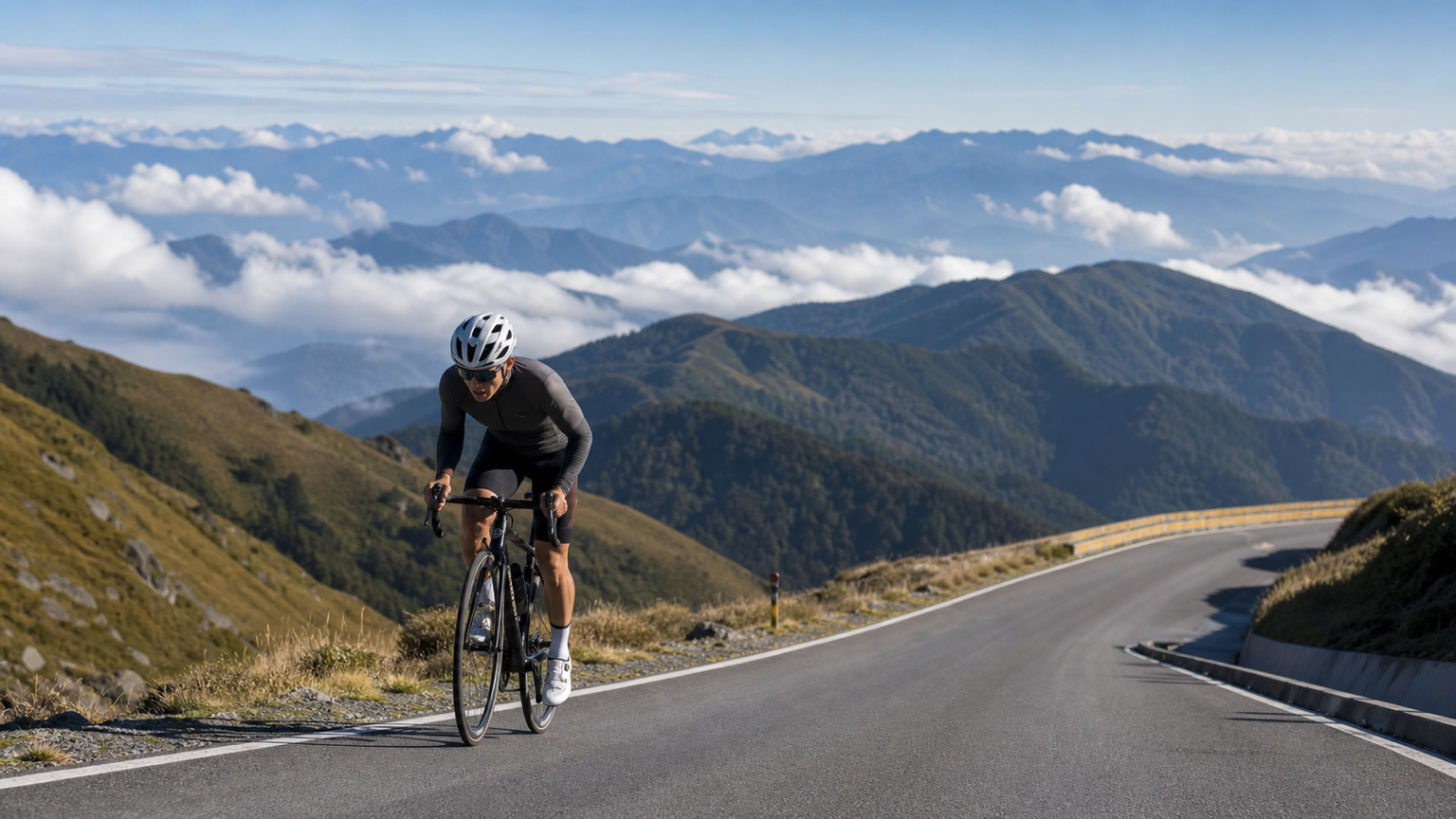
Hehuanshan is Taiwan’s most popular high-altitude cycling destination. Provincial Highway 14A climbs over the main peak, reaching a maximum elevation of 3,275 meters at Wuling — the only paved road in Taiwan that cyclists can ride above 3,000 meters. For riders who have not yet built altitude acclimatization, Hehuanshan’s high-altitude environment presents a genuine physiological challenge: thin air, sharply increased cardiopulmonary strain, and bodily responses that differ dramatically from riding at sea level. Understanding the physiological mechanisms of high-altitude hypoxia — and adjusting your pacing and strategy accordingly — is essential preparation for completing a safe ride on Hehuanshan.
The Physiology of High-Altitude Hypoxia
Above roughly 2,500 meters, atmospheric pressure drops significantly, and the partial pressure of oxygen in the air decreases along with it. Even if breathing rate and depth remain unchanged, the amount of usable oxygen absorbed with each breath declines. This directly affects several aspects of exercise performance:
| Altitude | Blood Oxygen Saturation (estimated) | Aerobic Capacity Decline | Main Symptoms |
|---|---|---|---|
| Sea level | 98-99% | Baseline | None |
| 1,500m | 96-97% | ~3-5% | No noticeable symptoms |
| 2,000m | 93-95% | ~8-10% | Mild breathlessness |
| 2,500m | 89-93% | ~12-15% | Noticeable breathlessness, elevated heart rate |
| 3,000m+ | 85-90% | ~15-20% | Strong fatigue, possible headache |
For riders without high-altitude acclimatization training, power output capacity around 3,000 meters may drop by 15-20% compared to sea level. In other words, a rider who can sustain 200W for an hour at sea level may only be able to sustain around 165-170W at 3,000 meters.
Recognizing Warning Signs
While riding Hehuanshan, you must continuously monitor for the following warning signs of high-altitude response:
Mild altitude reaction (common, riding can continue):
- Slight fullness or pressure in the head
- Faster breathing rate than usual
- Mild dizziness
- Reduced appetite
Moderate altitude reaction (intensity must be reduced):
- Persistent headache that does not ease even after painkillers
- Nausea or vomiting
- Severe fatigue far beyond the expected intensity
- Very poor sleep quality at night
Severe warning signs (must descend immediately):
- Loss of orientation or confusion
- Unsteady gait (test: try walking in a straight line)
- Breathlessness so severe that calm speech is impossible
Pacing Strategy Adjustments for Hehuanshan
The core principle of pacing adjustment at high altitude is “lower your expectations, keep a buffer”:
Above 2,000 meters:
- Proactively reduce your power target by 10%
- Heart rate response may lag 5-10bpm behind sea-level patterns — do not rely on heart rate alone to judge output intensity
- Increase cadence to 85-92rpm to reduce muscular load per pedal stroke
Above 2,500 meters:
- Reduce your power target by another 5% (15% total reduction)
- Use “comfortable enough to talk” as your intensity ceiling
- Pause for 1-2 minutes for every 200 meters of elevation gained to allow your body to adjust slightly
Approaching Wuling (above 3,000 meters):
- Stop chasing power numbers entirely; rely fully on feel and RPE
- Keep RPE at 5-6 out of 10, never exceeding 7
- If persistent headache occurs, slow down dramatically and consider stopping
Special Fueling Needs for High-Altitude Riding
High-altitude environments also demand a special fueling strategy:
- Increase fluid intake: The dry high-altitude environment increases water loss through respiration — replenish at least 600-800ml per hour
- Reduce portion size per feeding: Digestive function weakens at altitude, so small, frequent intake is easier to digest than large single portions
- Avoid alcohol: Even small amounts of alcohol accelerate dehydration and worsen altitude reaction symptoms
- Prioritize carbohydrates: At high altitude, carbohydrates require less oxygen to metabolize than fat, making them a more efficient energy source
Practical Recommendations
- If possible, stay at Cingjing Farm (approximately 1,750m) for 1-2 days before the ride to begin initial altitude acclimatization
- When starting from Puli, avoid lingering too long at low-elevation rest stops early in the route — keep your body in an active exercise state
- Bring lightweight warm clothing; temperatures at the summit of Hehuanshan can drop below 10°C, and wind chill can make it feel significantly colder
- If you have a history of high blood pressure, heart disease, or sleep apnea, be sure to consult a physician before riding at high altitude
- Descending also requires caution — fatigue and lowered body temperature slow reaction time, so maintain a slower speed and brake thoroughly
Conclusion
The magnificent scenery of Hehuanshan is worth experiencing for every rider, but high-altitude hypoxia is a physiological challenge that must be honestly confronted. Respect your body’s signals and proactively adjust your pacing — and Hehuanshan’s 3,000 meters will become more than just a number. It will become one of the most beautiful high points of your cycling life.
Related Reading
- Preventing Altitude Sickness at High-Altitude Riding: Precautions for Hehuanshan’s 3,275m
- Cycling Around Taiwan’s Hundred Peaks: Climbing Adjustments for High-Altitude Cold and Low Pressure
- High-Altitude Training: Physiological Adaptation and Training Adjustments Above 1,500m
- The Physiology of High-Altitude Cycling: Scientific Preparation for Riding Taiwan’s Mountains
騎單車去大屯山賞雪! 助航台滑冰 全記錄 | 台北R友大集合 | 下雪打雪仗囉 | 4K超高畫質
5 年前
單車 一日北高 ( 雙城 ) 肥宅雙人瘋狂行 紀錄片 REACTO
10 年前
台北闊瀨陡坡 騎旅 / 日本單車雜誌編輯車友臨時加入!/ 髮香才是最強的 / feat. 北迴歸線小隊 / 公路車 CT Yeh
6 個月前
觀霧 變好騎了! | 北高車友爆笑大會師 | 公路車 | 單車旅遊 Taiwan Cycling Route GuanWu
6 年前
大武山後門26%歡樂陡坡!JJSC南台灣單車行Day2 / 被颱風追著跑 / 公路車 / CT Yeh
2 年前
再快都跟的上!? 單車跟隨攝影機之王 HOVERAir X1 PROMAX 全面實測 / 唯一!8K畫質&自行車專用模式和跟蹤信標&前後避障 / DJI Neo 可參考/ 公路車 / CT Yeh
1 年前
新竹羅平 x 天湖部落 大禹嶺級變態陡坡! 4K超高畫質 空拍 | 公路車
5 年前
一日北高/長距離團騎 常見問題補充篇 / 組團或跟團的眉角 / 壯車友容易被瘦車友慢性拉爆 / 原來屁股痛可能是這個原因...? / 風場配速法 / 公路車 / CT Yeh
2 年前