Introduction
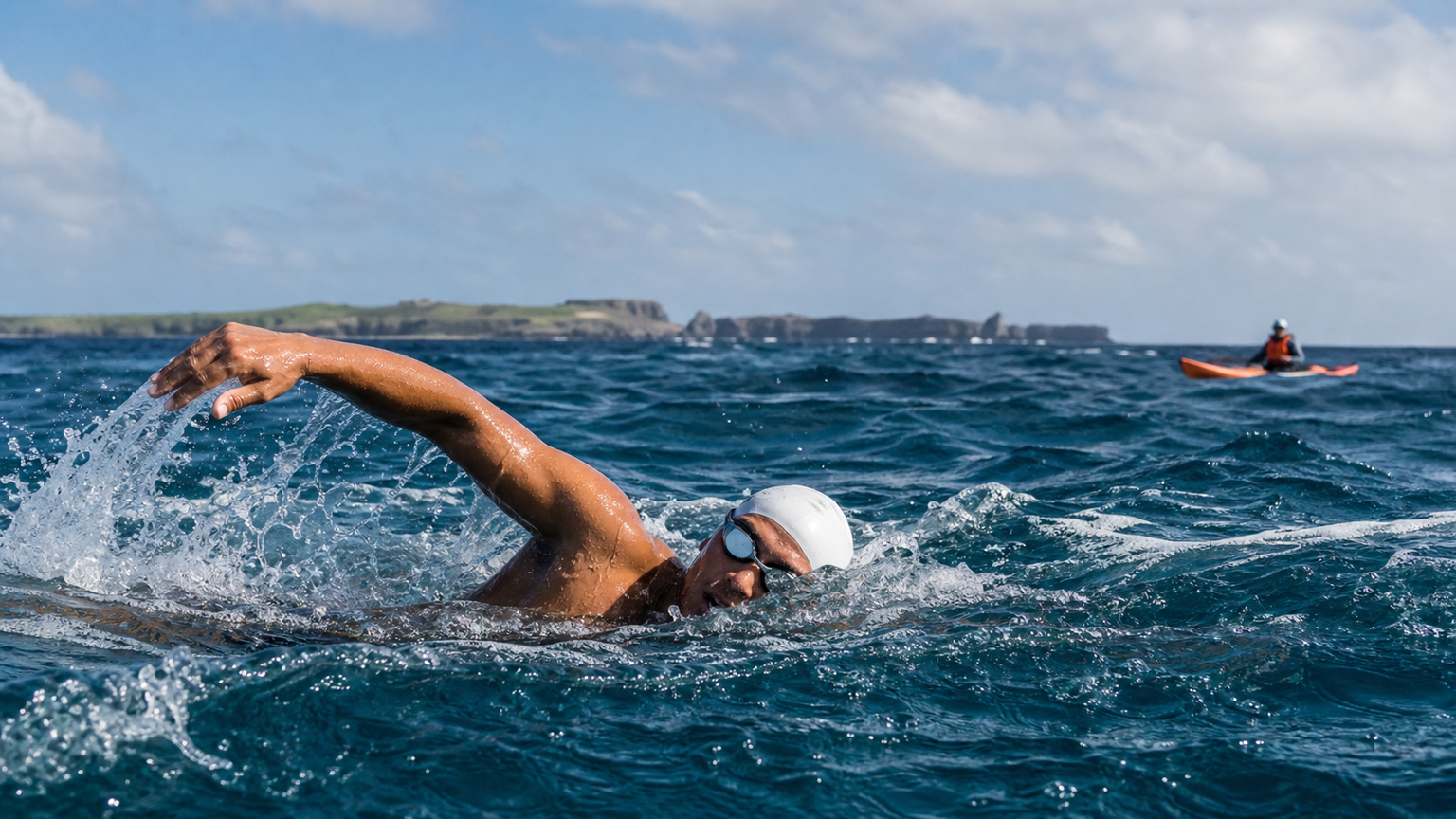
The Taiwan Strait is renowned for its strong winds, with average annual wind speeds ranking among the highest in the world, and the Penghu archipelago sits right in the middle of this turbulent body of water. Every summer, the Penghu Cross-Sea Swim Challenge attracts triathletes and swimmers from across Taiwan to push forward through the rolling waves of the strait. This is not just a swimming race—it is a profound measure of the limits of the human body. This article will take you deep into the characteristics of the Penghu waters, how to prepare systematically, and the essential safety knowledge you need before entering the water.
Understanding the Penghu Marine Environment
The marine environment around Penghu is completely different from typical coastal swimming. The currents in the Taiwan Strait are complex, and the waters around Penghu’s main island are simultaneously influenced by north-south tidal currents and the northeast monsoon. Even in summer, crosswinds frequently cause lateral drift.
| Sea Condition Factor | Summer Conditions | Impact on Swimmers |
|---|---|---|
| Water temperature | Approximately 26-29°C | No wetsuit needed, but be mindful of prolonged exposure |
| Wave height | 0.5-1.5 meters (event day selected based on weather) | Need to get used to breathing techniques that handle swallowing waves |
| Currents | Irregular, with noticeable lateral flow | Swim route may drift; frequent sighting required |
| Visibility | 3-10 meters underwater | Clear water, beneficial for mental stability |
| Biological risks | Occasional jellyfish | Wear UV-protective swimwear or apply petroleum jelly for protection |
The Penghu County Government and related associations typically hold cross-sea swimming events between July and August each year. The route varies by year and organizer, with common crossings including from Magong’s main island to surrounding outlying islands, or through the waterways between the northern Penghu islands. Before each event, the organizers select the optimal departure time based on weather bureau forecasts, postponing if sea conditions are poor.
Race Preparation: Physical and Technical Aspects
The waters around Penghu demand far more swimming skill than calm lakes or pools. Here are preparation tips from experienced open-water swimmers:
Key Technical Training
- Breathing in side swells: To maintain steady breathing when waves hit from the side, practice in choppy open water (such as the North Coast or Kenting) rather than only in the pool
- More frequent sighting: Currents will push you off course. In Penghu waters, it is recommended to lift your head to check direction every 4 strokes to avoid drifting significantly and wasting extra energy
- Building endurance reserves: Depending on the route length (usually 2-5 km), your longest training distance during preparation should reach 1.3 times the target distance, while also accumulating mileage completed in open water
- Heart rate management: Heart rates in ocean swimming are generally 10-15 bpm higher than in the pool, due to wave stimulation, water temperature, and adrenaline. Incorporate high-intensity interval training during preparation to improve cardiorespiratory efficiency
Equipment Selection
- Goggles: Anti-fog lenses are essential; Penghu’s summer sun is intense, so choose mirrored or smoked lenses
- Swim cap: Organizers usually provide caps in designated colors; wearing an additional silicone cap underneath can reduce the chance of it coming off
- Safety buoy: Strongly recommended to carry an inflatable buoy designed for open water, attached to your waist—it allows you to rest and makes you more visible to lifeguards
- Sun protection: Penghu has strong UV rays; use SPF50+ waterproof sunscreen and consider wearing a long-sleeved UV-protective swimsuit
Mental Preparation: Facing the Fear of Unknown Waters
For many swimmers, the biggest challenge in open-water swimming is not physical but mental. The fear of not being able to touch the bottom, the unease of limited visibility, and the loneliness that can set in during long distances are all common psychological hurdles.
Ways to overcome mental barriers:
- Complete at least 5 open-water swims before registering, so your body gets used to the “uncertainty”
- Take 3-5 deep breaths at the starting point to stabilize your heart rate before entering the water
- Set segment goals: break the entire distance into smaller 500-meter chunks, with each completed segment counting as an achievement
- Maintain eye contact with nearby swimmers to feel the power of the group; if you feel panic, raise your hand immediately to request support—no result is more important than your life
Practical Tips
- Arrive in Penghu three days early to let your body adapt to the seawater salinity and local climate
- Avoid strenuous exercise the day before the race; keep activity light and stay well hydrated with plenty of carbohydrates
- Understand the event insurance coverage and confirm that your swimming ability meets the qualification thresholds set by the organizers
- After finishing, rinse your entire body with fresh water and check your skin for jellyfish stings or coral cuts
Conclusion
The Penghu Cross-Sea Swim is one of the most challenging open-water swimming events in Taiwan. It tests not just muscular endurance, but also humility in the face of nature’s power and the wisdom to adapt. Behind every finisher lies a story of solid preparation, and that blue stretch of strait will remain etched in your memory forever.
Related Reading
- Penghu Cross-Sea Swim Challenge: Direction Control and Mental Overcoming in Strait Currents
- Penghu Cross-Sea Marathon: Complete Race Management Skills for Island Winds and Summer Heat
- Penghu Fireworks Festival Swim Event Guide: Full Analysis of an Island Signature Race
- Adapting to Waves and Currents in Sea Swimming: Key Techniques for Swimming Along Taiwan’s Coast
2025 海鷗團體繞圈賽 網路直播 超激烈裁判長視角 / EIPC 李廷威、Waypoint 等眾多高手競爭 / feat. 卡密兒主持 / 海鷗繞圈賽
9 個月前
2023桃園團體繞圈賽 / 海鷗繞圈賽 | 全程空拍數據版 | 公路車 | CT Yeh
2 年前
大武山後門26%歡樂陡坡!JJSC南台灣單車行Day2 / 被颱風追著跑 / 公路車 / CT Yeh
2 年前
2023桃園團體繞圈賽/環台賽等級拍攝/賽事精華/ 10人一隊缺一不可!50隊廝殺大場面 / 第三屆 海鷗繞圈賽 /公路車/CT Yeh
2 年前
備戰 戀戀197 賽前關門點分析 西濱團練 #公路車 4K高畫質
6 年前
第二屆 海鷗繞圈賽 / 桃園團體城市繞圈賽!多視角實況精華版 | | 訪問才是最好笑的 | 公路車 | CT Yeh
3 年前
2025 海鷗團體繞圈賽 / 前八強賽事精華!/ 環台賽等級拍攝 / 國手菁英隊伍較勁 / CT Yeh #公路車
8 個月前
水金九不厭五分 10度寒流冷到不願停!feat. 卡卡 / 公路車 / CT Yeh
6 個月前