Climate Adaptation for Climbing Races: Dealing with Afternoon Thunderstorms and Low Temperatures in Taiwan's Mountains
Introduction
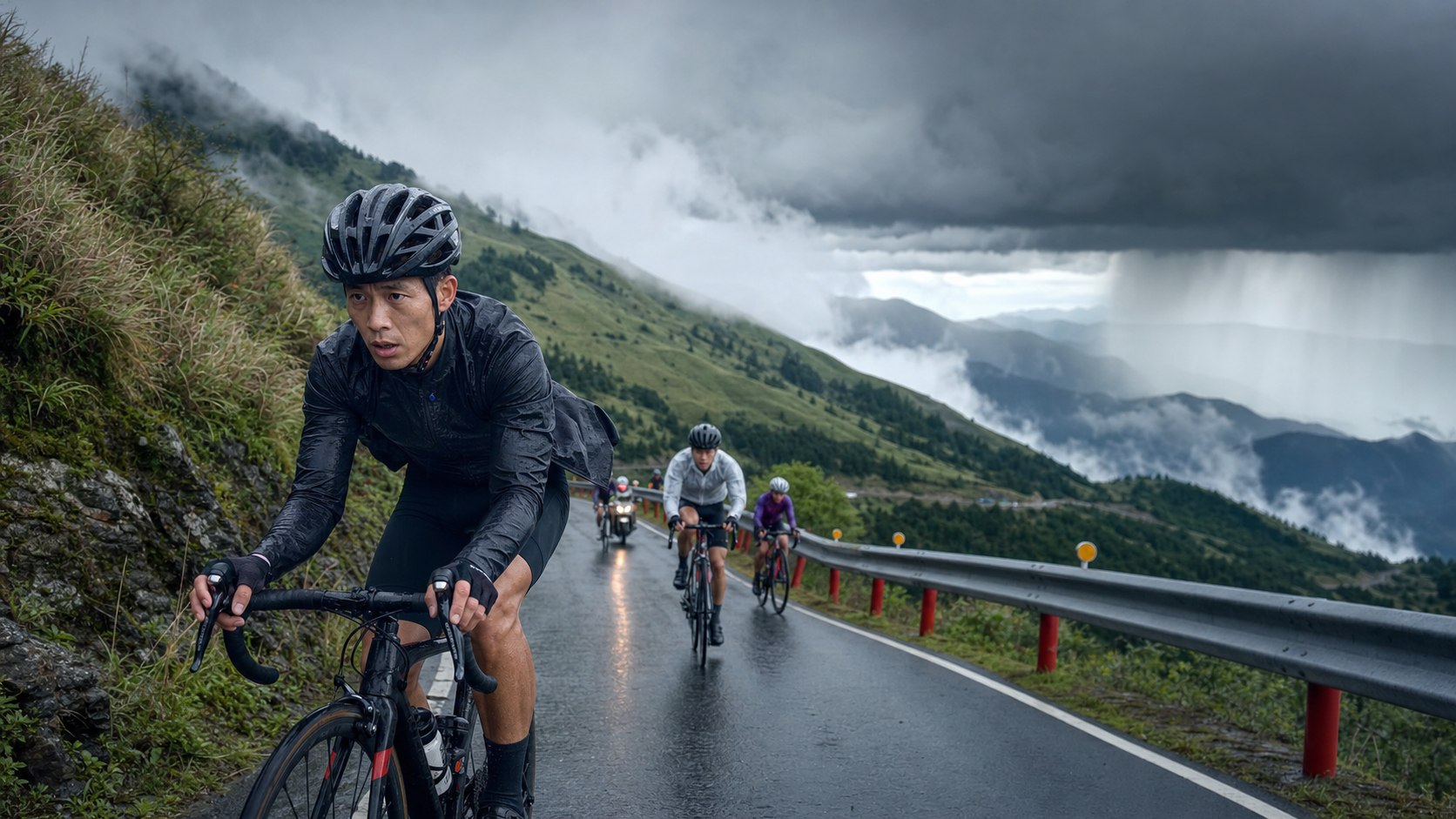
Taiwan’s mountainous climate is one of the most complex and variable in the world. Summer afternoon convective rainfall is almost a daily occurrence, while the winter northeast monsoon brings persistent low temperatures and drizzly fog that can catch anyone off guard. For climbing races held in Taiwan’s mountain areas, the climate is not just a matter of comfort—it directly affects safety and competitive performance. Understanding the weather patterns of Taiwan’s mountains and preparing the corresponding gear and strategies is an essential part of race preparation that no climbing racer can afford to overlook.
Major Climate Challenges in Taiwan’s Mountainous Regions
| Climate Challenge | Timing | Mainly Affected Routes | Danger Level |
|---|---|---|---|
| Afternoon thunderstorms | May–Sep, after 13:00 | Wuling, Alishan, Hehuan Mountain | High |
| Cloudy fog and low temperatures at summits | Year-round, more frequent in autumn/winter | Taiping Mountain, Hehuan Mountain, Wuling | Medium |
| Northeast monsoon fog and drizzle | Oct–Mar | Taiping Mountain, northern mountain areas | Medium |
| Rapid temperature swings | Year-round, especially spring/autumn | All mountain routes | Medium |
| Typhoon outer circulation | Jun–Oct | Eastern and southern mountain areas | Extremely high |
Afternoon thunderstorms are the biggest climate threat to summer climbing races in Taiwan’s mountains. The typical pattern is: clear in the morning, cumulus clouds begin developing around noon, with peak rainfall intensity between 13:00 and 15:00, accompanied by lightning and strong gusts. If a climbing race is held in summer, the start time is usually scheduled for early morning so riders can reach the summit before afternoon thunderstorms develop.
Weather Reading Tips Before Departure
You don’t need to be a meteorologist. The following practical weather observation methods can help you assess the day’s climate risk before a race:
The night before:
- Check the Central Weather Administration’s mountain weather forecast, paying special attention to high-altitude temperatures and precipitation probability
- Observe cloud conditions toward the sunset direction: a fiery sunset (orange-red sky) in the west often signals a frontal system the next day
- Check real-time imagery of Taiwan’s mountain areas (there are multiple CCTVs in Taiwan’s mountains) to understand cloud conditions
On race morning:
- If there are patchy cirrus clouds high in the sky that keep thickening, it may signal afternoon rainfall
- If low clouds already cover the sky with high humidity in the morning, the chance of fog and drizzle persisting all day is higher
- A wind shift to the northeast (easterly winds appearing in southern Taiwan) usually means a weather system is approaching
Gear Preparation for Climate Conditions
Basic rain gear (essential for all races):
- Thin windproof and waterproof jacket: keep weight within 100–150g so it fits easily into a jersey pocket without taking up space
- Waterproof gloves: or a pair of lightweight latex gloves worn over cycling gloves for extra warmth and waterproofing
- Waterproof rear pocket bag or backpack: to protect your phone, food, and spare supplies from getting wet
High-altitude low-temperature response (essential for Wuling and Hehuan Mountain):
- Lightweight down vest (50–80g): fits into a jersey pocket, worn at summit aid stations or during descents
- Arm warmers: suitable for mid-elevation sections; switch to a jacket at higher elevations
- Headband or thin cap: protects ears and head, preventing heat loss in cold summit conditions
Wet-road braking preparation:
- Check brake pad wear; braking power decreases on wet roads, and worn brake pads are even more dangerous in wet conditions
- If using disc brakes, confirm the rotors are free of oil contamination
Strategies for Coping with Sudden Weather Deterioration During a Race
If you encounter sudden weather deterioration mid-climb:
When rain begins:
- Immediately reduce speed, especially on corners
- Take out your waterproof jacket from the rear pocket and put it on (it’s best to put it on before the rain gets heavy, to avoid fumbling in a downpour)
- Increase the gap between you and the rider ahead to prevent spray from impairing your vision when riding close
When lightning occurs:
- Stopping is the only correct choice; lightning strikes in Taiwan’s mountains are recorded every year
- Move away from tall roadside trees, utility poles, and other high points; crouch in low-lying terrain
- After the lightning passes, wait at least 30 minutes with no thunder before resuming riding
When it’s cold at the summit:
- Put on warm clothing immediately upon reaching the summit aid station
- Do not linger at the summit; sweat evaporation combined with summit winds can rapidly lower your body temperature
- If descending the same day, check brake function before starting the descent and maintain low speed throughout
Practical Tips
- Subscribe to the Central Weather Administration’s mountain weather alert text messages to receive real-time warnings
- Race organizers usually update road and weather bulletins in the morning; confirm the latest information before departure
- Share your whereabouts with riding companions, letting them know your estimated ascent and descent times to establish a basic safety net
- Riding the same route multiple times helps build a feel for the climate and accumulate weather experience for specific mountain areas
Conclusion
Taiwan’s mountain climate is part of climbing races—it’s both a challenge and a source of these events’ unique appeal. Being fully prepared for the weather doesn’t mean you become fearless toward it; it means you can make the best decision in any conditions—whether to push on or to retreat safely, both are correct choices.
Related Reading
- Weather Response for Trail Running: Safety Judgment on Mountain Trails After Taiwan’s Rainy Season and Typhoons
- Strategy Adjustments for Climbing in High Heat: Considerations for Summer Mountain Cycling in Taiwan
- Trail Running Weather Response: 6 Key Points on Alpine Meteorology
- Weather Adaptation for Long-Distance Riding: Practical Strategies for Taiwan’s Summer Heat Waves and Southwesterly Flow
大武山後門26%歡樂陡坡!JJSC南台灣單車行Day2 / 被颱風追著跑 / 公路車 / CT Yeh
2 年前
雨戰! 西進武嶺員工旅遊 加料 各路段大數據分析 | 同事端出5公斤的公路車來挑戰!? EP1
4 年前
2023 夏季KOM 參賽實況 / 穿越空拍視角 / 整車都凸台 / 太魯閣峽谷x合歡山絕美大景 / 東進武嶺 / Taiwan KOM Challenge / 公路車 / CT Yeh
3 年前
TBA 北高360 逆風爆熱再送空汙 苦行挑戰賽全記錄 4K沈浸式臨空畫質| 公路車 | CT Yeh
3 年前
台灣登山王之路 KOM 全程參賽4K臨空錄影 PART1 穿越峽谷地形! #東進武嶺 太魯閣 / 燕子口 / 天祥 / 西寶 PART1 (公路車 / CT Yeh)
3 年前
那瑪夏x茶山 阿里山系深山單車行 Day2 累積爬升6000M | 🥶超陡連續下坡 整路看隊友刷 | 爬升一座西進武嶺 | JJSC | 公路車 | CT Yeh
3 年前
2019 夏季KOM 5小 完賽心得 準備攻略 東進武嶺 夏季登山王之路 Taiwan KOM Challenge
7 年前
太平山單車員工旅遊 | 這樣玩CP值最高!| 公路車
5 年前