Swimming Goggles Buying Guide: Field of View and Seal Differences Between Wide-Angle and Racing Goggles
Introduction
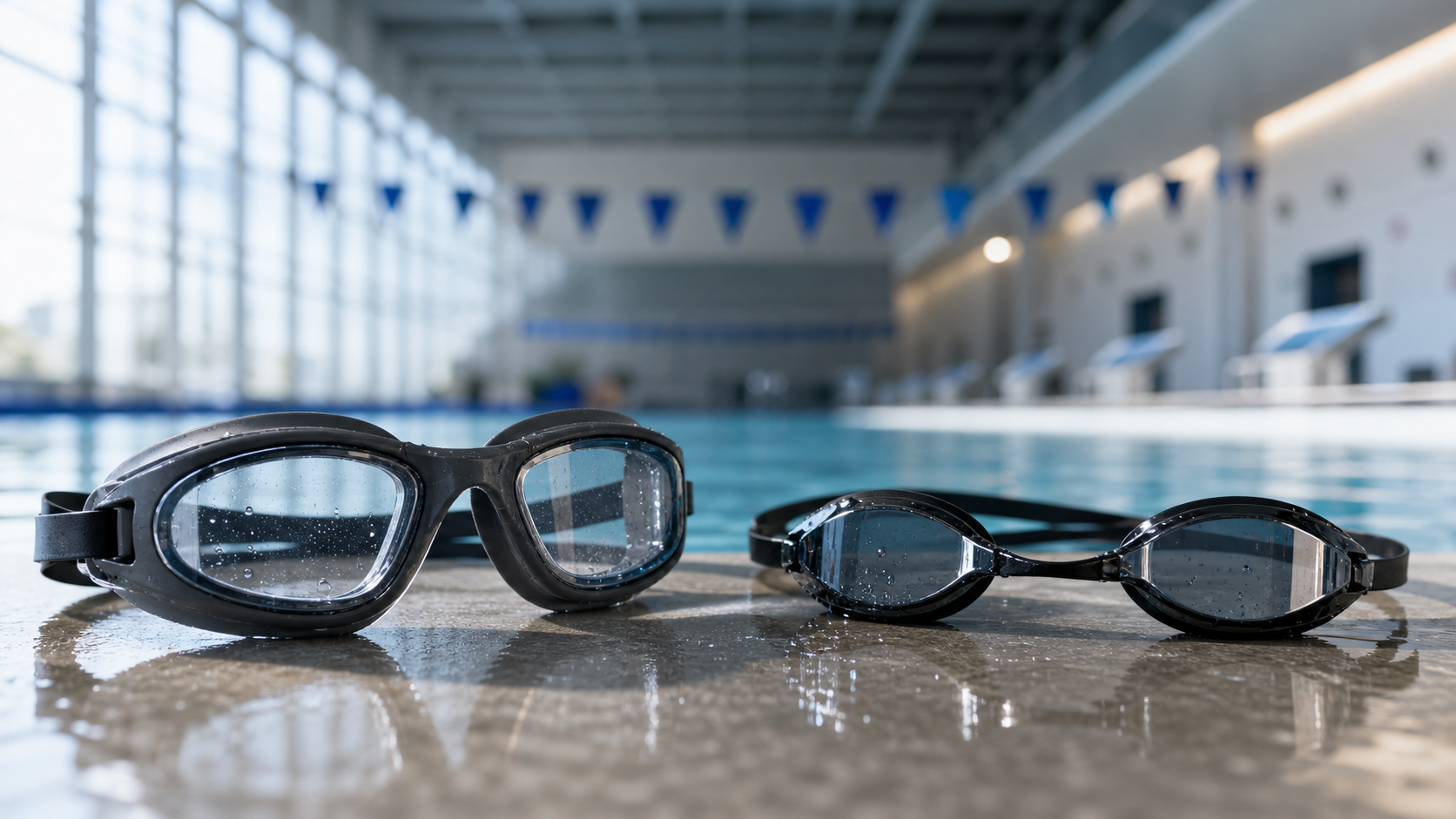
Swimming goggles are indispensable equipment for swim training and competition, but the dizzying array of options on the market often leaves consumers unsure where to start. Wide-view goggles and racing goggles (Swedish goggles) are the two most common types, each with fundamentally different design philosophies. Choosing the wrong goggles not only affects your field of view, but can also cause leaking, deep pressure marks, or even eye discomfort. This article will walk you through the differences between the two types to help you make an informed choice.
Design Features of Wide-View Goggles
The core design principle of wide-view goggles is comfort and a broad field of view. These goggles typically feature the following:
- Larger frames: Larger lens size provides a wider field of view, suitable for beginners and recreational swimmers
- Silicone or rubber seals: Soft sealing material conforms to facial contours, reducing pressure around the eye sockets
- Adjustable nose bridges: Usually offer multi-step adjustable nose bridge designs to fit different nose shapes
- UV-protective lenses: Many wide-view models offer UV400 protection, suitable for outdoor swimming
The main advantages of wide-view goggles are:
- Comfortable to wear, with less pressure during long training sessions
- Wide field of view, making it easy to see lane lines and other swimmers’ positions
- Suitable for new swimmers, with a higher tolerance for seal fit
- An ideal choice for outdoor open-water swimming
Design Features of Racing Goggles
The core design principle of racing goggles (also known as streamlined goggles) is reducing water resistance and weight. Representative models such as “Swedish goggles” have almost no cushioning, with the rigid frame sitting directly against the eye socket.
Main features:
- Extremely small frames: Reduce the surface area facing water resistance, ideal for high-speed swimming
- Rigid sealing edges: Sit directly against the orbital bone, providing good sealing but requiring an adjustment period
- Fixed or very short nose bridges: Fewer moving parts reduces the risk of loosening during high-speed swimming
- Lens angle design: Typically optimized for competitive swimming posture, offering a clearer forward-downward viewing angle
| Feature | Wide-View Goggles | Racing Goggles |
|---|---|---|
| Field of view | Wide (near-peripheral) | Narrow (focused forward) |
| Comfort | High | Low (requires adaptation) |
| Water resistance | Higher | Extremely low |
| Seal method | Soft silicone | Rigid edges |
| Eye socket pressure marks | Mild | Pronounced |
| Best suited for | Training, recreation, open water | Timed events, official races |
| Price range | NT$400–1,500 | NT$300–2,000 |
Key Differences in Sealing
Leaking is one of the most frustrating problems for swimmers, and the difference in sealing principles directly affects the likelihood of leaks.
Sealing principle of wide-view goggles:
- Seals through the adhesion of the silicone pad
- The silicone material fills in irregular facial contours
- Users need to periodically check whether the silicone ring has aged or cracked
Sealing principle of racing goggles:
- Seals through mechanical pressure of the frame against the eye socket
- You need to find a model that fits your face shape to achieve a proper seal
- Highly sensitive to strap tension, requiring repeated adjustment
Before purchasing, we recommend confirming the following:
- Whether the nose bridge length suits your face shape
- Gently place the goggles over your eyes (without the strap); if they adhere slightly, the seal is likely good
- The frame edges should not press painfully against the area below the cheekbones or the sides of the nose bridge
Field of View and Swimming Posture
Head position during swimming varies by stroke:
- Freestyle: The head faces downward most of the time, turning to the side only when breathing
- Breaststroke: The head lifts to breathe, requiring forward visibility
- Backstroke: Requires upward and rearward visibility
- Butterfly: Requires a broad forward field of view when breathing
The peripheral vision of wide-view goggles is especially advantageous during breaststroke and butterfly breathing; racing goggles, on the other hand, provide clearer forward visibility during high-speed freestyle when combined with a low head position.
Practical Recommendations
- Beginners: Choose wide-view silicone goggles; a budget of NT$500–1,000 offers good options
- Advanced swimmers: Use wide-view goggles for training and racing goggles for competitions—keep one pair of each
- Open-water swimming: Always choose wide-view models, and check whether the lenses offer polarized and anti-fog features
- Children: Always choose wide-view goggles to avoid rigid edges pressing on developing eye sockets
- Try before you buy: If a physical store is available, be sure to try them on in person to confirm the seal
Conclusion
Wide-view goggles and racing goggles each have their place, and there is no absolute superiority of one over the other. The key is to make the right choice based on your swimming goals, facial features, and intended use. For most swimming enthusiasts in Taiwan, starting with comfortable wide-view silicone goggles and then trying racing goggles as your technique improves is the most sensible equipment upgrade path.
Related Reading
- The Complete Swimming Goggle Buying Guide: Frame Shapes, Anti-Fog Coatings, and Prescription Options Explained
- The Science of Goggles, Swim Caps, and Accessories: Engineering Trade-offs in Visibility, Field of View, and Anti-Fog
- Choosing Triathlon Goggles: Differences in Field of View and Sealing Between Open-Water and Pool Goggles
- Swimming Goggle Prescriptions: Diopter Configuration and Buying Guide for Prescription Swim Goggles
開箱) 近視車友 也可以很帥的 Envis Transform 太陽眼鏡開箱 翔鷹 配近視框超便宜秘訣
7 年前
近視雷射三個月後悔嗎?單車族/工程師必看,Smart TransPRK 術後血淚史與後遺症全公開 / CT Yeh
4 個月前
雷達尾燈 雷不雷? 邁金L508 智慧雷達尾燈 情境考驗實測 | 同場加映 2千元等級的專業車錶 C406 Pro | 公路車 | CT Yeh
3 年前
多機位拍片神器 DJI Action 2 拍出速度張力感 | 類空拍機視角 4陣列麥克風超強降風噪 實測! | 公路車 | CT Yeh
3 年前
2016 彰化經典百K - 搖滾衝刺多鏡版
10 年前
全台首發神車錶! iGPSPORT iGS630 兩趟一日北高的續航! 超強導航、功率訓練、超人性APP! Garmin & Bryton 有對手了嗎? | 公路車 |CT Yeh
3 年前
類空拍神器 Feiyu Pocket 2s (有優惠連結)三軸穩定 運動攝影機 開箱!比GoPro 還強的滑順視角!三小時長時間錄影 行車記錄器 | 環花東365實測 | 公路車 CT Yeh
4 年前
一日北高/長距離團騎 常見問題補充篇 / 組團或跟團的眉角 / 壯車友容易被瘦車友慢性拉爆 / 原來屁股痛可能是這個原因...? / 風場配速法 / 公路車 / CT Yeh
2 年前