Introduction
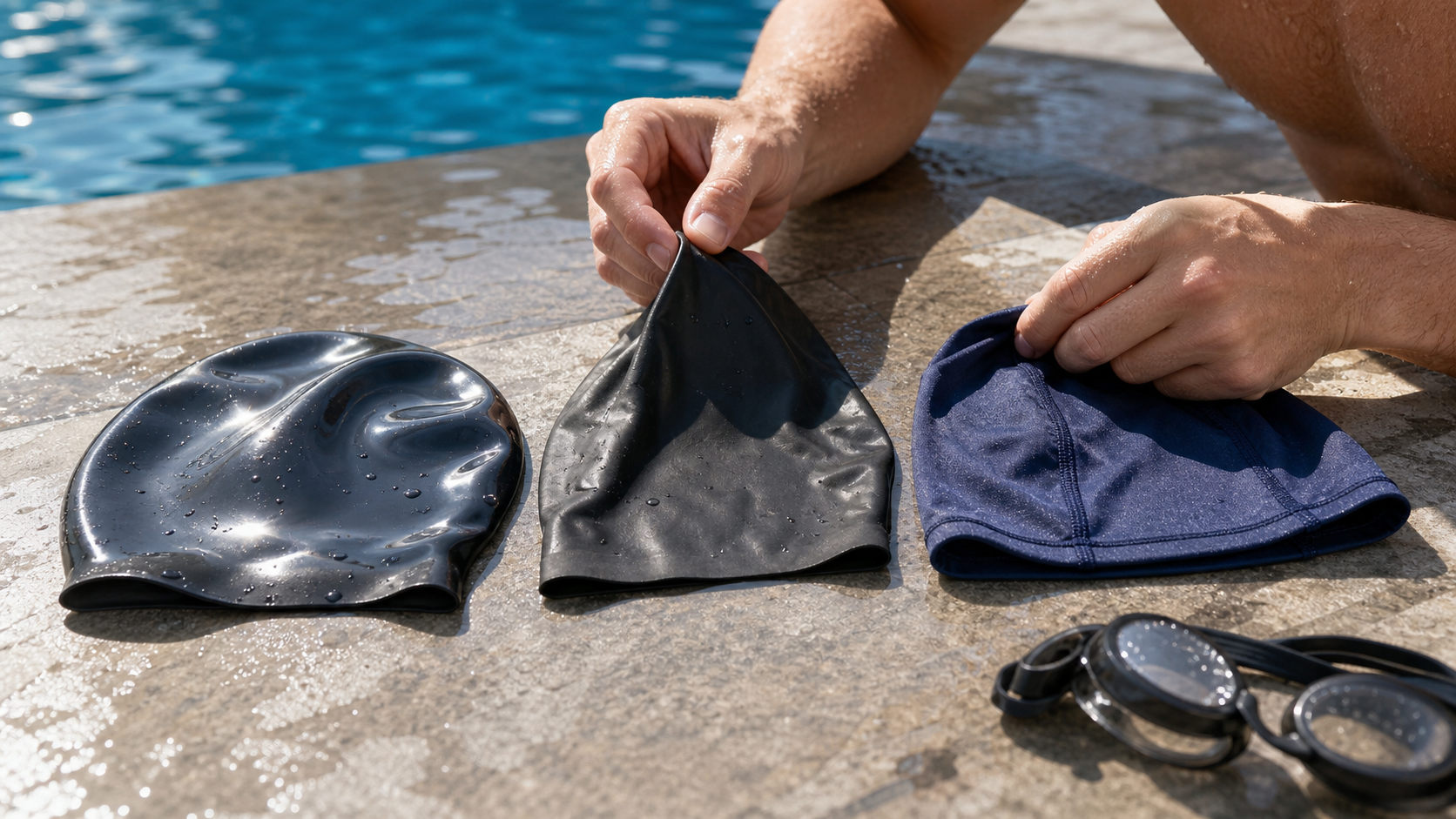
A swim cap may seem like the most inconspicuous piece of swimming gear, but a well-fitting swim cap not only reduces water resistance and protects hair from chlorine damage—it is also an essential safety marker in open-water swimming. Swim caps on the market mainly fall into three material categories: silicone caps, latex caps, and fabric caps (including Lycra caps). Each has its own strengths in durability, comfort, speed performance, and suitable use cases. This article breaks them down one by one to help you choose the best style for your needs.
Silicone Swim Caps
Silicone caps are currently the most popular type of swim cap on the market, suitable for swimmers of all ages.
Main advantages:
- Excellent water resistance: Silicone seals better than fabric caps, keeping hair relatively drier
- High durability: Resistant to cracking; a silicone cap can last 1–3 years with normal use
- Vivid, long-lasting colors: Does not fade, making it an ideal choice for visibility in open-water swimming
- Does not snag hair: Less likely to pull hair during put-on and take-off compared to latex caps
Main disadvantages:
- Relatively thicker: The head may feel hot and stuffy while swimming
- Slightly heavier: Though the difference is small, long-haired wearers may find more water pooling inside the cap
- Ages faster in high heat: Prolonged exposure to direct sunlight or a hot car interior accelerates silicone degradation
Best suited for:
- Daily training and recreational swimming
- Open-water swimming (bright colors aid visibility)
- Children’s swim lessons (durable and easy to put on and take off)
| Feature | Silicone Cap | Latex Cap | Fabric Cap (Lycra) |
|---|---|---|---|
| Durability | High | Medium | High |
| Water resistance | Good | Good | Low |
| Comfort | High | Medium | Highest |
| Drag | Low | Lowest | Medium |
| Weight | Medium | Light | Light |
| Breathability | Low | Low | High |
| Price | Medium (NT$200–500) | Low (NT$100–250) | Low (NT$100–300) |
Latex Swim Caps
Latex caps are the traditional choice for competitive swimmers, known for their thin material and extremely low water resistance.
Main advantages:
- Thinnest and lightest: Conforms closely to the head’s contours, offering the smallest drag profile
- Best for speed: Has long been the standard choice for racing caps
- High elasticity: Stretchy, and the standard size fits most head shapes
Main disadvantages:
- Prone to tearing: Latex is fragile; slightly longer fingernails can create tears when putting it on
- Hair snagging: Latex has some adhesion to hair, and long-haired swimmers need extra care when putting it on or taking it off
- Latex allergy: Some people are allergic to natural rubber latex; check before use
- Lower durability: Exposure to ozone, chlorine, and UV rays accelerates aging
Best suited for:
- Short-distance racing competitions
- Timed training sessions for advanced swimmers
- Athletes who are not allergic to latex
Fabric Caps (Lycra Caps)
Fabric caps are typically made of Lycra or a nylon-Lycra blend, making them the most comfortable type of swim cap.
Main advantages:
- Most comfortable: The soft fabric creates no sense of pressure
- Good breathability: Suitable for swimming in warm environments
- Most hair-friendly: Does not snag hair, and is the easiest for long-haired wearers to put on and take off
- Versatile for water activities: Suitable for snorkeling, water polo, and water aerobics
Main disadvantages:
- Not waterproof: Fabric caps cannot keep water out, so hair gets completely wet
- Higher water resistance: Fabric creates noticeably more drag in water than silicone or latex
- Not for racing: Rarely used in official competitions due to higher drag
Best suited for:
- Recreational swimming, water aerobics, and swim instruction
- Users with fragile hair or sensitive scalps
- Non-racing water activities such as snorkeling and surfing
Special Design: Double-Layer Silicone Caps
Worth mentioning is the increasingly popular “double-cap” method: first put on a fabric cap or thin silicone cap to hold the goggle straps in place, then wear an outer silicone cap over it. This approach keeps goggle straps from directly touching the hair and reduces the risk of them slipping off—it is standard gear for many competitive swimmers.
Practical Tips
- Long-haired users: Prioritize silicone caps; lightly applying a small amount of lotion inside the cap before putting it on can help with ease of wear
- Adults with larger head circumferences: Choose silicone caps labeled “extended size” or “adult large” to avoid headaches from excessive tightness
- Children: Use silicone caps made specifically for kids; bright colors increase visibility when swimming outdoors
- Open-water swimming: Choose high-visibility orange or yellow silicone caps to improve recognition by boats and lifeguards
- Those with sensitive skin: Choose latex-free silicone caps and check for “phthalate-free” labeling
Conclusion
Silicone, latex, and fabric caps each have their ideal use cases. For most swimming enthusiasts in Taiwan, silicone caps are the best everyday choice—balancing durability, water resistance, and comfort. If you have racing needs, consider latex caps; if comfort or scalp sensitivity is your priority, fabric caps are the way to go. Understanding the characteristics of each material allows you to use the right gear in the right situation, making every swim more enjoyable.
Related Reading
- Comprehensive Swim Cap Material Comparison: Drag and Durability of Silicone, Latex, and Fabric Caps
- Complete Swim Cap Material Comparison: Silicone vs Latex vs Lycra—Drag and Comfort Analysis
- When to Use Racing Swim Caps: Differences Between Training and Competition Caps, Plus Proper Care and Washing
- Swimming Earplug Buying Guide: Complete Waterproofing Comparison Between Silicone and Wax Earplugs
3D 列印車褲墊 / 舒適改善? / 無痕 x 分區壓縮 / ATK & Decider系列 / JE22黑科技 / #公路車 #CTYEH
11 個月前
多到選擇障礙... 換個單車把帶想一個小時 / BTP / 編織&軟木特有材質超吸睛! / 公路車 / CT Yeh
1 年前
單車 重低音 藍芽喇叭 音質實測 SoundBot SB525 Real Sound Test
8 年前
大家都在開箱的...單車用藍芽對講耳機真的有幫助嗎? SENA BiKom 20 長距離旅遊 & 海鷗繞圈賽 實際體驗心得 / 公路車 / CT Yeh
9 個月前
公路車 BB培林大升級! / 備戰海鷗繞圈賽 Canyon Aerod & TIME 一起改 / MIT大廠 CEMA對鎖式陶瓷培林BB & 導輪 / 公路車 / CT Yeh
2 年前
滑雪新手們慘摔學習全紀錄(請開字幕),滑雪好好玩 | Snowboard + Ski | 岩原 スキー場 | 滑雪APP使用 | GoPro Max
6 年前
一日北高 實用 單車手機架!Bone蹦克磁吸單車手機綁 //環島/室內訓練 / 導航的APP推薦 / 日本島波海道取景 / 公路車 / CT Yeh
2 年前
洗單車神器 吹水機! 實際洗車用用看 暴力洗鍊條大法 | 公路車 | CT Yeh
4 年前