Introduction
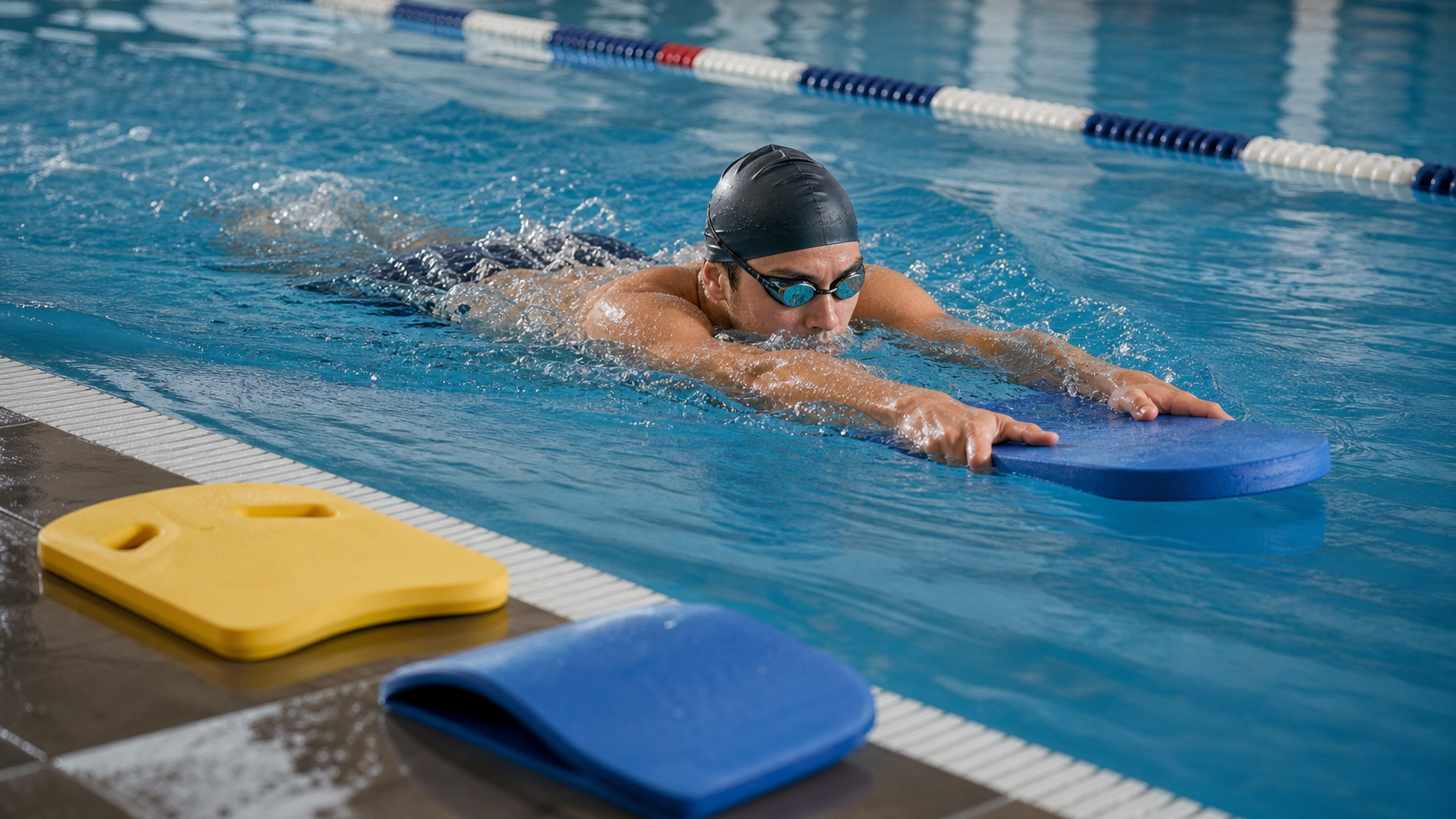
The kickboard is one of the most basic training aids in swimming, and almost everyone who has learned to swim has used one. By providing buoyancy to support the upper body, the kickboard allows swimmers to focus on practicing leg kicking movements, making it an important tool for improving leg propulsion and kicking technique. However, kickboards on the market are divided into two main categories—rigid boards and soft boards—and with the emergence of ergonomically designed models in recent years, many swimmers find the choice confusing. This article will provide an in-depth comparison from the perspectives of physical characteristics, training benefits, and target users to help you select the most suitable kickboard.
Analysis of Rigid Kickboard Characteristics
Traditional rigid kickboards are typically made of hard EVA foam or polyethylene (PE), and are the most common type.
Training characteristics:
- Stable buoyancy and strong support, making it easy for beginners to find balance
- Noticeable resistance during kicking, allowing clear perception of whether leg movements are efficient
- Because the board is stiffer, the vibration feedback from the kickboard during kicking is clear, making it easy to detect kicking rhythm problems
Advantages:
- High durability, resistant to deformation from impact or pressure
- Fixed buoyancy value, providing high training consistency
- Affordable price (NT$200–600)
Disadvantages:
- The edges of a rigid board may press against the armpits or chest during prolonged training
- Heavier, making storage and carrying slightly inconvenient
- Requires greater shoulder flexibility; those with tight shoulders may feel discomfort when using it
Analysis of Soft Kickboard Characteristics
Soft kickboards are typically made of soft EVA foam or TPE (thermoplastic elastomer), and have gained increasing favor among advanced trainees in recent years.
Training characteristics:
- The board can flex slightly with body movements, more naturally matching the streamlined swimming posture
- Lower resistance during kicking, suitable for practicing high-frequency freestyle kicking
- Less pressure on the shoulders, suitable for swimmers with shoulder issues
Advantages:
- Good flexibility, providing more natural interaction with the body
- Softer edges, more comfortable during prolonged training
- Lightweight design, easy to carry
Disadvantages:
- The buoyancy of a soft board may decrease over time with use
- Beginners may struggle to maintain balance due to slight board wobble
- Less durable than rigid boards, with potential permanent deformation after long-term use
| Characteristic | Rigid Board | Soft Board |
|---|---|---|
| Buoyancy stability | High | Moderate |
| Comfort | Moderate | High |
| Feedback on kicking feel | Clear | Softer |
| Suitable for beginners | Yes | Depends on the individual |
| Durability | High | Moderate |
| Portability | Moderate | High |
| Price | Low–Medium | Medium–High |
Ergonomically Designed Kickboards
In recent years, some brands have introduced kickboards with central grooves or angled designs, aiming to help swimmers maintain a body position closer to actual swimming while using the kickboard.
Traditional kickboards cause swimmers to raise their heads excessively, leading to hip drop—a posture that differs significantly from the horizontal position of actual swimming, and prolonged training may form bad habits.
Ergonomically designed kickboards address this issue through the following methods:
- Vertical grip design: Allows swimmers to hold the kickboard upright and vertically, bringing body position closer to freestyle
- Angled board surface: The board has a certain angle, so the arms do not need to be raised excessively
- Central waist-narrowing design: Allows a more natural hand grip, reducing shoulder abduction angle
A representative model such as the FINIS Alignment Kickboard adopts an angled design, suitable for swimmers who already have a certain swimming foundation and want higher training quality.
Differences in Kickboard Use Across Swimming Strokes
The way kickboards are used also differs across stroke training:
- Freestyle kicking: Hold the front of the kickboard with both hands, face in the water or breathing occasionally, focusing on the rhythm and amplitude of the up-and-down kick
- Backstroke kicking: Place the kickboard on the chest or hold it overhead, practicing kicking in a supine position
- Breaststroke kicking: Place the kickboard on the chest with hands stacked on top, practicing the outward-then-inward sweeping arc of the breaststroke kick
- Butterfly kicking: Kickboards are used less frequently, but you can try placing both hands on the kickboard to practice the rhythm of the dolphin kick
Practical Recommendations
- Beginner swimmers: Choose a standard-size rigid kickboard for stable buoyancy and easier entry into the sport
- Advanced trainees: Try soft boards or ergonomically designed models, which more closely match the muscle activation patterns of actual swimming
- Those with shoulder issues: Choose models with a central handle or angled design to reduce shoulder abduction angle
- Children: Choose small-size boards designed for children, with moderate buoyancy, so the board is not too large to control
- Long-distance trainees: Prioritize soft boards to avoid armpit pressure discomfort after prolonged training
Conclusion
Choosing a kickboard deserves more consideration than many people think. Rigid boards provide stable buoyancy and clear movement feedback, making them the best choice for beginners and foundational training; soft boards offer advantages in comfort during prolonged training and a more natural posture, making them suitable for advanced swimmers. Ergonomically designed models are the ideal tool for trainees focused on technique improvement. Based on your current level and training goals, choose the most suitable kickboard so that every kicking practice can be efficiently translated into progress in actual swimming.
Related Reading
- Float Board Buying Guide: In-Depth Comparison of Training Effects Between Standard Float Boards and Streamlined Float Boards
- The Science of Swimming Kickboards: Proper Use of Leg Training Tools
- Kickboards and Paddles Serve Different Training Purposes: How to Use Training Aids Correctly
- The Science of Swimming Fins Training: The Deep Impact of Different Fin Lengths on Kicking Power
訓練台體驗) 2019台北自行車展 三大家 訓練台體驗 Tacx Neo Flux 2 Xepdo Apx Wahoo Kickr
7 年前
滑雪新手們慘摔學習全紀錄(請開字幕),滑雪好好玩 | Snowboard + Ski | 岩原 スキー場 | 滑雪APP使用 | GoPro Max
6 年前
白沙屯媽祖進香在家走!UREVO 坡度自調走步機 / 可連接訓練遊戲APP MyWhoosh / 邊看直播邊走起來 / CT Yeh
11 個月前
Nepest NOVA 碳條輪組:輕量、空力、舒適一次滿足!/ 公路車 / CT Yeh
7 個月前
單車 重低音 藍芽喇叭 音質實測 SoundBot SB525 Real Sound Test
8 年前
CT暗黑廚房) 車友必備 宇宙無敵鮮蚵湯 幫助訓練恢復 天然食補 好市多 超肥鮮蚵 破PR
7 年前
靠單車減肥35公斤 心得分享與整理
7 年前
碟煞公路車 銑面器 !? 原來銑完差這麼多! 降低蹭碟機率! | TIME 公路車 保養小記錄 | CT Yeh
3 年前