Introduction
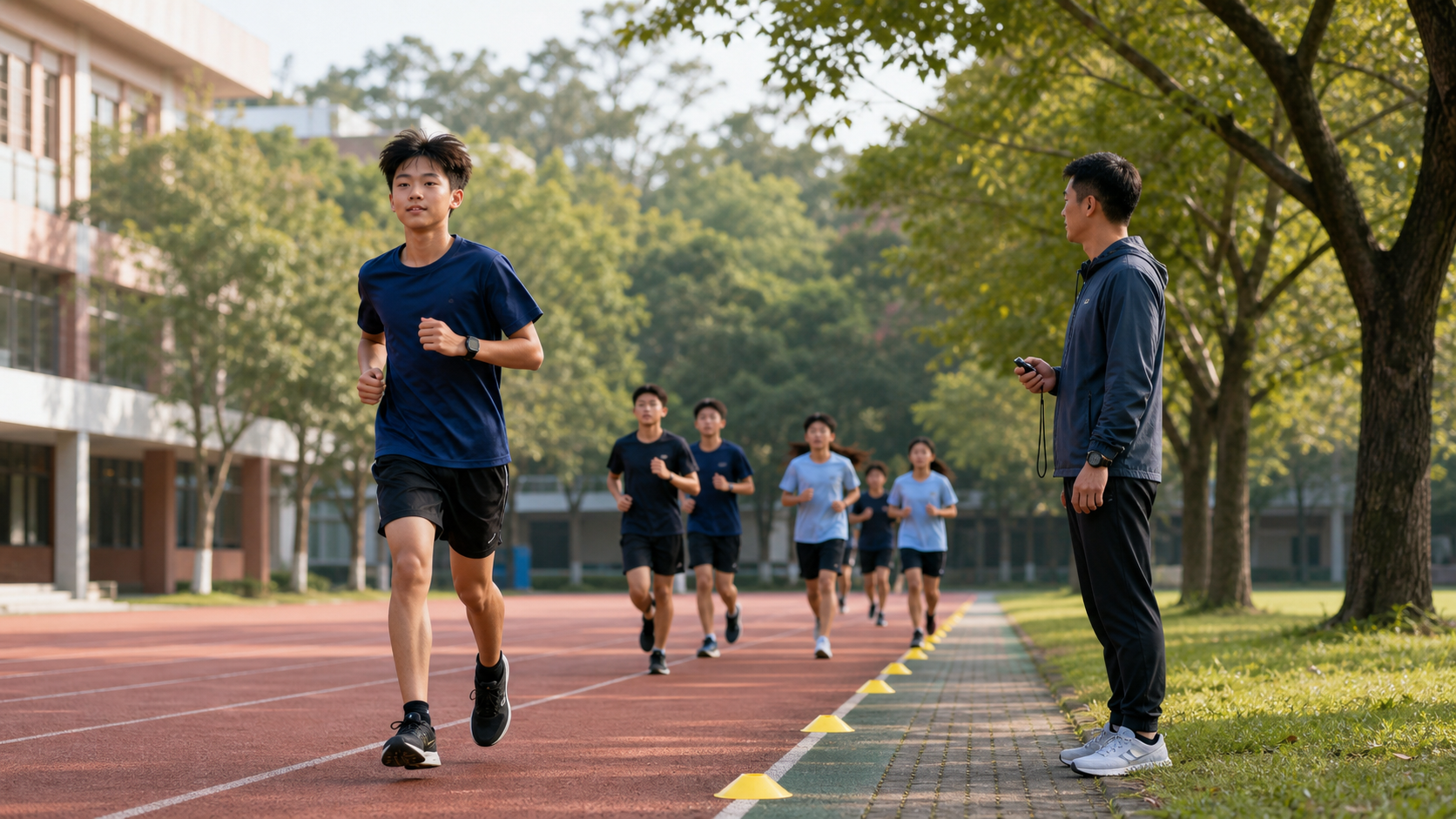
Physical education classes, track and field teams, and after-school clubs in Taiwanese middle schools are placing growing demands on running training. Ahead of sports days or inter-school track meets, many schools ramp up training intensity, sometimes pushing students to sharply increase their mileage in a short period. This “sprint to prepare” approach may boost performance in the short term, but for middle schoolers who are still growing, it plants the seeds of chronic injury.
How can we build athletic ability while protecting the growth and health of young athletes? The core question is: how much can a middle school student safely run each week? This article offers concrete, physiology-based guidance to help physical education teachers, coaches, and parents in Taiwan make smarter training decisions.
The Relationship Between Middle Schoolers’ Physical Development and Running Volume
Pubertal Growth Spurts and Risk
The middle school years (ages 12–15) mark the peak of the pubertal growth spurt. In the 12 months surrounding Peak Height Velocity (PHV), height can increase by 8–12 cm per year. Bone growth far outpaces the adaptation speed of tendons and ligaments, creating what is sometimes called a “flexibility gap” — bones lengthen faster than the surrounding soft tissue can stretch to keep up.
During this period, children are especially prone to:
- Iliotibial band syndrome (lateral knee pain)
- Tibial stress syndrome (shin pain)
- Achilles tendinitis or Sever’s disease (if the growth plate has not yet closed)
Differences in Development Timelines by Sex
| Sex | Puberty Onset | Growth Peak | Growth Plate Closure |
|---|---|---|---|
| Girls | Around age 10–11 | Around age 11–13 | Around age 14–16 |
| Boys | Around age 11–12 | Around age 13–15 | Around age 16–18 |
On average, girls’ skeletal development completes 1–2 years earlier than boys’. This means that, at the same age, girls can generally tolerate a slightly higher mileage ceiling than boys, since their growth plates have progressed further toward closure — though individual variation should always take priority in decision-making.
Safe Weekly Mileage Guidelines for Middle School Students
Baseline Mileage Recommendations
The following mileage guidelines apply to general middle school students who are not specialized track-and-field athletes:
| Grade | Weekly Mileage Ceiling | Longest Single Run | Training Days per Week |
|---|---|---|---|
| 7th grade (ages 12–13) | 15–20 km | 5 km | 3–4 days |
| 8th grade (ages 13–14) | 20–25 km | 6–8 km | 4 days |
| 9th grade (ages 14–15) | 25–30 km | 8–10 km | 4–5 days |
Advanced Mileage for Track and Field Teams
For students in structured track and field training, mileage can be increased 20–30% above the baseline above, provided the following conditions are met:
- The coach follows a systematic, periodized training plan
- At least 2 full rest days or light stretching-only days per week
- The student has no persistent pain symptoms
- The rate of increase does not exceed 10% per week
Warning Signs of Overtraining
If a middle school student shows any of the following signs, training volume should be reduced immediately and a medical evaluation considered:
Physical signs:
- Knee, heel, or shin pain after running that persists beyond 48 hours
- Heavy legs or joint stiffness upon waking
- Declining sleep quality, difficulty falling asleep, or frequent dreaming
- Resting heart rate 5–10 beats per minute above baseline
Psychological signs:
- Reluctance or dread toward training
- Performance plateauing or declining despite training
- Emotional instability or irritability
- Decreased appetite
Managing Training Quality Beyond Mileage
The 80/20 Rule for Intensity Distribution
Sports science research shows that elite runners spend roughly 80% of their training at “easy pace” (a pace at which they can still talk while running), with only 20% at high intensity. For middle school students, this ratio should be even more conservative — 85–90% easy aerobic running, with only 10–15% at high intensity (intervals, tempo runs).
The Importance of a Training Log
Encourage students to record daily mileage, pain, sleep, and mood. This allows coaches to monitor training load more objectively and catch early signs of overtraining.
Practical Recommendations
- Adjust mileage around academic pressure: Reduce volume by 30–50% before and during exam weeks to maintain physical and mental balance
- Never use extra mileage as punishment: The training culture of “you weren’t focused today, run five more laps” needs to change
- Begin tapering two weeks before competition: Accumulated fatigue before a race hurts performance more than a lack of training does
- Prioritize recovery training: Easy jogging, swimming, and stretching are all essential training components beyond mileage
- The parent’s role: Regularly check in on your child’s training status. If a coach consistently demands mileage beyond recommended ranges, proactively communicate with them
Conclusion
Appropriate mileage is an art that requires individualized assessment — there is no one-size-fits-all number. The guidance in this article offers a safe range based on population-level research; actual implementation still requires coaches to adjust based on each child’s developmental stage, fitness foundation, and recovery capacity. The ultimate goal is not to help a child run their fastest time in middle school, but to build a healthy athletic foundation that lets running accompany them through a longer, richer life journey.
Related Reading
- Youth Distance Running Training: The Science of Growth Plate Protection and Weekly Mileage Limits
- Safe Running for Teenagers: Training Volume, Intensity, and Long-Term Development During Growth
- Bone Development and Mileage Limits in Youth: How to Avoid Growth Plate Injury
- Youth Marathon Running: Distance Limits and Training Advice for Athletes Under 18
一日北高/長距離團騎 常見問題補充篇 / 組團或跟團的眉角 / 壯車友容易被瘦車友慢性拉爆 / 原來屁股痛可能是這個原因...? / 風場配速法 / 公路車 / CT Yeh
2 年前
一日北高常見問題大集合 | 攻略 | 路線 | 訓練 | 補給 | 自行車 單車 | 一日雙城 | 雙塔 | TWB北高360 | 屁股痛
6 年前
單車 一日北高 ( 雙城 ) 肥宅雙人瘋狂行 紀錄片 REACTO
10 年前
西進武嶺 免費訓練分析服務 Intervals | 練不夠還是練過頭?你哪一種類型選手?AI模型告訴你! | 備戰神器 | 公路車 訓練 | CT Yeh
4 年前
半日 小台灣 極限單車路線挑戰實錄
7 年前
2019 柯P 超越北高 第一集團實錄 (11小時實錄請參考另一部影片) 一日雙城 一日北高 NeverStop Taiwan Long Distance Cycling Challenge
7 年前
一日北高前的高裝檢 | 北高 360 | 挑戰11小時的裝備 | 一日雙塔 | 補給
6 年前
滑雪新手們慘摔學習全紀錄(請開字幕),滑雪好好玩 | Snowboard + Ski | 岩原 スキー場 | 滑雪APP使用 | GoPro Max
6 年前