Introduction
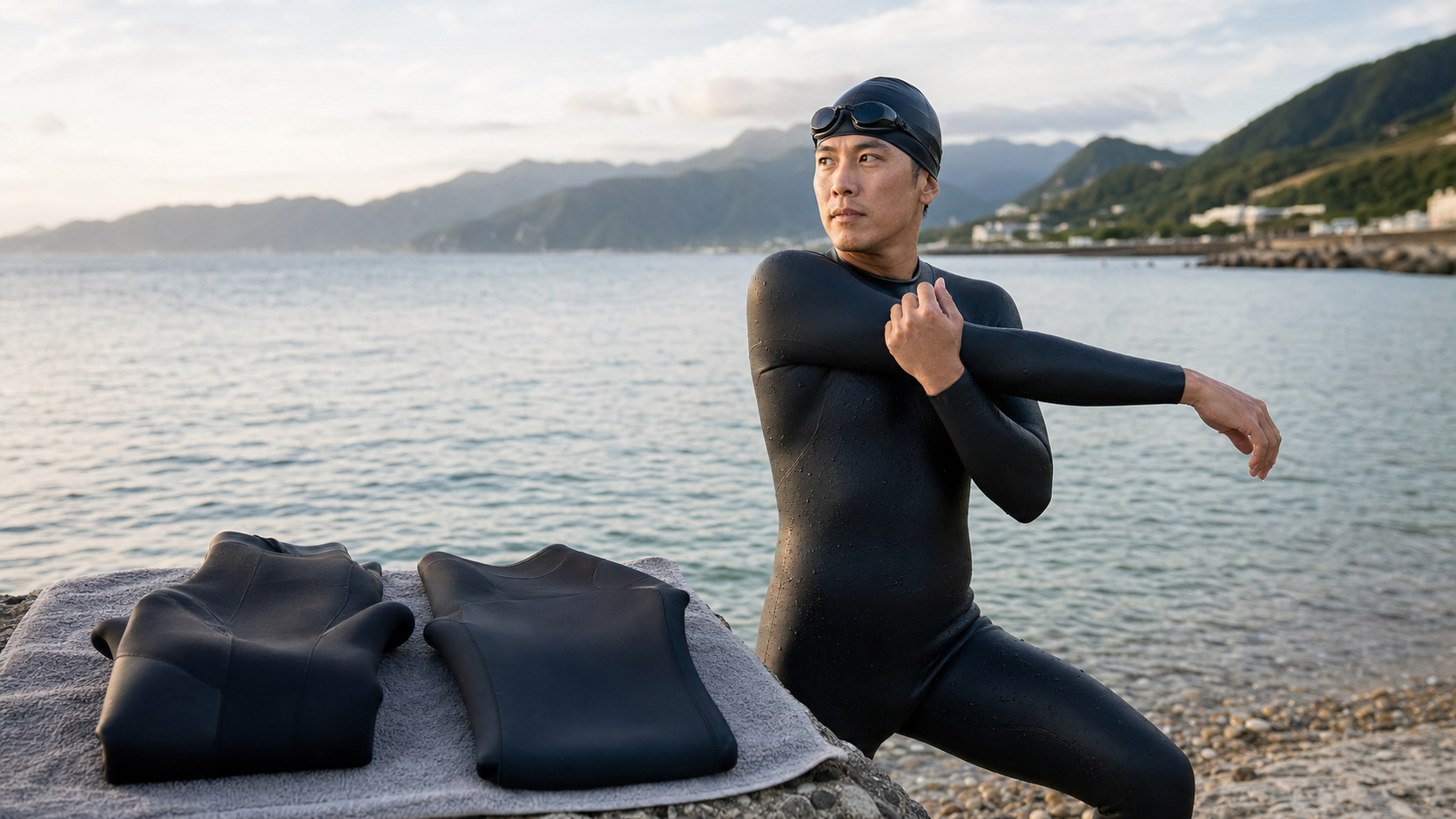
A wetsuit is core gear for open-water swimming and triathlon. It not only provides warmth in cold water, but the thick neoprene material also offers significant additional buoyancy, bringing the swimmer’s body position closer to the surface and theoretically improving swimming speed. However, choosing a wetsuit involves several competing factors: thicker suits offer better warmth and buoyancy but restrict mobility; thinner models allow free movement but provide insufficient warmth in cold water. This article systematically analyzes these key metrics to help Taiwanese triathletes and open-water swimmers make the most suitable choice.
Understanding Wetsuit Thickness Specifications
Wetsuit thickness is typically expressed in millimeters (mm), with standard models using two marking methods:
- Single thickness (e.g., 3mm): Same thickness throughout the body; simple design
- Dual-zone thickness (e.g., 5/3mm): 5mm on the chest and back, 3mm on the arms and legs—a common design for race-oriented wetsuits
Recommended water temperatures by thickness (reference values):
| Wetsuit Thickness | Suitable Water Temperature | Characteristics |
|---|---|---|
| 1–2mm (long-sleeve top) | 22–28°C | Minimal restriction; suitable for Taiwan summers |
| 3mm (full suit) | 18–24°C | Entry-level wetsuit; suitable for Taiwan autumn/winter |
| 5/3mm (dual-zone) | 14–20°C | Standard race model; balances warmth and mobility |
| 5mm (full suit) | 10–16°C | Cold water; restricted mobility |
Water temperatures at open-water races in Taiwan typically range between 22–28°C (summer), with some winter events dropping to around 18°C. Therefore, a 3mm or 5/3mm suit is sufficient for most Taiwanese triathletes.
Buoyancy Characteristics and Swimming Performance
Wetsuits increase buoyancy due to the low-density properties of neoprene (which is lighter than water). The specific effects of buoyancy:
- Improved body horizontal alignment: The hips and legs are pushed upward, reducing drag from the lower body
- Easier breathing: A higher body position makes breathing movements easier
- Increased swimming speed: Most tests show that wearing a proper wetsuit can make you 5–15 seconds faster per 100m
- Reduced energy expenditure: Less energy is needed to maintain a horizontal position, indirectly benefiting the bike and run legs of a triathlon
Some high-end race wetsuits use higher-density buoyancy foam materials in the chest and hip areas to further optimize buoyancy distribution, making it especially easy for the swimmer’s hips to float, approaching the streamlined position of a racing swimsuit.
Key Mobility Design Features
The mobility limitations of a wetsuit come primarily from the shoulders. Swimming requires a large range of motion for shoulder rotation, and without proper design, thick neoprene can significantly restrict the stroke, impairing swimming technique and accelerating shoulder fatigue.
Advanced race wetsuit mobility features include:
- Super-stretch shoulder neoprene (special materials like Yamamoto #40): 40–60% more stretch than standard materials
- Ultra-thin arm panel design (1–1.5mm): greatly reduces resistance to arm rotation
- Laser-cut shoulder design: removes excess material thickness to improve rotational flexibility
- Sleeveless wetsuit design: sacrifices arm warmth for maximum mobility; suitable for races in warmer water
Different Types of Wetsuits
Race Wetsuits:
- Use the highest-stretch materials; mobility is the priority
- Dual-zone or multi-zone thickness designs
- Higher price (NT$15,000–40,000)
- Representative brands: Orca Predator, Blueseventy Helix, 2XU Propel
Training/Practice Wetsuits:
- Durability is the priority; thicker, more robust materials
- Mobility is secondary
- Mid-range price (NT$5,000–15,000)
- Suitable for athletes who train frequently
Entry-Level Wetsuits:
- Standard neoprene; more noticeable mobility restrictions
- Affordable price (NT$3,000–6,000)
- Suitable for recreational athletes who race occasionally
Sizing and Fitting Considerations
Wetsuit sizing is a key factor affecting the overall experience. Main points to check:
- Collar: Should fit snugly around the neck—not too tight (restricted breathing) and not too loose (water entry)
- Underarms: No excess fabric bunching under the arms when raising them
- Waist: Firm and snug, with no gaps at the waist
- Ankles and wrists: Sealed but not cutting off circulation
Tips for putting on a wetsuit:
- Put plastic bags over your hands before putting on the suit to reduce the risk of scratching the neoprene with your fingernails
- Pull it up gradually, starting from the ankles, ensuring each section fits snugly
- The zipper is usually at the back and requires assistance to pull up
Practical Recommendations
- Taiwan triathlon beginners: Start with a 3mm full suit; a budget of NT$4,000–8,000 will get you a solid option
- Advanced competitive athletes: Choose a 5/3mm race suit; focus on confirming shoulder mobility
- Recreational open-water swimmers: Choose thickness based on the water temperature at your swimming location; race-oriented designs are not necessary
- Pre-race fitting and training: Never wear a wetsuit for the first time on race day; train in it at least 2–3 weeks in advance
- Maintenance: Rinse with fresh water immediately after use, avoid direct sunlight, and hang dry on a hanger
Conclusion
Choosing a wetsuit is a fine balance between thickness (warmth/buoyancy) and mobility. Taiwan’s water temperature conditions mean most athletes don’t need the thickest wetsuits, allowing more of the budget to go toward high-stretch materials that improve mobility. A properly selected and well-maintained wetsuit will deliver its performance advantages in every race.
Related Reading
- Open-Water Wetsuit Buying Guide: Thickness Selection, Buoyancy Assistance, and Dressing/Undressing Tips
- Choosing and Wearing Triathlon Wetsuits: Balancing Buoyancy Benefits and Mobility Limitations
- The Complete Wetsuit Guide: Selection, Dressing/Undressing, and Adjusting Your Swim Feel
- 2026 Triathlon Wetsuit Buying Guide: Buoyancy, Flexibility, and Fit for Taiwan Water Temperatures
[防寒衣體驗] 鐵人魂 三鐵 防寒衣試穿會 於松運 深水游泳池 鯨魚池
8 年前
松運深水池拍攝 作品 防寒衣品牌
8 年前
單車 一日北高 ( 雙城 ) 肥宅雙人瘋狂行 紀錄片 REACTO
10 年前
3D 列印車褲墊 / 舒適改善? / 無痕 x 分區壓縮 / ATK & Decider系列 / JE22黑科技 / #公路車 #CTYEH
11 個月前
ThinkRider 智騎 XXPRO 訓練台,高階機種功能 只要 1/3價格!? 實測功率對比、噪音實測 / 公路車 / CT Yeh
1 年前
洗單車神器 吹水機! 實際洗車用用看 暴力洗鍊條大法 | 公路車 | CT Yeh
4 年前
Nepest NOVA 碳條輪組:輕量、空力、舒適一次滿足!/ 公路車 / CT Yeh
7 個月前
2026 車錶排行榜!誰是最多車友正在使用?練家子最愛哪款?🏆 (2萬名車友數據) / 公路車 / CT Yeh
5 個月前