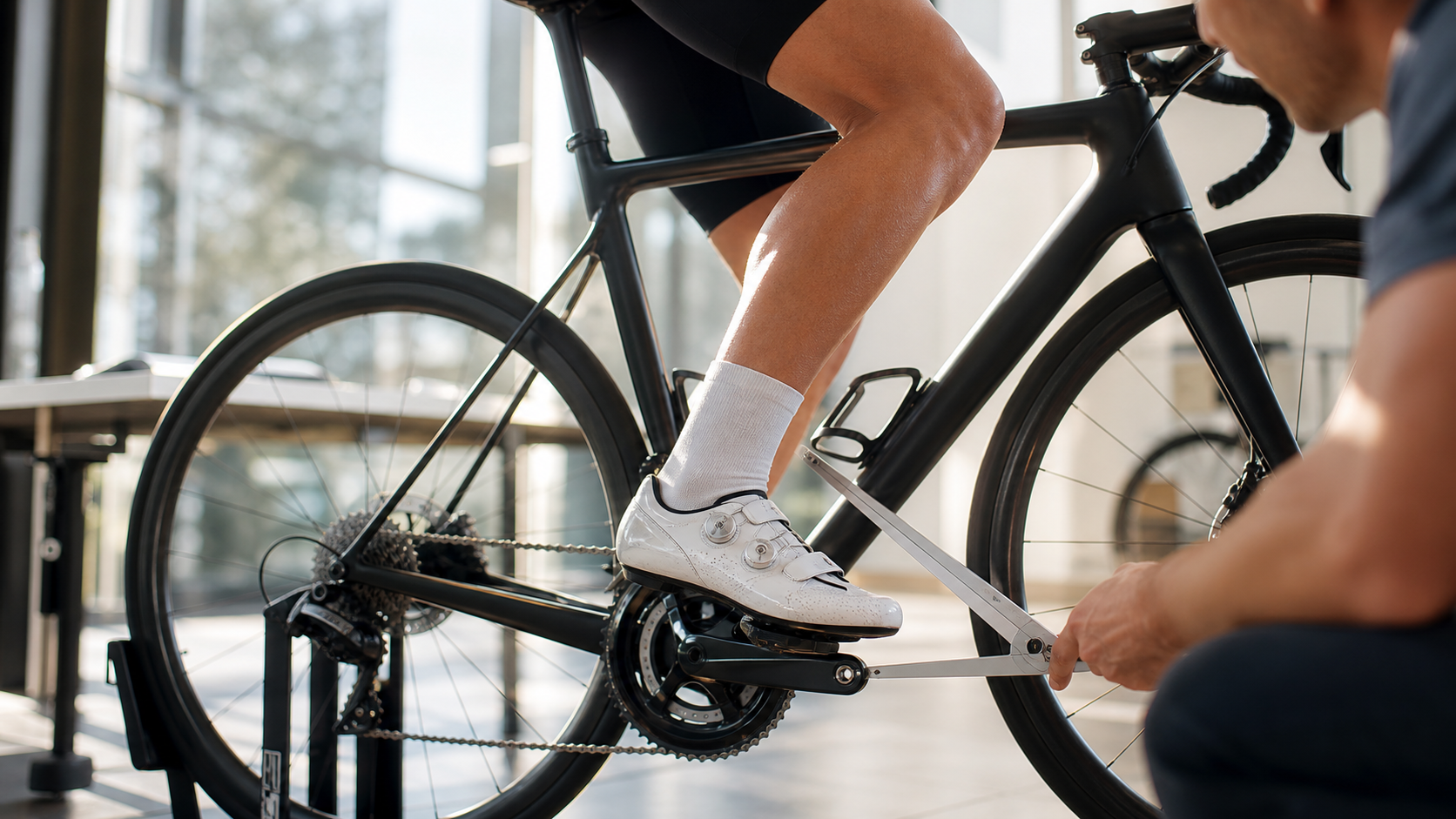
The Science of Crank Length: The Real Impact of 165mm, 170mm, and 175mm on Riding
Introduction
In the world of Bike Fit, crank length has long been an underestimated variable. Most riders never replace the cranks that come stock on their bikes, but in recent years, a growing number of dynamic fit specialists and biomechanics researchers have begun to point out that crank length has a far greater impact on knee angles, cadence ceilings, and long-distance comfort than previously thought.
The Physical Significance of Crank Length
The crank is the metal arm connecting the BB (bottom bracket) to the pedal, and its length determines the radius of the pedaling arc. Longer cranks provide greater leverage (torque arm), favoring heavy pedaling at low cadence; shorter cranks reduce the pedaling arc, decreasing the knee bend angle at the top of the stroke and favoring light pedaling at high cadence.
Comparison of Three Common Crank Lengths
| Specification | Knee Angle at Top of Pedal Stroke | Suitable Cadence | Torque Characteristics | Common Applications |
|---|---|---|---|---|
| 165mm | Smallest (knee most open) | 90–110+ rpm | Low | Time trials, triathlon, riders with long shins |
| 170mm | Moderate | 85–105 rpm | Medium | Standard choice for most road cyclists |
| 175mm | Largest (knee most bent) | 80–95 rpm | High | Taller riders, heavy-pedaling climbing style |
Traditional Height-to-Crank-Length Correspondence
In the past, the industry favored a “height determines crank length” formula. While not precise, it provides a preliminary reference:
- Height below 160cm: 165mm
- Height 160–170cm: 165–170mm
- Height 170–180cm: 170–172.5mm
- Height 180–190cm: 172.5–175mm
- Height above 190cm: 175–180mm
However, the modern biomechanics perspective holds that thigh length (femur length) is a better predictor of suitable crank length than overall height.
The Rise of Shorter Cranks: Why Are More People Switching to 165mm?
In recent years, there has been a notable trend: more and more professional riders and time trial specialists are switching to shorter cranks than traditional recommendations, even going down to 160mm. The reasons are as follows:
1. Improved Hip Joint Angle
Shorter cranks reduce the hip flexion angle at the top of the stroke (opening the hip). For riders with tight hip flexors, this allows them to sustain higher average power without compensatory movement.
2. Higher Cadence Ceiling
The shorter the crank, the smaller the pedaling arc and the lower the angular velocity required per revolution, making it easier to reach and sustain high cadence.
3. Special Considerations for Time Trial and Triathlon Bikes
When riding in an aero bar position, the hip joint is already extremely flexed. Shorter cranks prevent the hip joint from “locking up” at the top of the stroke, improving pedaling efficiency.
Advantages and Limitations of Longer Cranks
Advantages
- Greater torque when grinding up climbs
- More natural for riders accustomed to low cadence (70–80 rpm)
- Riders with proportionally longer legs can utilize a fuller pedaling arc
Limitations
- Increased knee bend angle at the top of the stroke, adding stress to the hip flexors and the front of the knee
- Increased centrifugal acceleration at high cadence, reducing pedaling “smoothness”
- After switching to longer cranks, saddle height must be recalculated (for every 2.5mm increase in crank length, the effective saddle height needs to drop by approximately 1.5mm)
Considerations When Changing Crank Length
- Saddle height needs recalibration: For every 5mm change in crank length, the saddle needs a corresponding adjustment of approximately 2.5–3mm
- Adaptation period of about 4–6 weeks: Muscle memory takes time to rebuild
- Cost of crank replacement: A full crankset (including chainrings) costs approximately NT$1,500–8,000, depending on the brand
- BB specification must be verified: Before replacing the crank, confirm compatibility with the frame’s BB specification
Conclusion
Crank length is not a variable that needs frequent changing, but if you still experience pain in the front of the knee after a full Bike Fit adjustment, or if you feel your hip joint “bottoming out” at high cadence, then evaluating a shorter crank length is worth adding to your list. The modern biomechanics trend leans toward “shorter is better than longer,” provided you have patience during the adaptation period.
Related Reading
- Road Bike Crank Arm Length Selection Guide: The Science of 165mm to 175mm
- The Science of Crank Length Selection: It’s Not Just About Leg Length
- The Impact of Bicycle Crank Length on Pedaling Biomechanics: Research Basis for Individualized Selection
- Bike Fit Biomechanics: Saddle Height, Fore-Aft Position, and Knee Tracking
2025崇越「西進武嶺」挑戰VLOG / 賽前改短成165曲柄會如何? / 選手昏倒? / 公路車 / CT Yeh
1 年前
#公路車 #Fitting 靠人工智慧APP 幫你調整單車
6 年前
大家都在開箱的...單車用藍芽對講耳機真的有幫助嗎? SENA BiKom 20 長距離旅遊 & 海鷗繞圈賽 實際體驗心得 / 公路車 / CT Yeh
9 個月前
Nepest NOVA 碳條輪組:輕量、空力、舒適一次滿足!/ 公路車 / CT Yeh
7 個月前
Vision Metron RS 37碳幅條輪組 (非SL)官網沒有的 低調開箱 / 這重量太銷魂了 / 公路車 / CT Yeh
6 個月前
2025 自行車錶排行榜 兩萬車友大數據 / Garmin Bryton 排名會大洗牌嗎? / 全新的碼表前身分析 /公路車 / CT Yeh
1 年前
單車胎壓觀察到的有趣現象,SRAM Quarq TyreWiz 2.0 無內胎胎壓計 / 裝了有哪些幫助? / Tubeless / 公路車 / CT Yeh
1 年前
車錶新黑馬? / 超狂續航 / 超好用錶冠 / 無敵準定位 / Dash圖表合成!?/ COROS DURA 評測!/ 公路車 / CT Yeh
2 年前