Open-Water Swimming in Waves: Technical Differences Between Swimming with, Against, and Across the Swell
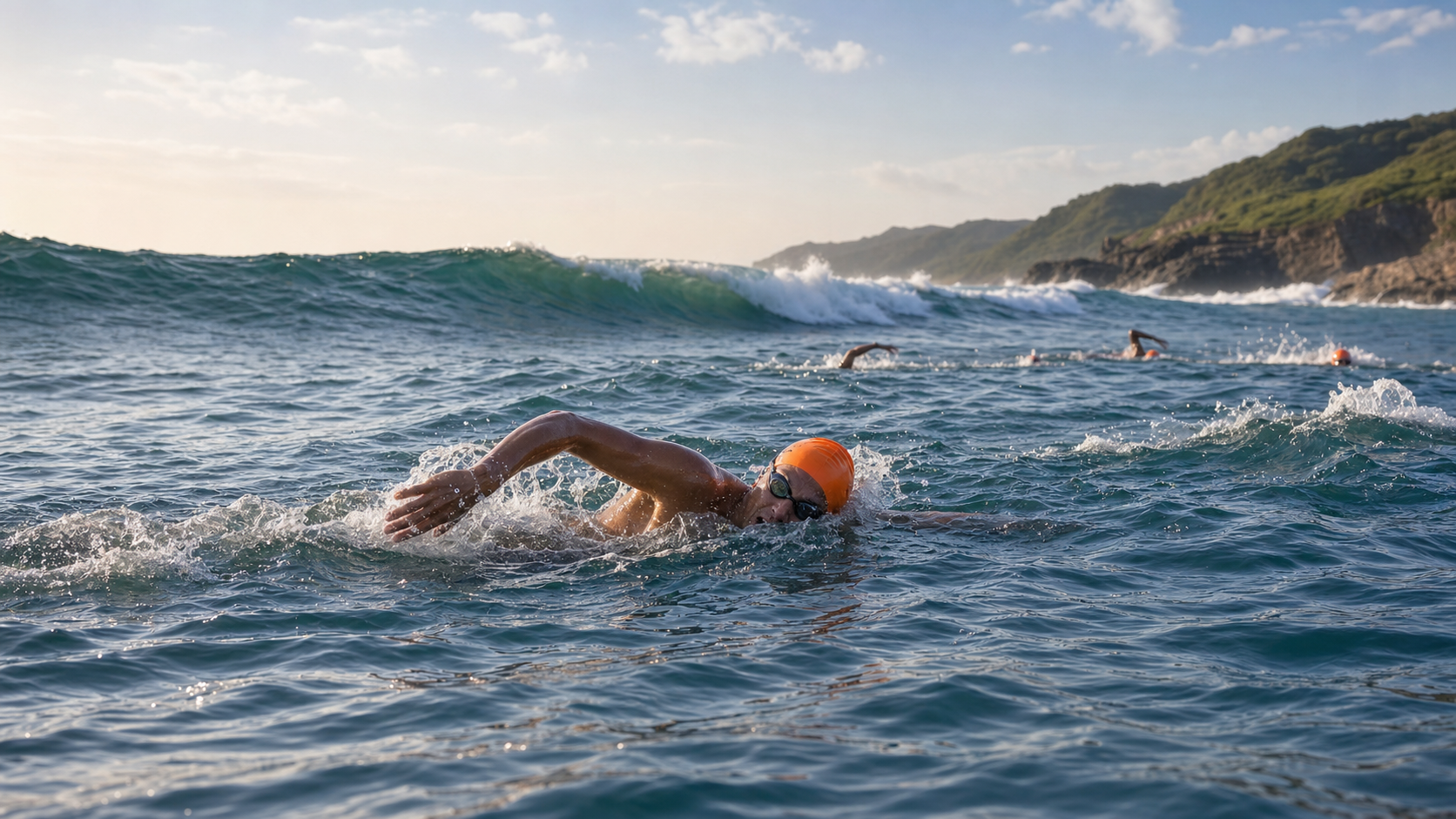
Swimming in Open-Water Waves: Technical Differences Between Swimming with, Against, and Across the Waves
Introduction
Surrounded by the sea on all sides, Taiwan presents open-water swimmers with a rich array of challenges: the long-period swells carried by the Kuroshio Current on the east coast, the short, choppy breakers of the Taiwan Strait on the west coast, and the lingering aftermath of typhoons that keeps the sea unsettled for days. For many, the first real swim in ocean waves is both exhilarating and terrifying—when a wave hits, you don’t know whether to hold your breath or breathe, whether to lower your head or lift it. This article systematically breaks down the technical choices for three wave-direction scenarios, helping you turn the waves into an ally rather than an obstacle.
1. Understanding the Basic Types of Waves
Before learning the techniques, let’s first understand the three common wave conditions in Taiwan:
| Wave Type | Characteristics | Common Locations in Taiwan |
|---|---|---|
| Swell | Long period, gentle undulation, high energy | East coast, Kenting |
| Breaking Wave | Short period, white-capping crests, strong impact | West coast, southern bays |
| Wind Wave | Irregular, shifting directions | Anywhere when winds are strong |
2. Swimming with the Waves
Swimming with the waves (waves pushing from behind) is the most favorable sea condition for athletes, but it requires technique to make the most of it:
- Timing: Feel the rising phase of the wave, increase your stroke rate to ride the push of the crest, like “catching a wave” in surfing
- Forward body lean: Keep your head slightly low, keeping your body parallel to the wave surface to reduce the chance of being flipped over
- Stronger kick: Kick harder at the crest to extend your glide time on the wave face
- Watch for the trough: Stay steady in the trough, avoiding over-breathing that disrupts your rhythm
Pro tip: During training, try to feel the rhythm of “a forward surge every few strokes” and learn to anticipate the wave period.
3. Swimming against the Waves
Swimming against the waves (heading into the wave face) is the most physically demanding, and proper technique can significantly reduce energy expenditure:
- Lower your waterline: Keep your body as low beneath the surface as possible, letting the wave wash over your head rather than hitting you head-on
- Break through the wave wall: When facing an imminent breaking wave, use a “dolphin dive”—lean forward and pierce through the wave with both arms extended
- Tuck and submerge: Take a deep breath the instant the breaker hits, submerging your entire head until the wave passes
- Control your rhythm: Don’t force a breath when a wave hits; choose the trough period to breathe
4. Swimming across the Waves
Swimming across the waves is the most demanding condition for breathing technique, because waves coming from the side often arrive right on the side where you breathe:
- Bilateral breathing: In side waves, you must be capable of bilateral breathing, choosing to breathe on the side of the lower wave
- Body roll: Use the natural body roll of the front crawl to turn the breathing-side face slightly away from the wave surface
- Adjust breathing timing: Switch to breathing every 3 or 5 strokes for greater flexibility
- Asymmetric stroke: In big waves, slightly shorten the stroke on the side the wave comes from, keeping your body underwater a moment longer
5. Practical Advice
Training tips:
- Beginners should practice standing stability against breaking waves in knee-deep shallow water before gradually moving deeper
- Advanced practice: Swim back and forth in the wave zone, deliberately practicing breathing as waves arrive
- Use a surfboard to practice “reading the waves,” which helps you understand wave periods and energy direction
Pre-race assessment:
- When waves exceed 1 meter (or chest height) with irregular periods, avoid swimming alone in the sea unless necessary
- The night before a race, check the marine forecast on Windy or the Central Weather Administration, paying special attention to the swell period (swells with periods over 10 seconds carry particularly high energy)
Conclusion
The waves are not an enemy—they are a teacher. Every time a wave knocks you over is an opportunity to read the ocean. From borrowing power from following waves, piercing through opposing waves, to adjusting your breathing in side waves, the techniques for these three wave directions form the core skills of open-water swimming. Spend time honing these skills in real sea conditions, and you’ll find yourself increasingly enjoying the ocean rather than fighting it.
Related Reading
- Adapting to Waves and Currents in Sea Swimming: Technical Essentials for Swimming along Taiwan’s Coast
- Swimming in Waves: Techniques for Leveraging Wave Power and Coping Strategies
- Open-Water Wave Swimming Techniques: Utilizing Wave Rhythm and Managing Energy Expenditure
- Wave Swimming Techniques: Dancing with the Waves Instead of Fighting Them
2023桃園團體繞圈賽 / 海鷗繞圈賽 | 全程空拍數據版 | 公路車 | CT Yeh
2 年前
大武山後門26%歡樂陡坡!JJSC南台灣單車行Day2 / 被颱風追著跑 / 公路車 / CT Yeh
2 年前
一日北高前的西濱集訓 | 跟著11小時軍團 | 300W踩不動的大逆風 | 輪車破風差幾瓦?
6 年前
2025 海鷗團體繞圈賽 網路直播 超激烈裁判長視角 / EIPC 李廷威、Waypoint 等眾多高手競爭 / feat. 卡密兒主持 / 海鷗繞圈賽
9 個月前
單車 梅山36灣 坡度介紹 路段介紹 空拍 (相關遊記影片,請參考說明或我的頻道喔,歡迎訂閱)
6 年前
一起升級!海鷗盃LSD團練...JJSC Zone2招待 騎到手抖 / 公路車 / CT Yeh
1 天前
虎豹潭!日本老師來台一日約騎 台灣車友熱情招待私房路線 / CT Yeh
20 天前
CT 喇低賽) 武嶺牽車 才是王道 西進牽車四小時內秘訣 攝手位置 如何判斷 防抽筋小秘訣
7 年前