The Complete Guide to Plantar Fasciitis: Treatment Strategies and Training Adjustments for the Most Common Foot Injury in Runners
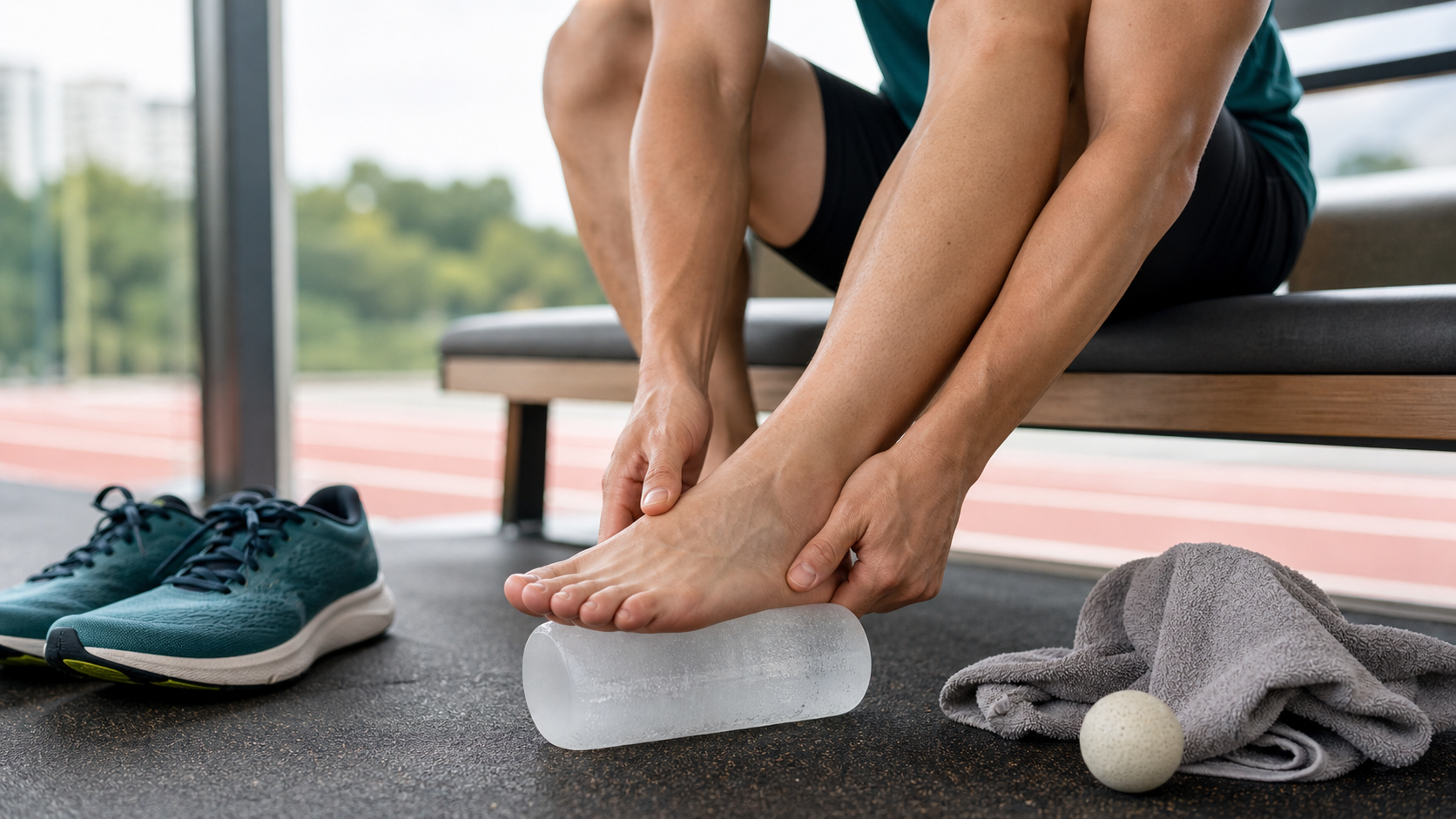
Plantar Fasciitis: It’s Not “Inflammation,” It’s “Degeneration”
The first step out of bed in the morning brings a sharp pain in the heel, which eases slightly after a few minutes of movement, only to return after prolonged standing or running—this is the classic trilogy of plantar fasciitis. Interestingly, modern sports medicine has gradually renamed this condition “Plantar Fasciopathy,” because tissue biopsy studies show that the pathological changes in the chronic phase involve collagen disarray and neovascularization, rather than the typical inflammatory cell infiltration. This shift in understanding directly influences treatment strategies.
Anatomy and Biomechanics
The plantar fascia is a thick fibrous band extending from the calcaneal tuberosity to the base of the five toes. Its primary functions are to maintain the arch of the foot and to store and release elastic energy. With every step, as body weight is transmitted through the heel to the plantar fascia, the fascia endures a tensile force of approximately 1.3–2.9 times body weight. This figure is even higher during running.
Common Risk Factors
| Risk Factor | Clinical Significance |
|---|---|
| Tight gastrocnemius/soleus muscles | Restricted ankle dorsiflexion, causing compensatory stress on the plantar fascia |
| High or low arch | Alters the distribution of force on the fascia |
| BMI > 25 | Increased load from body weight |
| Sudden increase in training volume | Insufficient time for tissue adaptation |
| Prolonged barefoot walking on hard surfaces | Lack of cushioning and support |
| Worn-out running shoes (> 800 km) | Reduced cushioning |
Confirming the Diagnosis
Key Clinical Diagnostic Points:
- Heel pain on the first step in the morning (diagnostic sign, sensitivity approximately 80%)
- Marked tenderness over the proximal plantar fascia (1–2 cm anterior to the calcaneal attachment)
- Positive Windlass Test: passively dorsiflexing the great toe in a standing position; if this reproduces heel pain, the test is positive
In terms of imaging, X-rays may reveal a heel spur, but the spur itself is not necessarily the source of pain; ultrasound can assess fascial thickness (>4 mm is abnormal), while MRI is more valuable for ruling out stress fractures.
Phased Rehabilitation Plan
Phase 1: Acute Symptom Control (Weeks 1–2)
Primary Goal: Reduce pain and prevent worsening
- Ice massage: After running or meals, roll a frozen water bottle under the sole for 15 minutes, providing both ice therapy and massage
- Taping: Low-Dye Taping to reduce tension on the fascia
- Temporarily reduce running volume by 30–50%, substituting with swimming or cycling
- Switch to insoles with arch support and avoid barefoot walking
Phase 2: Tissue Loading Training (Weeks 3–8)
Eccentric and isometric training currently has the strongest evidence base:
Calf Raise + Towel Toe Curl:
- Stand on the edge of a step, rise onto your toes (2 seconds up) → slowly lower until your heel drops below the step (4 seconds down)
- Perform 3 sets × 15 reps daily for 12 weeks
- Increase load by 5–10% every 2 weeks
Isometric Ankle Dorsiflexion Resistance Training: Place your foot against a resistance band and hold maximal dorsiflexion for 10–30 seconds, 3–5 times daily. This can rapidly relieve acute pain (ideal to perform immediately after waking)
Towel Toe Curls: Before getting out of bed each morning, use your toes to scrunch a towel 50 times to activate the intrinsic muscles of the foot
Phase 3: Functional Recovery (Weeks 9–16)
- Single-leg rope jumping: Start at low intensity and assess tolerance
- Return to running: Use a run-walk approach, initially running 10 minutes followed by 5 minutes of walking
- Improve gastrocnemius flexibility: Static lunge stretch against a wall, 3 sets × 30 seconds
Night Splint
During sleep, the foot naturally rests in a plantarflexed position, allowing the fascia to heal in a shortened state, which contributes to the tearing sensation on the first step in the morning. A night splint maintains the ankle in a neutral to slightly dorsiflexed position (5–10 degrees), allowing the fascia to heal in a lengthened position.
Usage Guidelines:
- Wear time: Throughout the night; initial sleep disruption is possible and requires a 2-week adaptation period
- Duration: Recommended for 8–12 consecutive weeks
- Studies show it can shorten the time to pain relief by approximately 4–6 weeks
Principles for Adjusting Running Training
Complete cessation of running is not necessary, but the following principles should be followed:
- Morning pain NRS score ≤ 3/10: Normal training can continue
- NRS 4–5/10: Reduce volume by 50%, avoid hills and long distances
- NRS > 5/10: Pause running and switch to low-impact training
- Apply ice immediately after every run as a standard procedure
When to Consider Advanced Treatments
If there is no improvement after 12–16 weeks of rehabilitation, the following options may be evaluated:
- Extracorporeal Shock Wave Therapy (ESWT): Well-supported by evidence for chronic plantar fasciopathy; a course of 3–5 sessions is recommended
- Platelet-Rich Plasma (PRP) Injection: Promotes tissue regeneration, with better long-term outcomes than corticosteroid injections
- Corticosteroid injections: Effective in the short term but may accelerate fascial degeneration in the long term; careful evaluation is required
Conclusion
The key to treating plantar fasciitis lies in “providing sufficient load to stimulate tissue remodeling, rather than complete rest and waiting for healing.” With 12 weeks of systematic eccentric training combined with lifestyle adjustments, most runners can fully return to training. Patience in executing the training plan offers greater long-term benefits than seeking quick pain-relief injections.
Related Reading
- Prevention and Treatment of Plantar Fasciitis: A Complete Analysis of Foot Pain in Runners
- Plantar Fasciitis in Runners: A Complete Guide to Causes, Treatment, and Prevention
- Analysis of the Causes of Plantar Fasciitis and a Runner’s Recovery Plan
- The Complete Treatment Pathway for Plantar Fasciitis: From Morning’s First Step Pain to Returning to the Marathon
一日北高常見問題大集合 | 攻略 | 路線 | 訓練 | 補給 | 自行車 單車 | 一日雙城 | 雙塔 | TWB北高360 | 屁股痛
6 年前
一日北高/長距離團騎 常見問題補充篇 / 組團或跟團的眉角 / 壯車友容易被瘦車友慢性拉爆 / 原來屁股痛可能是這個原因...? / 風場配速法 / 公路車 / CT Yeh
2 年前
單車 一日北高 ( 雙城 ) 肥宅雙人瘋狂行 紀錄片 REACTO
10 年前
Never Stop 西進武嶺 前後雙機 完整全程錄影 訓練台 實境
8 年前
[教學] Premiere 影片 手震 修正 教學 防抖 單眼 影像 GoPro 穩定 Video Stabilization
8 年前
摔車後補裝備: 好市多新款單車安全帽& Specialized Romin 北高整路屁股都不痛的坐墊 | 一千元居然有MIPS | CT Yeh | 公路車
4 年前
CT 喇低賽) 武嶺牽車 才是王道 西進牽車四小時內秘訣 攝手位置 如何判斷 防抽筋小秘訣
7 年前
iPhone內建一秒變長腿🤣 車友必備#cycling
2 年前