Running-Related Stress Fractures: Six Early Warning Signs and Evidence-Based Return-to-Running Timing
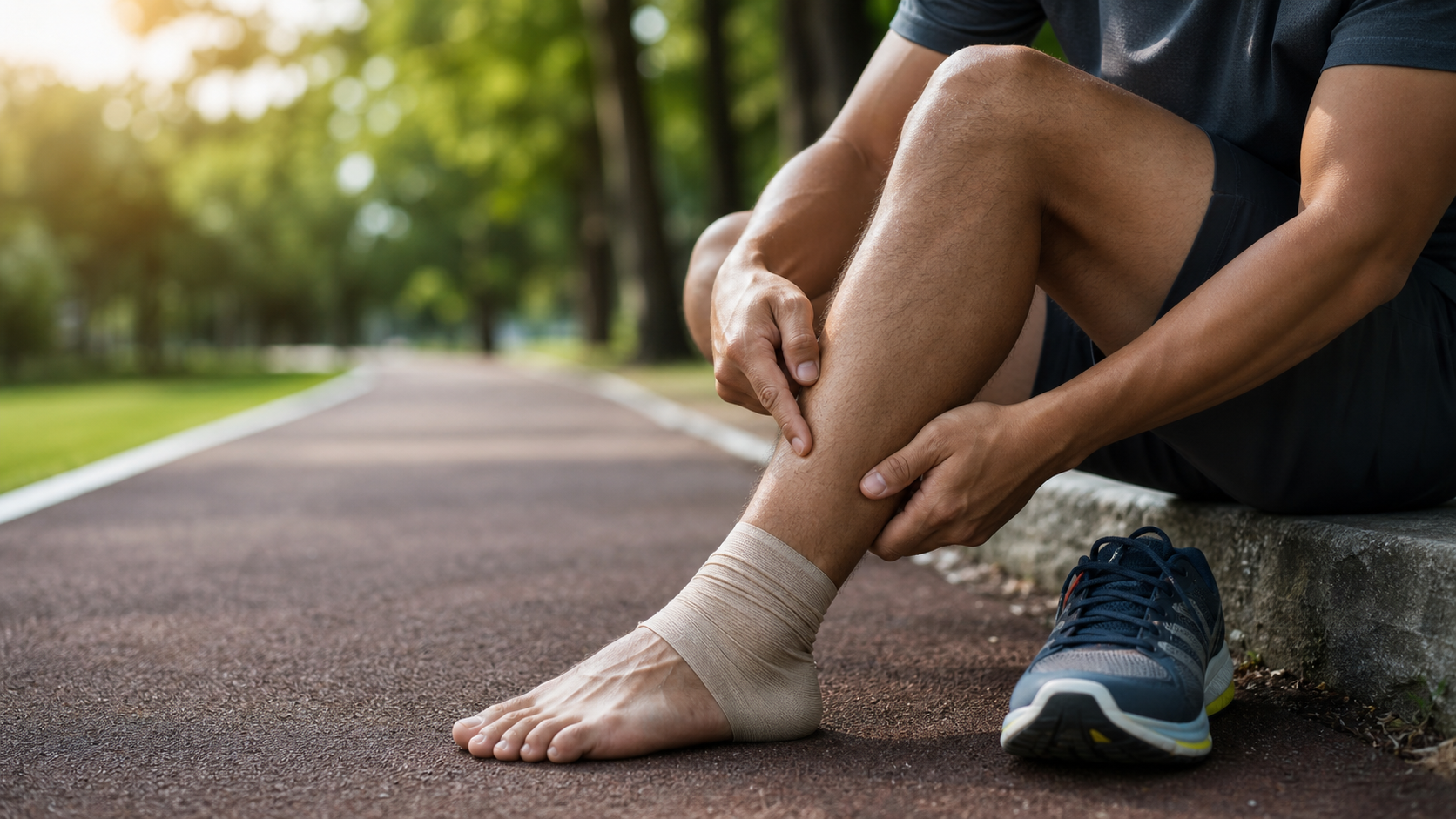
The Overlooked Danger Signals
“Just run through it” — this mindset may hold some truth for many running injuries, but for stress fractures, such an attitude can lead to a complete fracture, potentially requiring surgery. Stress fractures account for 10–15% of all running injuries. They result from repeated mechanical loading on bone, where osteoblast repair cannot keep pace with osteoclast resorption, leading to the accumulation of microcracks.
The problem is that early stress fracture symptoms closely mimic ordinary muscle fatigue or medial tibial stress syndrome (MTSS), causing many runners to miss the golden window for treatment.
High-Risk Sites for Stress Fractures in Runners
| Site | Percentage | Risk Level | Notes |
|---|---|---|---|
| Mid-to-distal tibia | ~33% | Low–moderate | Most common; responds well to conservative treatment |
| Metatarsals (2nd and 3rd) | ~20% | Low–moderate | More common in female runners |
| Fibula | ~12% | Low | Best prognosis |
| Navicular | ~10% | High | Poor blood supply; high non-union risk |
| Femoral neck | ~7% | Very high | Compression-side fractures require immediate surgical evaluation |
| Base of 5th metatarsal | ~5% | High | Jones fracture; difficult healing |
| Sacrum | ~5% | Moderate | Female long-distance runners should take note |
Six Early Warning Signs
If two or more of the following six characteristics are present, a stress fracture should be highly suspected:
1. Localized “pinprick” pain during running
Unlike the diffuse pain of MTSS, stress fracture pain typically has a distinct, localized point spanning < 3 cm.
2. Pain completely resolves the next day at rest, but returns at the very start of a run
MTSS usually “improves after warming up,” whereas stress fracture pain appears almost as soon as running begins.
3. Pinpoint tenderness on local palpation
Compared with surrounding tissue, the tender point of a stress fracture is highly localized, with noticeable discomfort even under light pressure.
4. Pain worsens after 10 single-leg hops (positive Hop Test)
Single-leg hopping increases axial loading on bone and serves as a simple clinical screening tool.
5. Pain at rest during the night
Most running injuries ease with rest, but the bone marrow edema of a stress fracture may cause a dull ache at night.
6. Positive Tuning Fork Test
Placing a 128 Hz tuning fork over the fracture site; if it triggers more intense vibratory pain than normal, it strongly suggests cortical bone damage.
Choosing Imaging Diagnostics
| Imaging Tool | Early Sensitivity | Characteristics |
|---|---|---|
| X-ray | Low (high early false-negative rate) | First-line; rules out complete fracture |
| Bone scan | High | Higher radiation exposure; lower cost |
| MRI | Very high | Gold standard; no radiation; allows grading |
| CT | Moderate–high | Suitable for preoperative assessment; higher radiation |
Important note: X-rays may not show periosteal reaction until 2–3 weeks after injury; an early negative result cannot rule out a stress fracture. If suspicion is high, proceed directly to MRI.
Risk Stratification and Management Strategies
Low-risk sites (tibia, fibula, metatarsal shafts):
- 4–8 weeks of non-running weight-bearing activity (walking, swimming, deep-water running)
- No cast immobilization required, but stiff-soled shoes or a walking boot are necessary
- Assess symptom improvement weekly
High-risk sites (navicular, femoral neck, base of 5th metatarsal):
- Immediate non-weight-bearing (no walking), using crutches
- Urgent evaluation by orthopedics or sports medicine
- Possible surgical fixation (especially for compression-side femoral neck fractures)
The Female Athlete Triad
Female runners with recurrent stress fractures should be evaluated for Relative Energy Deficiency in Sport (RED-S) risk:
- Inadequate caloric intake (dietary restriction)
- Menstrual cycle disturbances (amenorrhea, irregular periods)
- Decreased bone mineral density
When all three coexist, stress fracture risk increases significantly, requiring multidisciplinary intervention (sports medicine + nutrition + gynecology).
A Scientific Timeline for Returning to Running
Five-step return-to-running assessment (do not skip any step):
- Pain-free walking for 30 minutes: Confirms baseline load tolerance
- Pain-free single-leg stand for 30 seconds: Confirms ankle joint and bone proprioception
- Pain-free 10 single-leg hops: Confirms impact load tolerance
- Pain-free 10-minute jog: Confirms running load tolerance
- MRI or bone scan confirming healing signals: Imaging confirmation is mandatory for high-risk sites
Progressive principles after returning to running:
- Week 1: Daily mileage no more than 25% of original training volume
- Week 2: If asymptomatic, increase to 40%
- Weeks 3–4: Weekly increase no more than 10%
- Avoid speed work and interval training for the first 8 weeks
Conclusion
The prognosis for a stress fracture depends entirely on the timing of diagnosis. “Gritting through the pain” could turn a 6-week conservative treatment into a 3-month surgical recovery. Learning to recognize the six early warning signs and seeking sports medicine evaluation immediately when suspicious symptoms appear is essential knowledge for every runner. Better to run less for a month than to let a fracture become complete and derail your entire year’s training plan.
Related Reading
- Stress Fractures: The Skeletal Warning Sign of Overtraining
- Early Identification of Stress Fractures: From Tibial Tenderness to Imaging Confirmation
- Identifying and Preventing Running-Related Stress Fractures: Considerations for High-Risk Groups
- Fatigue Fractures in Road Running: How to Distinguish Stress Fractures by Pain Characteristics
西進武嶺 免費訓練分析服務 Intervals | 練不夠還是練過頭?你哪一種類型選手?AI模型告訴你! | 備戰神器 | 公路車 訓練 | CT Yeh
4 年前
CT 喇低賽) 武嶺牽車 才是王道 西進牽車四小時內秘訣 攝手位置 如何判斷 防抽筋小秘訣
7 年前
摔車後補裝備: 好市多新款單車安全帽& Specialized Romin 北高整路屁股都不痛的坐墊 | 一千元居然有MIPS | CT Yeh | 公路車
4 年前
Never Stop 西進武嶺 前後雙機 完整全程錄影 訓練台 實境
8 年前
一日北高常見問題大集合 | 攻略 | 路線 | 訓練 | 補給 | 自行車 單車 | 一日雙城 | 雙塔 | TWB北高360 | 屁股痛
6 年前
一日北高/長距離團騎 常見問題補充篇 / 組團或跟團的眉角 / 壯車友容易被瘦車友慢性拉爆 / 原來屁股痛可能是這個原因...? / 風場配速法 / 公路車 / CT Yeh
2 年前
爬陡坡被爆胎的車友跑步超車 #cycling #里佳部落
9 個月前
FTL 與 SYB 車隊專訪 西進武嶺 實用攻略分享! 2小時 如何練?!你不知道的眉角!新手準備武嶺必看 EP1 | 實力派女車友 | 精華版 | 公路車 | CTYeh
4 年前