The Science of Running Recovery: Comparing the Benefits of Cold Water Baths, Foam Rolling, and Massage, and the Best Timing for Use
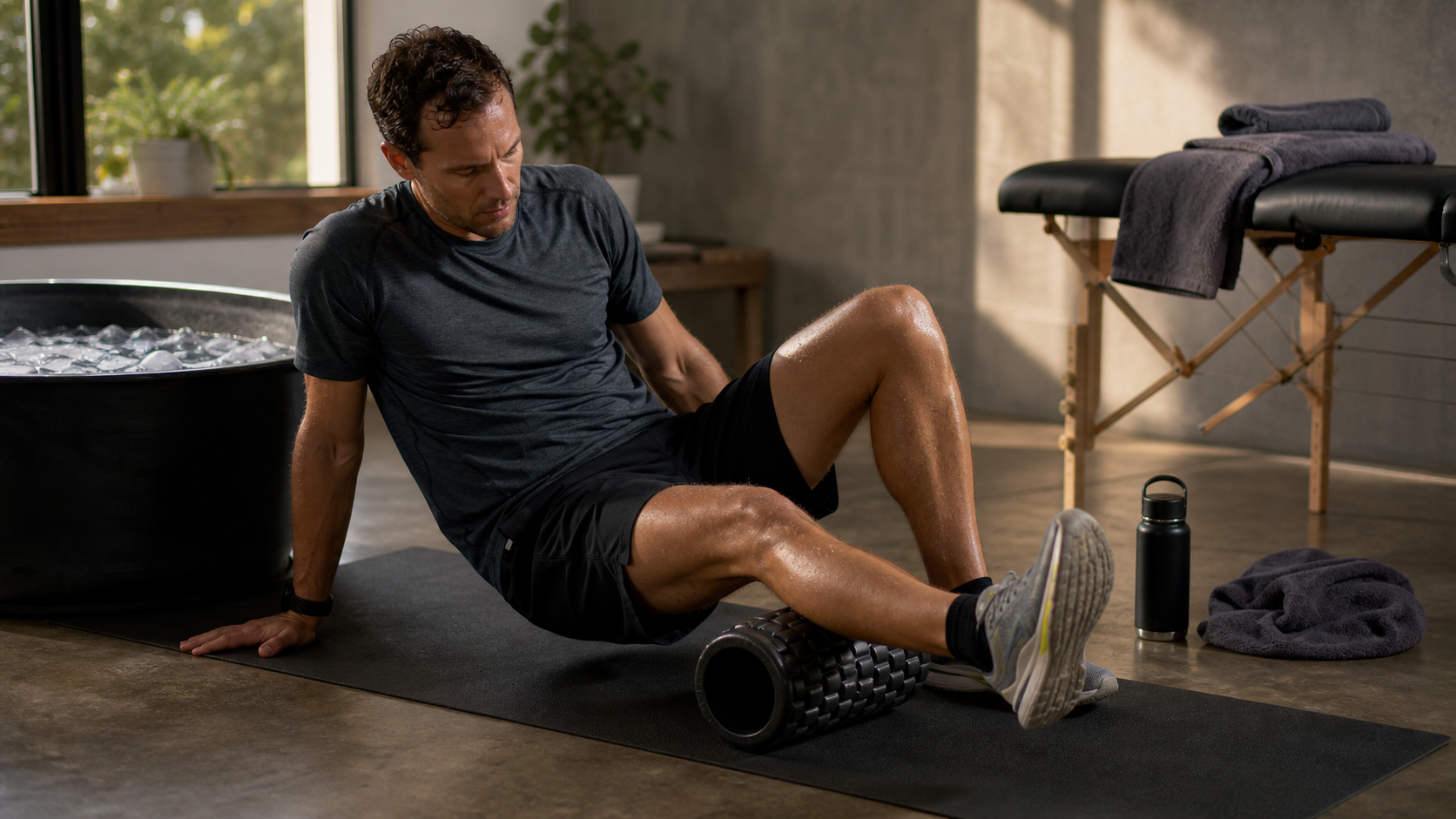
Recovery: The Other Half of Training
“Training makes you progress; recovery makes that progress real.” This saying is almost common knowledge in the professional sports world, but for the average runner with limited time, training often gets 99% of the attention, while recovery gets only 1%.
Understanding the scientific principles and practical benefits of different recovery tools can help runners make the most effective recovery investments within their limited time.
The Physiological Basis of Muscle Damage
The muscle damage caused by running (especially long distances or downhill running) is primarily Delayed Onset Muscle Soreness (DOMS), which works as follows:
- Eccentric contractions (such as downhill running) cause micro-tears in muscle fibers
- A local inflammatory response is triggered (white blood cell infiltration, cytokine release)
- Swelling, stiffness, and pain appear 24–72 hours later
The goal of various recovery tools is mainly to shorten the duration of the above process, or to alleviate the discomfort it brings, so that training capacity can be restored more quickly.
Comparison of the Benefits of Three Main Recovery Tools
1. Cold Water Immersion (CWI)
Principle: Immersion in cold water (8–15°C) causes vasoconstriction, reducing local blood flow and the accumulation of inflammatory substances. As temperature rises afterward, reperfusion enhances the efficiency of waste removal.
Research findings:
- Systematic review (Cochrane, 2012): Compared to passive rest, cold water immersion significantly reduces DOMS, especially 24–96 hours after exercise
- Duration effect: 10–15 minutes is superior to longer durations
- Perceived fatigue improvement: Subjective fatigue (RPE) is noticeably reduced
Usage recommendations:
- Water temperature: 10–15°C
- Duration: 10–15 minutes
- Timing: Most effective within 30 minutes after a race or high-intensity training session
- Note: Long-term use of cold water immersion after training may suppress the adaptive signals for muscle hypertrophy. It is not recommended after every training session; reserve it for important races or during consecutive race periods
2. Self-Myofascial Release with Foam Rolling
Principle: Sustained pressure reduces the viscoelasticity of the fascia, influences neural receptors (Golgi tendon organs) to lower muscle tension, and promotes local blood circulation.
Research findings:
- Significant improvement in DOMS symptom relief (pain, swelling sensation)
- Short-term increase in range of motion (ROM) is effective, but the effect lasts a relatively short time (about 20–30 minutes)
- Acute effects on strength performance: using high-intensity rolling before strength work may slightly reduce muscle strength, but low-to-moderate intensity does not affect it
| Foam Roller Characteristics | Benefits |
|---|---|
| High-density (firm) foam | Deeper pressure, suitable for large muscle groups (quadriceps, back) |
| Low-density (soft) foam | Suitable for beginners or sensitive areas |
| With raised massage bumps | Targets specific trigger points, more concentrated pressure |
| Vibrating foam roller | Some studies show it is more effective than non-vibrating types, but the difference is small |
Usage recommendations:
- Speed: Roll slowly (about 1 cm/sec); when you find a tender point, hold for 30–60 seconds
- Pressure: Aim for a “comfortable soreness,” around 4–5/10 on the NRS; excessive pain may trigger protective tension instead
- Timing: After runs or on dedicated recovery days
- Pre-run use: Low-pressure, fast rolling (2 cm/sec) can aid warm-up
Situations where it is not suitable: Acute sprains, fractures, deep vein thrombosis, or areas with skin infections
3. Massage Therapy
Principle: Manual or mechanical pressure improves blood and lymphatic circulation, reduces muscle tension, and influences nervous system regulation, potentially promoting parasympathetic dominance (a recovery state).
Research findings:
- The most consistent benefit is improved subjective recovery perception (strong psychological relaxation effect)
- DOMS: Mild to moderate improvement, similar to cold water immersion
- Strength recovery: Some studies show that strength tests performed after massage are slightly better than after passive rest
- Optimal timing: 2–6 hours after exercise (not immediately, to avoid interfering with early repair signals)
Main limitations:
- Requires time and cost
- Effectiveness is highly dependent on the practitioner’s skill
- Self-massage (massage balls, massage sticks) is about 60–70% as effective as professional massage
Integrated Comparison of Recovery Tools
| Recovery Tool | Strength of Evidence | Main Benefits | Optimal Timing | Cautions |
|---|---|---|---|---|
| Cold water immersion | Moderate–High | DOMS, perceived recovery | Immediately after races | Do not use frequently after daily training |
| Foam rolling | Moderate | ROM, DOMS symptoms | After runs or on recovery days | Avoid excessive pressure |
| Professional massage | Moderate | Subjective recovery, psychological | 2–6 hours after training | Higher cost |
| Sleep | Very High | Comprehensive repair | Every night | The most underestimated recovery tool |
| Active recovery (jogging/swimming) | High | Lactate clearance, circulation | The day after training | Intensity must be low |
The Most Underestimated Recovery Tool: Sleep
Among all recovery tools, the one with the strongest research support and the most comprehensive benefits is sleep. The peak secretion of growth hormone (GH) occurs during deep sleep, and muscle protein synthesis, bone repair, and neural plasticity all depend on adequate sleep.
Recommendations for runners:
- 7–9 hours of sleep per day
- During high training volume periods, an additional 30–60 minutes may be added
- In the 2–3 days before a race, prioritize sleep quality rather than trying to “make up” for it with various recovery tools
Recommendations for a Personalized Recovery System
After daily training (easy runs): Foam rolling for 10 minutes + static stretching for 10 minutes
After high-intensity training or long runs: Cold water immersion for 10 minutes → static stretching for 15 minutes → adequate nutritional intake
After races (full/half marathon): Cold water immersion → massage (24–48 hours later) → low-intensity active recovery for the first 5 days → adequate sleep
Conclusion
There is no magic bullet among recovery tools, and there is no need to use them all. Choosing the 1–2 most effective tools based on training intensity, combined with non-negotiable adequate sleep, delivers more tangible results than a wide array of elaborate recovery rituals. Remember: training stimulates you; recovery makes you stronger.
Related Reading
- Recovery Strategies After Running: The Science of Ice Baths, Massage, and Sleep
- Cold Water Immersion Recovery: Research on the Duration and Anti-Inflammatory Benefits of 10°C Cold Baths
- Recovery Strategies for Long-Distance Runners: The Science of Foam Rolling, Stretching, and Compression Tights
- Cold Water Immersion vs. Ice Baths: Key Differences in Temperature and Duration
西進武嶺 免費訓練分析服務 Intervals | 練不夠還是練過頭?你哪一種類型選手?AI模型告訴你! | 備戰神器 | 公路車 訓練 | CT Yeh
4 年前
摔車後補裝備: 好市多新款單車安全帽& Specialized Romin 北高整路屁股都不痛的坐墊 | 一千元居然有MIPS | CT Yeh | 公路車
4 年前
CT暗黑廚房) 車友必備 宇宙無敵鮮蚵湯 幫助訓練恢復 天然食補 好市多 超肥鮮蚵 破PR
7 年前
實景訓練台) 彰化經典百K 高強度喵團 90分鐘 跟著一起練功 2019 Indoor workout Changhua Classic 100 Taiwan
7 年前
類空拍神器 Feiyu Pocket 2s (有優惠連結)三軸穩定 運動攝影機 開箱!比GoPro 還強的滑順視角!三小時長時間錄影 行車記錄器 | 環花東365實測 | 公路車 CT Yeh
4 年前
Insta360/DJI做不到的!如何製作「騎士頭頂瓦數特效」單車影片?CycleDash 完整教學 / 超強批次影片數據疊加軟體
12 天前
洗單車神器 吹水機! 實際洗車用用看 暴力洗鍊條大法 | 公路車 | CT Yeh
4 年前
2016/05/13 單車 冷水坑下滑
10 年前