Cardiovascular Benefits of Swimming: Scientific Evidence for Aerobic Capacity Improvement and Blood Pressure Control
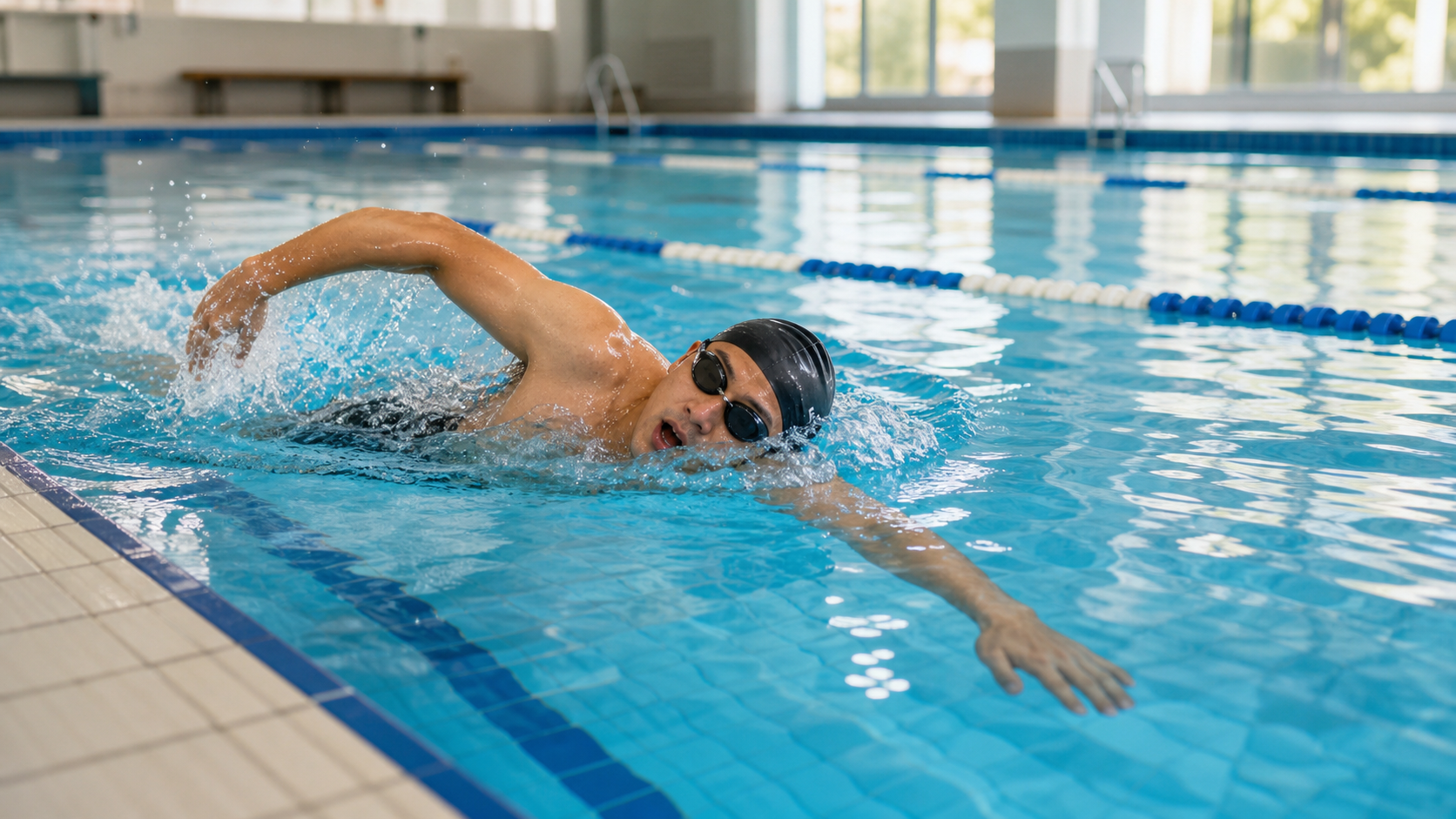
Cardiovascular Benefits of Swimming: Scientific Evidence for Aerobic Capacity Improvement and Blood Pressure Control
Introduction
Among the many forms of aerobic exercise, swimming holds a unique position: the buoyancy of water eliminates joint weight-bearing stress, water resistance provides whole-body muscular stimulation, and water’s thermal conductivity accelerates heat dissipation, allowing individuals to maintain a lower heart rate and perceived temperature even during high-intensity training. These characteristics make swimming a highly effective aerobic exercise that can be safely performed by the elderly, obese individuals, and arthritis patients alike.
But the cardiovascular benefits of swimming go far beyond this—research from around the world is uncovering swimming’s profound effects on the heart, blood vessels, and metabolic system. This article will walk you through this scientific evidence and show you how to maximize the cardiovascular health benefits of swimming.
How Does Swimming Train the Heart?
Cardiac Adaptation: The Formation of the Athlete’s Heart
Regular swimming training induces beneficial structural changes in the heart, known as “Exercise-induced Cardiac Hypertrophy”:
- Increased left ventricular volume: The heart can pump more blood with each beat (increased stroke volume)
- Lower resting heart rate: Well-trained swimmers can have resting heart rates as low as 50–60 beats per minute or even lower
- Improved myocardial contractile efficiency: At the same oxygen consumption, the heart can perform more work
Comparison with Other Aerobic Exercises
| Exercise Type | VO₂max Improvement | Joint Impact | Suitable Populations |
|---|---|---|---|
| Running | High (+15–20%) | High | Healthy adults |
| Swimming | Moderate-high (+10–15%) | Very low | Almost everyone |
| Cycling | Moderate-high (+10–15%) | Low | Healthy adults, individuals with knee injuries |
| Walking | Moderate (+5–10%) | Low | Beginners, elderly |
Research shows that moderate-intensity swimming training (3 times per week, 30–45 minutes per session) sustained for 8–12 weeks can improve VO₂max in average adults by 10–15%, with effects comparable to running training at the same intensity.
Swimming and Blood Pressure Control
Hypertension is one of the most common chronic diseases in Taiwan, with Ministry of Health and Welfare statistics indicating approximately 4.75 million hypertension patients in Taiwan. Regular aerobic exercise is the first-line recommendation for non-pharmacological blood pressure control, and swimming has demonstrated significant blood pressure-lowering effects in multiple studies.
Summary of Research Findings
Multiple systematic review studies show that regular swimming can:
- Lower systolic blood pressure (SBP) by an average of 7–9 mmHg
- Lower diastolic blood pressure (DBP) by an average of 4–5 mmHg
This magnitude of blood pressure reduction is equivalent to the effect of low-dose antihypertensive medication, carrying important clinical significance for patients with stage 1 hypertension (SBP 130–139 mmHg).
Mechanisms of Blood Pressure Reduction
- Improved vascular endothelial function: Exercise increases the production of nitric oxide (NO), enhancing vasodilation capacity
- Autonomic nervous system regulation: Regular exercise reduces sympathetic nervous system activity, decreasing adrenaline’s stimulation of the cardiovascular system
- Improved renal function: Exercise improves the kidney’s sodium excretion efficiency, reducing blood volume
- Reduced arterial stiffness: The indicator measuring arterial stiffness (pulse wave velocity, PWV) is significantly lower in regular swimmers
Swimming’s Effects on Blood Lipids
| Indicator | Effect of Regular Swimming | Clinical Significance |
|---|---|---|
| Total cholesterol | Mild decrease | Reduces atherosclerosis risk |
| LDL (bad cholesterol) | Moderate decrease | Reduces plaque formation |
| HDL (good cholesterol) | Moderate increase | Enhances reverse cholesterol transport efficiency |
| Triglycerides | Significant decrease | Reduces metabolic syndrome risk |
Particularly noteworthy is that swimming’s triglyceride-lowering effect is relatively prominent among aerobic exercises, making it especially therapeutic for individuals with dyslipidemia.
The Unique Advantage of Water-Based Exercise: The Hydrostatic Pressure Effect
When swimmers are immersed in water for extended periods, hydrostatic pressure exerts unique physiological effects on the body:
- Promotes venous return: Water pressure compresses from the extremities toward the heart, increasing venous return
- Reduces cardiac preload: Provides adjunctive benefits for patients with cardiac dysfunction
- Alleviates lower extremity edema: Beneficial for those who stand for long periods at work or patients with mild varicose veins
This is why many cardiologists specifically recommend swimming as a rehabilitation exercise for cardiac patients.
Cardiovascular Benefits of Swimming for Different Populations
Hypertension Patients
Before swimming, patients should confirm their blood pressure control status with their physician. Swimming at moderate-to-high intensity should be avoided when blood pressure exceeds 180/110 mmHg. A “conversational” moderate intensity is recommended as the baseline (heart rate approximately 50–70% of maximum heart rate).
Coronary Artery Disease Patients (Cardiac Rehabilitation Phase)
Under the supervision of cardiac rehabilitation professionals, swimming is an excellent option for post-myocardial infarction rehabilitation. Water temperature should be maintained at 26–30°C, avoiding water that is too cold (which triggers cardiovascular constriction) or too hot (which increases cardiac workload).
Diabetes Patients
Regular swimming can improve insulin sensitivity and aid in blood sugar control. Diabetic patients should carry sugar supplements while swimming and watch for symptoms of hypoglycemia.
Training Recommendations for Maximizing Cardiovascular Benefits
Weekly Goals: At least 150 minutes of moderate-intensity (heart rate 50–70% HRmax) or 75 minutes of high-intensity swimming, meeting the exercise recommendations of Taiwanese and international guidelines.
Heart Rate Control: Heart rate during swimming is generally lower than during running (water’s thermal conductivity lowers body temperature, and hydrostatic pressure reduces venous blood return). At the same perceived exertion level, swimming heart rate is approximately 10 beats per minute lower than running—this difference must be considered when calculating target heart rate.
Interval Training for Accelerated Results: Add 1–2 interval swimming sessions per week (e.g., 25m sprints × 8 sets with 30 seconds rest between sets) to significantly improve VO₂max.
Practical Recommendations
- Monitor blood pressure regularly: Measure once per month and record trends before and after training
- Start with 20 minutes: Beginners or those who have been inactive for a long time should start with 20 minutes of moderate-intensity swimming per session, increasing by 5 minutes each week
- Combine with diet: Pairing aerobic exercise with a Mediterranean diet provides complementary cardiovascular protection benefits
- Don’t rely on swimming alone: Adding resistance training (such as on-land core training) can further improve metabolic health indicators
- For those with a history of heart disease: An exercise ECG (Exercise ECG) assessment is mandatory before starting a regular swimming program
Conclusion
Swimming is a rare cardiovascular workout suitable for all ages—it allows young athletes to break through their aerobic ceiling while enabling retired seniors to protect their hearts safely and effectively. Science has clearly told us: sustained, regular swimming training can significantly lower blood pressure, improve blood lipids, and enhance cardiac performance. You don’t need to become a competitive swimmer—simply keep moving forward in the water, and your heart will reward you with stronger, more powerful beats.
Related Reading
- The Scientific Benefits of Swimming for Cardiovascular Health
- Swimming and Heart Health: Research on the Cardiovascular Benefits of Long-Term Aerobic Swimming
- The Scientific Benefits of Swimming for Cardiovascular Health: What the Research Says
- The Long-Term Benefits of Swimming for Cardiovascular Health: What the Research Says
#公路車 #Vo2Max #最大攝氧量 測驗 體驗 | 心肺測試
6 年前
CT暗黑廚房) 車友必備 宇宙無敵鮮蚵湯 幫助訓練恢復 天然食補 好市多 超肥鮮蚵 破PR
7 年前
一起升級!海鷗盃LSD團練...JJSC Zone2招待 騎到手抖 / 公路車 / CT Yeh
2 天前
西進武嶺 免費訓練分析服務 Intervals | 練不夠還是練過頭?你哪一種類型選手?AI模型告訴你! | 備戰神器 | 公路車 訓練 | CT Yeh
4 年前
[教學] Premiere 影片 手震 修正 教學 防抖 單眼 影像 GoPro 穩定 Video Stabilization
8 年前
靠單車減肥35公斤 心得分享與整理
7 年前
一日北高/長距離團騎 常見問題補充篇 / 組團或跟團的眉角 / 壯車友容易被瘦車友慢性拉爆 / 原來屁股痛可能是這個原因...? / 風場配速法 / 公路車 / CT Yeh
2 年前
抖肩舞 台灣x日本交流版 (台灣 vs 前橋) 赤城山登山賽 coincidance
8 年前