The Complete Guide to Swimming During Pregnancy: Safe Water Temperature, Stroke Selection, Intensity Limits, and Contraindications
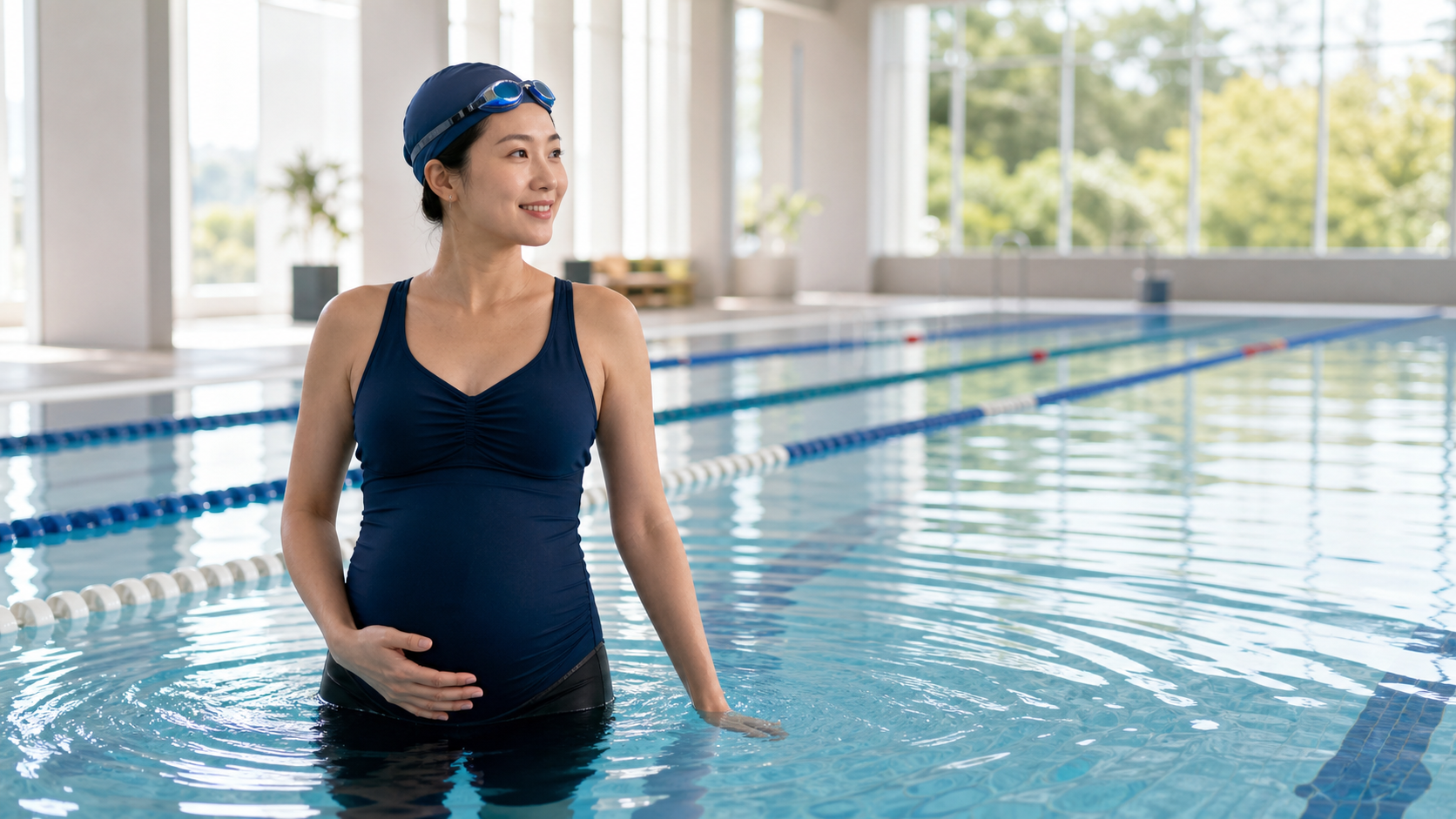
The Complete Guide to Swimming During Pregnancy: Safe Water Temperature, Stroke Selection, Intensity Limits, and Contraindications
Introduction
During pregnancy, many expectant mothers face the same question: “Can I still exercise? Is swimming safe?” In fact, for healthy pregnant women without pregnancy complications, regular moderate-intensity aerobic exercise is both safe and beneficial — this is now the consensus among obstetric professionals.
Swimming is an excellent choice for exercise during pregnancy: the buoyancy of water removes the gravitational load the growing belly places on the lower spine, water resistance provides a full-body workout, and the relatively stable water temperature helps prevent excessive rises in body heat. The American College of Obstetricians and Gynecologists (ACOG) states clearly that swimming during pregnancy is a safe and beneficial exercise option for most pregnant women.
That said, swimming during pregnancy is not entirely without limits. Understanding the correct safety principles is essential reading for every expectant mother who swims.
Benefits of Swimming During Pregnancy
| Benefit | Description |
|---|---|
| Relieves lower back pain | Water’s buoyancy reduces the load on the spine and pelvis, easing the lower back pain common during pregnancy |
| Reduces leg swelling | Hydrostatic pressure promotes venous return, reducing ankle swelling |
| Helps manage pregnancy weight gain | Aerobic activity burns calories, helping to avoid excessive weight gain |
| Improves sleep quality | Regular exercise supports better sleep at night |
| Lowers the risk of gestational diabetes | Improves insulin sensitivity |
| Eases pregnancy-related anxiety | Exercise-induced endorphins improve mood |
| Maintains cardiorespiratory fitness | Helps prepare the body for the physical demands of labor |
Medical Clearance: When Is Swimming Not Appropriate?
You must inform your obstetrician before swimming. The following conditions may require you to pause or avoid swimming altogether:
- Placenta previa (low-lying placenta)
- Unexplained vaginal bleeding
- Premature rupture of membranes (water breaking early)
- Signs of preterm labor (frequent contractions)
- Cervical insufficiency
- Gestational hypertension or preeclampsia
- Multiple pregnancy (twins or more)
- Severe anemia
Even without any of the above conditions, you should still inform your doctor about your exercise habits at every prenatal checkup.
Swimming Guidelines by Trimester
First Trimester (Weeks 1–12)
Characteristics: The placenta has not fully formed yet, so the risk of miscarriage is relatively higher; early morning sickness may also affect your motivation to exercise.
Swimming principles:
- If you have no nausea or discomfort, you can maintain your pre-pregnancy swimming routine
- Keep the intensity at a level where you can “comfortably hold a conversation” (Borg Rating of Perceived Exertion 11–13, light to moderate)
- Avoid high-intensity sprints or competitive training
- If experiencing severe morning sickness, pause swimming until symptoms ease
Heart rate guidance: Target heart rate should not exceed 140 beats per minute (this is the traditional recommendation; more recent research suggests healthy pregnant women may reach 60–70% of maximum heart rate, but the conservative guideline of 140 bpm as an upper limit is still recommended)
Second Trimester (Weeks 13–28)
Characteristics: Morning sickness eases for most expectant mothers and energy levels recover; the belly begins to noticeably grow, affecting movement patterns.
Swimming principles:
- This is the “golden period” for swimming during pregnancy — energy is high and the belly is not yet too large
- 30–45 minutes per session, 3–4 times per week
- Start adjusting your stroke: prone positions (such as freestyle) may become uncomfortable, so gradually increase the proportion of backstroke
- Be mindful with breaststroke kicks: some pregnant women experience pubic symphysis pain, and should stop breaststroke if this occurs
Third Trimester (Weeks 29–40)
Characteristics: The belly grows significantly, the center of gravity shifts forward, and balance decreases; fatigue increases; extra caution is needed as you approach your due date.
Swimming principles:
- Further reduce intensity, focusing on easy swimming and walking in water
- Keep sessions to no more than 30 minutes
- Avoid movements that require quick turns or put pressure on the abdomen
- Diving is not recommended (not appropriate at any stage of pregnancy)
- After week 36, check for any signs of contractions before each swim
Safe Water Temperature: Core Body Temperature Is Key
Overheating during pregnancy (a core body temperature above 39°C) may affect fetal neural tube development, with the greatest impact occurring during the first trimester (the first 12 weeks).
| Water temperature range | Safety | Description |
|---|---|---|
| 26–30°C | Safe | The most suitable water temperature range for swimming during pregnancy |
| 30–33°C | Acceptable | Light swimming is acceptable; intensity should not be too high |
| Above 33°C | Use caution | In warmer pools, keep intensity controlled and avoid high-intensity swimming |
| Above 37°C (hot springs/hot tubs) | Avoid | Hot springs and hot tubs should be avoided during pregnancy |
Note: Seawater and lake water carry a higher risk of infection; for swimming during pregnancy, it is recommended to choose an indoor pool with properly managed water quality.
Guide to Choosing a Stroke
Most recommended: Backstroke
- No pressure on the abdomen, and facing upward avoids breathing anxiety
- Easy to control intensity
- Suitable at any stage of pregnancy (though lying on your back for too long in the third trimester may compress the inferior vena cava — sit up immediately if you feel dizzy)
Recommended: Freestyle
- Suitable during the first and second trimesters; lying prone may become uncomfortable in the third trimester
- Using a kickboard can reduce the discomfort of the prone position
Recommended with caution: Breaststroke
- Watch for signs of pubic symphysis pain and stop immediately if it occurs
- In the third trimester, the breaststroke kick places more pressure on the pubic symphysis, so backstroke is recommended as an alternative
Best to avoid: Butterfly
- Places significant strain on the lower spine and is not suitable during pregnancy
Self-Monitoring Signs While Swimming
Stop swimming immediately and seek medical attention if you experience:
- Vaginal bleeding or fluid leakage
- Sudden abdominal pain or regular contractions
- Severe headache or blurred vision
- Chest pain or severe difficulty breathing
- A sudden, noticeable decrease in fetal movement (second and third trimesters)
- Dizziness or a feeling of nearly fainting
Practical Tips
- Stay hydrated before and after swimming: Pregnant women are prone to dehydration, so drink 250–500 mL of water both before and after swimming
- Wear non-slip pool shoes: As your center of gravity shifts forward during pregnancy, the risk of slipping around the pool increases
- Choose a pool with rescue equipment on site: Confirm the facility has an AED and trained lifeguards
- Don’t swim alone: If something goes wrong, you’ll need someone available to help
- Rest well after swimming: Recovery is slower during pregnancy, so give yourself 15–20 minutes to sit and rest after swimming
- Returning to swimming after childbirth: Wait 6 weeks after a vaginal delivery or 8 weeks after a cesarean section, and only return to the pool after your doctor confirms your wounds have healed
Conclusion
Pregnancy is not a reason to stop exercising — it’s an opportunity to adjust how you exercise. Swimming offers expectant mothers an almost weightless, comfortable space where you can temporarily set down the weight of your belly and feel the lightness and freedom of your body. As long as you have your obstetrician’s clearance and choose water temperature and intensity carefully, swimming can be one of the most precious gifts of health during your pregnancy — for you, and for your baby.
Related Reading
- Safe Swimming Guidelines During Pregnancy: Suitable Swimming Intensity and Strokes for Each Trimester
- Safe Swimming Guidelines During Pregnancy: Precautions and Benefits at Each Stage
- Safe Swimming Guidance During Pregnancy: Benefits for Both Mother and Baby
- Swimming During Pregnancy: Safety Guidelines and Benefits for Mother and Child
靠單車減肥35公斤 心得分享與整理
7 年前
水金九不厭五分 10度寒流冷到不願停!feat. 卡卡 / 公路車 / CT Yeh
6 個月前
CT 喇低賽) 武嶺牽車 才是王道 西進牽車四小時內秘訣 攝手位置 如何判斷 防抽筋小秘訣
7 年前
西進武嶺 免費訓練分析服務 Intervals | 練不夠還是練過頭?你哪一種類型選手?AI模型告訴你! | 備戰神器 | 公路車 訓練 | CT Yeh
4 年前
一日北高常見問題大集合 | 攻略 | 路線 | 訓練 | 補給 | 自行車 單車 | 一日雙城 | 雙塔 | TWB北高360 | 屁股痛
6 年前
[教學] Premiere 影片 手震 修正 教學 防抖 單眼 影像 GoPro 穩定 Video Stabilization
8 年前
松運深水池拍攝 作品 防寒衣品牌
8 年前
滑雪新手們慘摔學習全紀錄(請開字幕),滑雪好好玩 | Snowboard + Ski | 岩原 スキー場 | 滑雪APP使用 | GoPro Max
6 年前