The Truth About Weight Management in Swimming: A Complete Analysis of Calorie Expenditure Calculation and the Appetite Compensation Effect
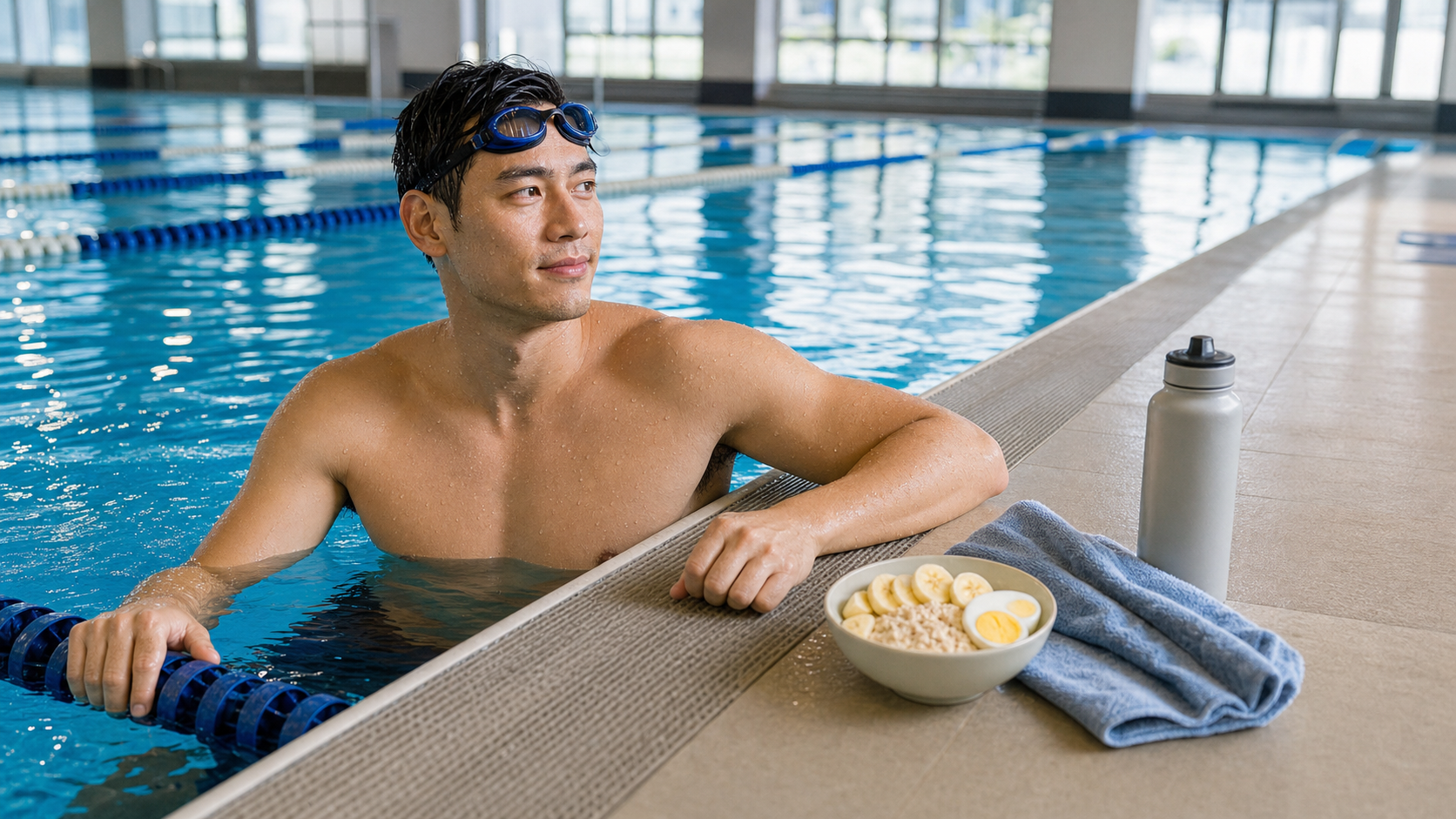
The Truth About Swimming and Weight Management: A Complete Analysis of Calorie Expenditure and Appetite Compensation Effects
Introduction
“I’ve been swimming for three months now—why hasn’t my weight changed much?” This is a common frustration among swimming enthusiasts. Swimming does burn a considerable number of calories, but many studies have found that swimming’s weight-loss effects often fall short of running or cycling. One key reason is the “appetite compensation effect”—the hunger you feel after swimming tends to be stronger than after other forms of aerobic exercise.
Understanding this mechanism and learning coping strategies is the only way to make swimming a true ally in your weight management plan.
Calorie Expenditure in Swimming: More Complex Than You Think
Basic Calculation Formula
Calorie expenditure in aerobic exercise mainly depends on:
- Exercise intensity (speed)
- Exercise duration
- Body weight
- Stroke efficiency
| Stroke | Easy Pace (kcal/kg/hour) | Moderate Intensity (kcal/kg/hour) | Vigorous Intensity (kcal/kg/hour) |
|---|---|---|---|
| Freestyle | 5.0 | 7.0 | 9.8 |
| Breaststroke | 5.3 | 7.3 | 10.3 |
| Backstroke | 4.8 | 6.1 | 8.0 |
| Butterfly | 7.0 | 9.5 | 13.8 |
| Water walking | 3.5 | 4.5 | — |
Calculation Example: A 70 kg swimmer swimming freestyle at moderate intensity for 45 minutes
Calories burned = 70 × 7.0 × (45/60) = 367 kcal
This is equivalent to one bowl of white rice (about 280 kcal) plus one boiled egg (about 80 kcal).
Why Is Swimming’s Weight-Loss Effect Limited?
The Core Issue: Caloric Compensation
A 2010 study from Heriot-Watt University in the UK shocked the swimming community: comparing post-exercise food intake among three groups—swimmers, runners, and non-exercisers—the study found that the swimming group consumed significantly more calories after exercise than the running group. In fact, some participants consumed more calories than they had burned swimming, resulting in a net calorie deficit of zero or even negative.
Why Does Swimming Trigger Appetite So Easily?
Water Temperature Effect (Thermoregulation)
This is currently the most widely accepted explanation. During land-based exercise, the rise in body temperature suppresses appetite (similarly, you usually lose your appetite when you have a fever). But when swimming, water’s high thermal conductivity continuously draws heat away from the body, so body temperature doesn’t rise as much as it does when running, making the appetite-suppressing effect weaker.
Solution: Choose a warmer pool temperature (above 29°C), or walk briskly on deck for 10 minutes after swimming to briefly raise body temperature and suppress appetite.
Brain Energy Signals
Research has found that blood levels of ghrelin (the appetite-stimulating hormone) rise more after swimming than after running, possibly related to the metabolic patterns of aquatic exercise.
Body Composition Changes in Swimmers: Fat Loss Rather Than Weight Loss
Although swimming may not produce as dramatic a change on the scale as running, it is equally effective at improving body composition:
- Swimming is a full-body exercise that simultaneously engages the upper body, core, and lower body muscle groups
- Regular swimming can maintain or even increase muscle mass, and muscle tissue is denser than fat
- Studies show that long-term regular swimmers have significantly lower body fat percentages than sedentary control groups
Conclusion: The number on the scale may not change much, but your body’s “composition” is improving—fat decreasing, muscle increasing. That is the true health indicator.
Practical Strategies for Combining Swimming with Dietary Control
Pre-Swim Nutrition (About 90 Minutes Before)
- Consume 200–300 kcal of complex carbohydrates: oatmeal, whole-grain toast, bananas
- Avoid high-fat foods (slow to digest, can cause nausea while swimming)
- Hydrate adequately (200–300 mL)
Post-Swim Nutrition (Within 30 Minutes)
- Prioritize protein: eggs, unsweetened soy milk, Greek yogurt—these promote muscle repair and increase satiety
- Moderate carbohydrates: replenish glycogen without overdoing it; avoid high-glycemic foods that trigger larger blood sugar swings and appetite
- Avoid the “treat yourself” mindset: the mentality of “I swam 1,000 meters, so I can have braised pork rice and bubble tea” is the biggest enemy of weight loss
Practical Tips to Suppress Post-Swim Appetite
- Drink 300–400 mL of warm water immediately after swimming
- Walk briskly or jog for 10 minutes outside the pool after swimming (raise body temperature to suppress appetite)
- Carry pre-prepared healthy snacks (boiled eggs, plain nuts) to prevent poor choices when hunger strikes
- Schedule swimming 1–2 hours before a meal (so post-swim hunger leads directly into a proper meal)
Swimming Weight Strategies for Different Goals
Pure Fat-Loss Goal
- Swim 4–5 times per week, 45–60 minutes per session
- Pair with a calorie-deficit diet (consume 300–500 kcal less per day)
- Add 1–2 interval swimming sessions (HIIT) to boost basal metabolic rate
- Add 1 land-based strength training session per week to prevent muscle loss
Weight Maintenance Goal
- Swim 3 times per week, 30–45 minutes per session is sufficient
- Maintain a balanced diet without strict calorie counting
- Use swimming as a supplement to daily activity rather than your only exercise
Muscle Gain and Fat Loss Goal
- Swimming handles the aerobic foundation; land-based strength training provides the muscle-building stimulus
- Increase protein intake to 1.6–2.0 grams per kilogram of body weight
Practical Recommendations
- Measure body fat percentage regularly rather than just weight: use a body fat scale or take monthly body photos to track changes
- Keep a swimming log of your diet: record your post-swim meals for 2 consecutive weeks to identify your compensation patterns
- Distance matters more than time: use distance (meters) as your training metric for more accurate calorie expenditure estimates
- Water temperature selection: if weight loss is your goal, prioritize warmer pools above 28°C
Conclusion
Swimming is an excellent exercise, but it is not a magical weight-loss weapon. Truly effective weight management always comes from the fundamental principle of “energy balance.” Understanding the existence of the appetite compensation effect and preparing coping strategies in advance is the only way to let swimming fully realize its potential for health promotion. Swimming for a healthy body is more worth pursuing than swimming for impressive numbers.
Related Reading
- Swimming and Weight Management: The Truth About Calorie Expenditure in Aquatic Exercise
- Weight Control Through Swimming: Dietary Compensation Issues in High-Volume Swimmers
- Swimming Weight Management Plan: Calorie Expenditure and Diet Pairing for 4 Weekly Sessions
- The Science of Swimming for Fat Loss: Comparing Calorie Expenditure Across Different Intensities
靠單車減肥35公斤 心得分享與整理
7 年前
2016/4/20 - 中社路 夜騎 半年甩肉14KG 後測
10 年前
CT暗黑廚房) 車友必備 宇宙無敵鮮蚵湯 幫助訓練恢復 天然食補 好市多 超肥鮮蚵 破PR
7 年前
16/02/16 - 夜訪中社路 緩慢進步中
10 年前
#公路車 #Vo2Max #最大攝氧量 測驗 體驗 | 心肺測試
6 年前
西進武嶺 免費訓練分析服務 Intervals | 練不夠還是練過頭?你哪一種類型選手?AI模型告訴你! | 備戰神器 | 公路車 訓練 | CT Yeh
4 年前
戰略) Zwift Race 如何咬在第一集團 如何評估自己要開多少推力 (請開1.5倍速看)
7 年前
#公路車 #Fitting 靠人工智慧APP 幫你調整單車
6 年前