Fubon Taipei Marathon: An In-Depth Analysis of the Urban Marathon Course with the Most Personal Bests Over the Years
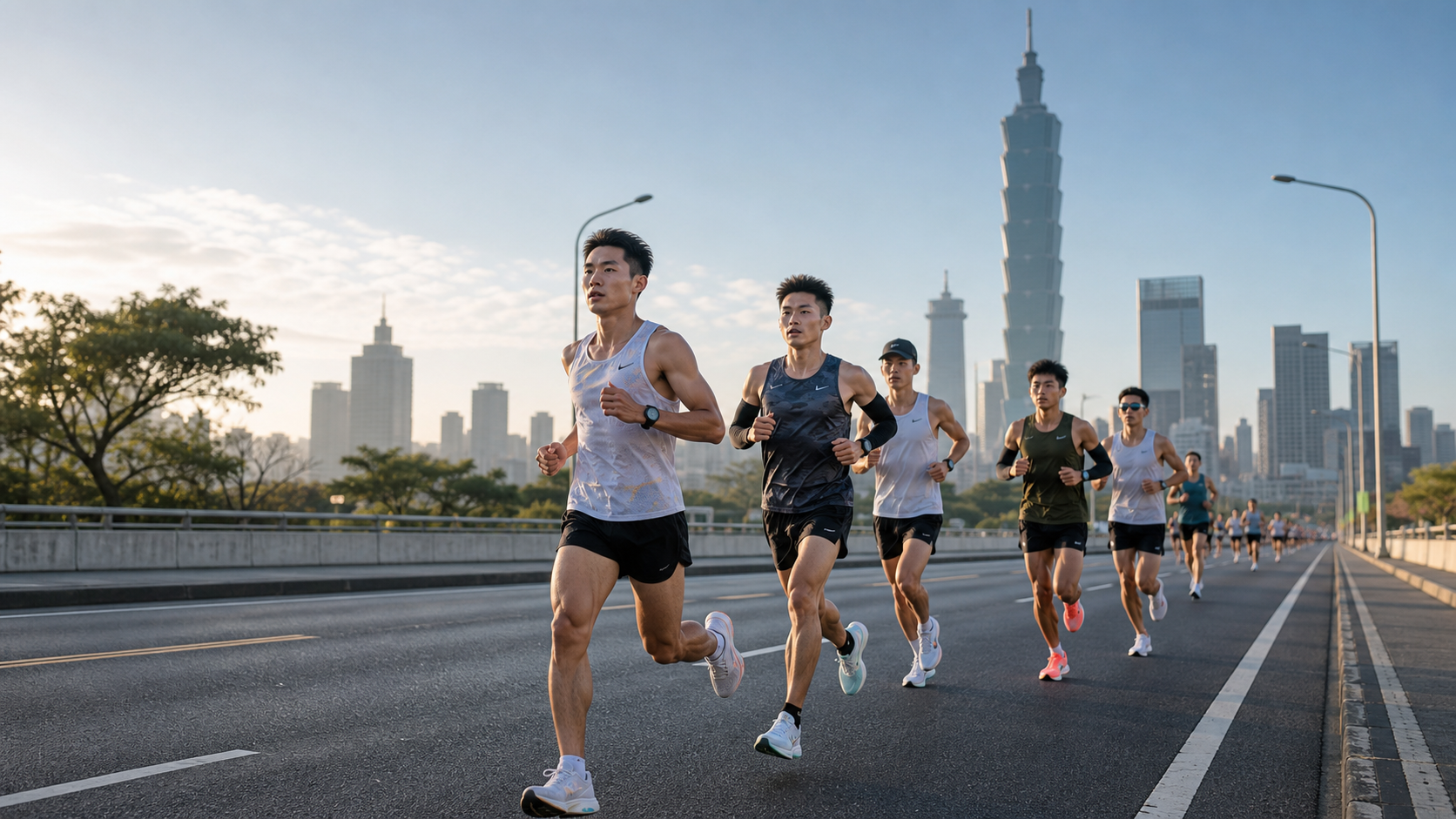
Fubon Taipei Marathon: In-Depth Analysis of the Urban Marathon Course with the Most PBs in History
Introduction
The Fubon Taipei Marathon (Taipei Marathon) is held every December in Taipei City and is one of Taiwan’s largest and most internationally visible marathon events. Compared with other local races, the Taipei Marathon features a meticulously planned urban course, a comprehensive aid station system, professional timing technology, and Taiwan’s most concentrated group of elite runners. As a result, it has become the stage where Taiwanese runners most frequently set personal bests (PBs). This article provides a complete speed-chasing playbook, from course analysis and PB pacing plans to race-day details.
Course Characteristics Analysis: Why the Taipei Marathon Is Ideal for a PB
The Taipei Marathon’s course selection reflects the organizing committee’s emphasis on fast racing:
| Characteristic | Description | Impact on PB |
|---|---|---|
| Flat terrain | Total elevation gain does not exceed 100 meters | Stable pacing, unaffected by inclines |
| Road surface quality | Primarily asphalt, smooth surface | Good underfoot feel, efficient propulsion |
| Few turns | Many long straight sections | Maintains rhythm, no need for frequent braking |
| Winter temperatures | December temperatures around 12–18°C | Close to the optimal marathon temperature |
| Group effect | Precise corrals and clearly defined pace groups | Easy to find drafting partners |
| Official pacers | Multiple target-time pacers available | Following a pacer strategy is viable |
Key Course Sections Explained
The Taipei Marathon course is slightly adjusted each year, but the core sections remain relatively fixed:
- Ren’ai Road start section (0–3 km): Wide roads with dense crowds; the first kilometer is often slower, requiring patience until space opens up
- Xinyi District section (3–10 km): Relatively straight with ample aid stations; this section is suitable for settling into your target pace
- Around Chiang Kai-shek Memorial Hall (10–15 km): More turns around the plaza; pay attention to footwork when adjusting to direction changes
- Riverside road section (varies by year’s route): Some years include riverside embankment sections with stronger winds; adjust accordingly
- Return leg in the latter half (30–42 km): Fatigue accumulates, requiring strong mental support; this section shows the greatest performance differences
PB Pacing Calculation and Split Recommendations
Using a four-hour finish goal (approximately 5:41/km) as an example, the split pacing recommendations are as follows:
- 0–5 km: 5:50–6:00/km, let the body fully warm up and find a good position in the crowd
- 5–15 km: 5:40–5:45/km, settle into target pace, feeling relaxed and natural
- 15–25 km: 5:38–5:42/km, steady output, key fueling timing
- 25–32 km: 5:40–5:50/km, high-risk zone for hitting the wall in the latter stages; maintaining is a victory
- 32–38 km: Adjust flexibly based on energy levels; if feeling good, a slight acceleration is possible
- 38–42 km: Go all out; willpower matters more here than at any other point
Using a three-hour-thirty-minute goal (approximately 4:58/km) as an example, the split pacing recommendations are as follows:
- 0–5 km: 5:05–5:10/km, restrain the excitement
- 5–20 km: 4:58–5:02/km, steady cruising
- 20–30 km: 4:55–5:00/km, slight acceleration possible if feeling good
- 30–42 km: Depending on conditions, try to maintain or slightly ease the pace
Strategy for Following Pacers
The Taipei Marathon features official pacers covering multiple target times from three hours to six hours. Key points for the pacer-following strategy:
- Confirm the pacer’s race number: Find your target pacer in the designated area before the start
- Stay behind and to the side of the pacer: Don’t surge ahead of the pacer; staying close is key
- Maintain contact before and after aid stations: Quickly catch back up to the pacer after aid stations
- 30 km is the turning point: If you still feel comfortable, you can pass the pacer and sprint after 35 km
Race-Day Details for Winter Taipei
- Warmth before the start: Temperatures are low while waiting to start; it’s recommended to wear a disposable lightweight jacket until the gun goes off
- First aid station (around 5 km): By this point the body is fully warmed up, so you can begin taking fluids
- Energy gel timing: It’s recommended to take one gel at 15 km, 25 km, and 35 km, consuming it 2–3 minutes before reaching the aid station
- Warmth after the race: Immediately wrap yourself in a thermal blanket after finishing to prevent discomfort from a rapid drop in body temperature
Practical Tips
- Complete your final long run two weeks before the race, then focus primarily on tapering
- The day before the race, confirm your gear: check the timing chip laces and test where your fuel is placed
- Avoid trying energy foods for the first time on race day; stick with items tested during training
- Mental preparation: the pain after 35 km is normal—“the real challenge of a full marathon only begins in the second half”
Conclusion
The Fubon Taipei Marathon is the stage where Taiwanese runners most yearn to set a PB. It gives runners the best external conditions: a fast course, suitable temperatures, abundant fueling, and a powerful competitive atmosphere. All that remains is for you to show up with a solid training foundation and a clear pacing strategy. On a December morning in Taipei, the stage is yours to break through your limits.
Related Reading
- Complete Taipei Marathon Guide: Route Analysis and Pacing Strategy
- Fubon Taipei Marathon Pacing Guide: A Complete Plan from Registration to the Finish Line
- Taipei Marathon Guide: Course Analysis, Pacing Recommendations, and Aid Station Locations
- Complete Taipei Marathon Guide: Registration, Route Analysis, and Pacing Strategy
台中大雪山 膏王領騎 震到都沒畫面了 公路車
5 年前
一日北高/長距離團騎 常見問題補充篇 / 組團或跟團的眉角 / 壯車友容易被瘦車友慢性拉爆 / 原來屁股痛可能是這個原因...? / 風場配速法 / 公路車 / CT Yeh
2 年前
Live) 備戰2019彰化經典百K 賽前攻略 (已完賽請看新影片
7 年前
2021 96聯賽 桃園市長盃 4K多視角實況 當天選手瓦數/推力比/均速/時間 即時數據分析 | 公路車 | CT Yeh
5 年前
2024 如來神掌 百人約騎挑戰!feat. 秘境單車社團 / 神人們太可怕 / 全程錄影 x 完整坡度解析 / 公路車 / CT Yeh
2 年前
車隊介紹) 台北 一年開團365天 車隊 Apollo Ride 晨騎 好選擇 ( 陽明山 風櫃嘴 冷水坑 平等里 聖人 關渡 大稻埕 ) 找人騎車
7 年前
台北大雁西飛 約騎挑戰 feat. Doris | 公路車 | CT Yeh
3 年前
高雄綠園道鐵路自行車道 / 外地人能輕鬆駕馭 還是整路崩潰? / 2025 全線開通 春節實地探索一次!(附GPS連結)/ 公路車 / CT Yeh
1 年前