Alishan Forest Trail Running: A Complete Guide to Temperature Management and Oxygen Supplementation Strategies for High-Altitude Races
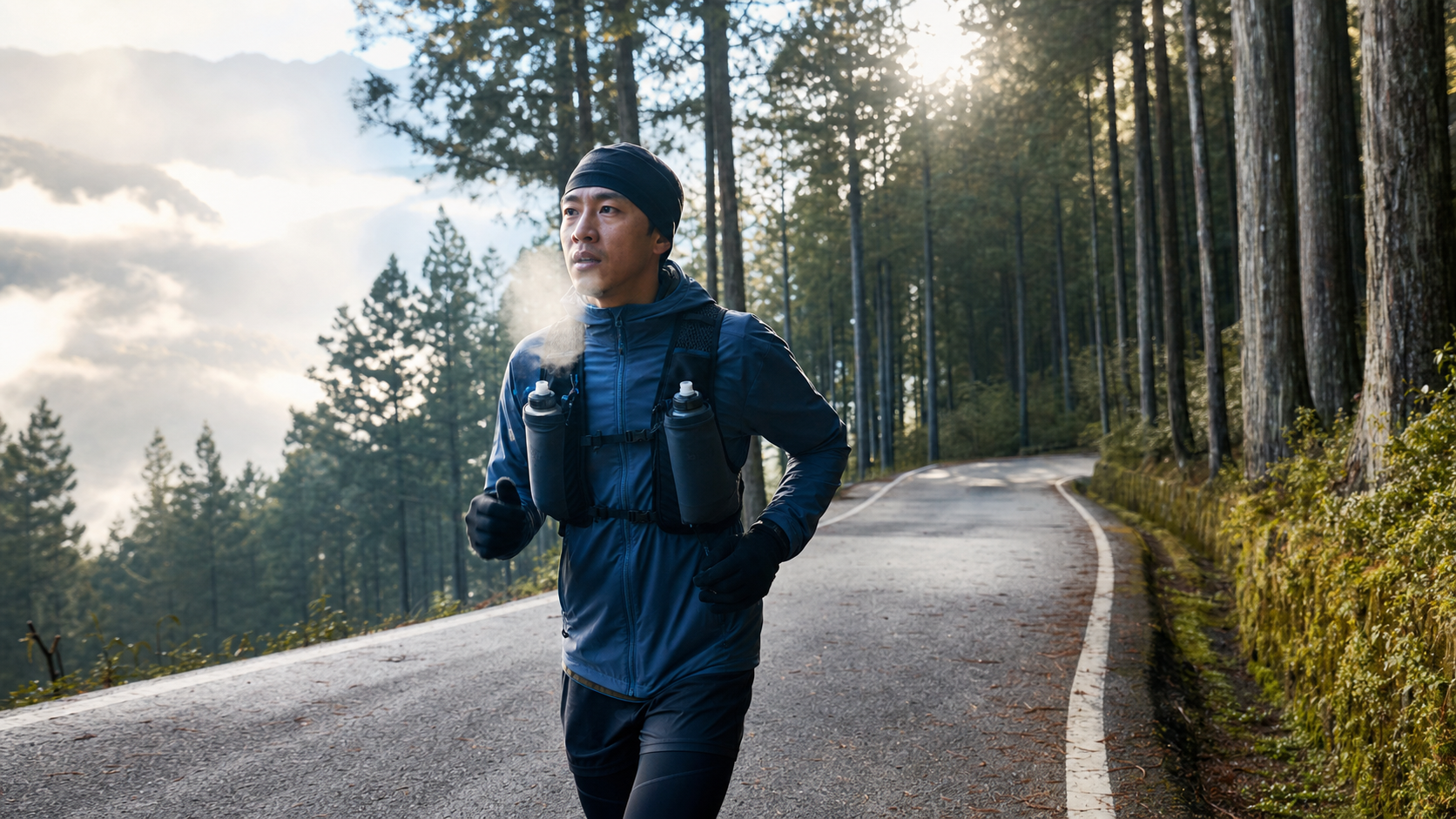
Alishan Forest Road Run: Complete Guide to Temperature Management and Oxygen Supplementation Strategies for High-Altitude Races
Introduction
The Alishan Forest Road Run is one of the few road races in Taiwan held in a high-altitude environment. The course winds through the forest trails of the Alishan National Forest Recreation Area, passing among giant cypress trees and swirling clouds, with an atmosphere that feels like another world. However, with an average elevation exceeding 2,000 meters, this race is one of the most physically demanding road races in Taiwan. The air contains about 20% less oxygen than at sea level, and temperatures are 10–15°C lower than at the mountain’s base—factors that together create the unique challenges of a high-altitude event.
Effects of High Altitude on the Body
At elevations of 2,000–2,500 meters, the human body exhibits the following responses:
| Factor | Description | Impact on Running |
|---|---|---|
| Thin air | Partial oxygen pressure drops by ~20% | Higher heart rate at the same intensity |
| Dry air | Humidity lower than at sea level | Faster water loss from the respiratory tract |
| Strong UV radiation | UV index 30–50% higher than at sea level | Increased risk of sun damage |
| Low temperatures | 10–15°C lower than at the mountain’s base | Muscle stiffness, longer warm-up needed |
| Rapid temperature changes | Morning-to-noon swings up to 10°C | Complicates clothing strategy |
Acclimatization Recommendations
Runners not suited to high-altitude environments may experience altitude sickness symptoms such as headache, nausea, and fatigue before the race even starts. Prevention strategies:
- Stay overnight at altitude two days before the race: Book accommodation in Alishan to let your body gradually adapt to the low-pressure, low-oxygen environment
- No intensity training on arrival day: Light walking is enough; let your lungs adjust to the air density
- Hydrate heavily: High-altitude air is dry; drink 500–800 ml more water per day than usual
- Avoid alcohol: Alcohol accelerates dehydration and interferes with the acclimatization process
- Carry glucose supplements: Glycogen is depleted faster at altitude; keep glucose tablets on hand
- If severe headache or vomiting occurs, descend and seek medical attention immediately: Altitude sickness must not be taken lightly
Temperature Management: Alishan’s “Four Seasons in One Day”
Alishan is known as having “four seasons in one day.” In the morning you may need a down jacket, yet by noon it feels like a Taiwanese summer. The race typically starts in the early morning; here is a typical day’s temperature profile:
- 5–6 AM start: Temperature around 8–12°C; insulating outer layer needed
- 8–10 AM: Temperature rises to 15–20°C; feels comfortable once your body warms up
- After 10 AM (if still on course): Temperature may climb to 22–26°C; cooling needed
Clothing strategy:
- Start with a lightweight down vest or windbreaker; after 15 km, tie it around your waist or discard it
- Compression tights are ideal for the lower body, protecting the knees while keeping warm
- A thin cap and gloves are essential for the first half
- Apply sunscreen from the start—don’t wait until the sun comes out
Fueling Strategy: Energy Demands at High Altitude
Basal metabolic rate is slightly higher at altitude, and glycogen is depleted about 10–15% faster than at sea level. Fueling strategy needs adjustment:
- Start taking energy gels earlier: Don’t wait until you feel hungry; begin at 15 km and take one every 25–30 minutes
- Increase the proportion of carbohydrate intake: Fat metabolism is less efficient at altitude, making carbs more important
- Drink more electrolyte sports drinks: In low-oxygen conditions, breathing is more rapid, causing greater fluid loss through respiration
- Avoid caffeinated products: Caffeine may worsen dehydration and arrhythmias at altitude
Pacing Adjustment: Slow Down 10–15% at High Altitude
At high altitude, even when it “feels” easy, your heart rate is often 10–20 beats per minute higher than at sea level. Pacing recommendations:
- Target pace should be 10–15% slower than a sea-level race (e.g., if 6:00/km at sea level, aim for 6:40–7:00/km in Alishan)
- Control by heart rate rather than speed, staying in the aerobic zone (70–78% of max heart rate)
- Walk uphill sections without hesitation—the cost of running hills at altitude is far higher than at sea level
- Be cautious on descents too; oxygen deprivation affects reaction time and foot stability
Practical Tips
- Carry a personal headlamp in case it’s still dark or foggy at the start
- Bring a spare plastic bag for waterproofing; mountain weather is unpredictable and sudden rain is common
- Take one electrolyte salt tablet every 5 km to prevent hyponatremia-related cramping
- Track your resting heart rate during daily training; after arriving at altitude, compare changes as an indicator of your physical condition
Conclusion
The Alishan Forest Road Run is a race that tests a runner’s all-around abilities. It doesn’t just challenge your endurance—it tests your awareness of and adaptability to the environment. Finishing under the witness of thousand-year-old cypress trees brings a sense of fulfillment that far surpasses any flat-course PB. Step onto the forest trail with adequate preparation and a humble mindset, and Alishan will give you an unforgettable running memory.
Related Reading
- Cycling Around Taiwan’s Hundred Peaks: Climbing Adjustments for High-Altitude Cold and Low Pressure
- The Impact of Altitude on Pacing: Adjustment Strategies for Taiwan’s Mountain Races
- Nutritional Adjustments for High-Altitude Races: How Your Diet Should Change When the Air Is Thin
- High-Altitude Training: Physiological Adaptation and Training Adjustments Above 1,500m
台灣登山王之路 KOM 全程參賽4K臨空錄影 PART1 穿越峽谷地形! #東進武嶺 太魯閣 / 燕子口 / 天祥 / 西寶 PART1 (公路車 / CT Yeh)
3 年前
2025 乘鞍岳登山賽 比賽全紀錄篇 / 完整路線攻略介紹 / 日本版武嶺 公路最高點 / 高山空拍絕景 / 明年會開團! / 公路車 / CT Yeh
10 個月前
#公路車 #Vo2Max #最大攝氧量 測驗 體驗 | 心肺測試
6 年前
2023 夏季KOM 參賽實況 / 穿越空拍視角 / 整車都凸台 / 太魯閣峽谷x合歡山絕美大景 / 東進武嶺 / Taiwan KOM Challenge / 公路車 / CT Yeh
3 年前
太平山單車員工旅遊 | 這樣玩CP值最高!| 公路車
5 年前
阿里山塔塔加 兩倍特濃版!全新隧道開通! 進喔!公路車 | CT Yeh
3 年前
超激烈!2025 南庄仙山KOM 賽事精華 / 男菁英A x 女菁英A / 公路車 / CT Yeh
9 個月前
嘉義大埔、阿婆灣挑戰賽,美到以為在日本!ft. 環騎5 Cool 西拉雅188 / 公路車 / CT Yeh
7 個月前