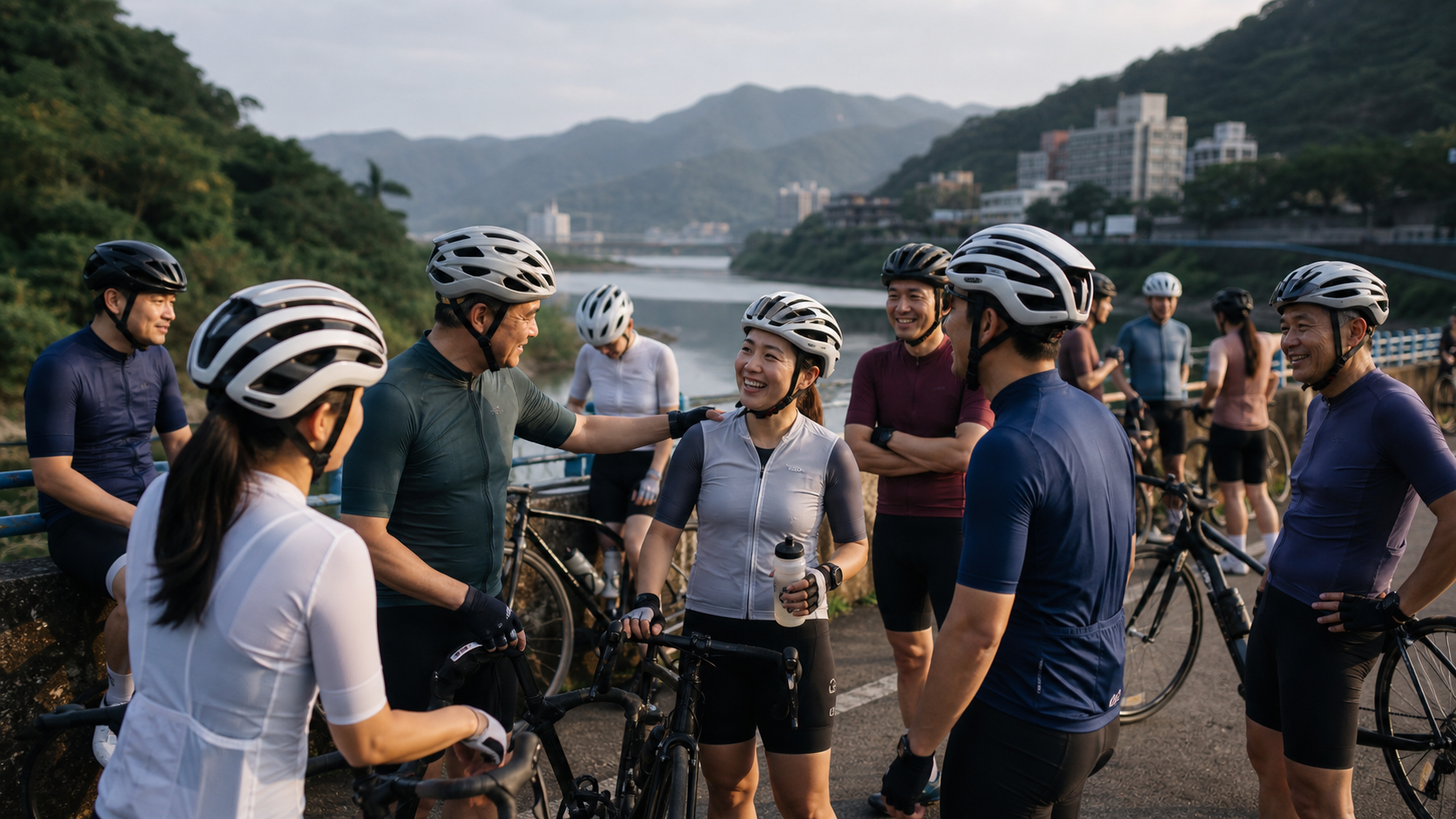
The Cohesion of the Cycling Community: How to Build a Lasting and Active Cycling Club
Taiwan has countless informal cycling groups. A few friends create a Line group, agree to meet every Saturday morning, and the first few rides are full of enthusiasm. But three months later, only a few regular members remain in the group, while the others quietly disappear. This is the common fate of many cycling teams.
What truly sustains a cycling club over the long term is not just a shared interest, but a mature philosophy of community management.
Why Clubs Fail: An Analysis
Before discussing how to succeed, let’s first understand why most clubs fade into silence:
- Speed stratification: Faster riders always leave slower ones behind, and newcomers or those with weaker fitness gradually feel excluded
- Lack of clear positioning: When it’s unclear whether the club is “fitness-oriented,” “leisure-focused,” or “competitive training,” it struggles to attract a specific audience
- Monotonous activities: It’s always just riding, with no other forms of interaction or connection
- Missing organizational structure: No one is responsible for route planning, no one handles newcomer reception, and the club relies on a few enthusiastic individuals to keep things going
- Poor communication channels: Group notifications get buried easily, and important information goes unanswered
At the Start: Define the Club’s Core Identity
A club’s DNA should be clearly defined from the very beginning. The following questions are worth serious discussion among founding members:
- Target rider demographic: Is it for weekend leisure among office workers? Competitive training? Family-friendly? Suitable for seniors?
- Geographic scope: Focused on a specific city or district, or mobile across Taiwan?
- Activity frequency: Weekly, biweekly, or monthly? Fixed times or flexible scheduling?
- Openness to outsiders: A closed membership system? Or welcoming drop-in riders?
A club with clear positioning is more likely to attract the “right people” and build a stronger sense of identity.
Grouping System: Giving Everyone a Sense of Belonging
Speed-based grouping is a key system for keeping a club vibrant. It’s recommended to divide riders into 3–4 levels based on ability, with each group starting separately but converging at the same destination. This way, faster riders get their challenge, and slower riders don’t feel left behind.
| Group | Target Riders | Average Speed | Features |
|---|---|---|---|
| Beginner Group | Newcomers, families, seniors | 15–18 km/h | Easy pace, focused on enjoyment |
| Leisure Group | Weekend recreational riders | 20–25 km/h | A balance of speed and scenery |
| Advanced Group | Those with training habits | 25–32 km/h | Higher-intensity routes |
| Race Group | Members who compete | 32 km/h and above | Pace training, time trials |
Non-Cycling Activities: Building Deeper Connections
In a club that only rides, relationships between members often stay at the “riding buddy” level. Adding non-cycling activities allows members to get to know each other in different contexts and build deeper emotional bonds:
- Bike maintenance workshops: Invite a shop mechanic to teach basic repairs; the shared learning process is the easiest way to get conversations flowing
- Gear sharing events: A monthly “Gear Show-and-Tell Day” where members bring equipment to share or sell, creating a secondhand gear market
- Trip planning sessions: Once a quarter, discuss the next long-distance goal (such as a round-island tour or Wuling), and plan together to build anticipation
- Celebration dinners: After every major goal is completed, a group meal is a must—ritual is an important catalyst for community cohesion
Making Good Use of Digital Tools
A modern club’s operations rely heavily on digital tools:
- Strava Club: Set up a club page on Strava so members can see each other’s training data, creating positive motivation
- Line / Signal groups: Use the main group only for important announcements, and set up separate discussion groups to avoid noise
- Google Forms for sign-ups: Use forms for event registration to make attendance predictable and facilitate route planning
- Instagram account: Post photos of activities regularly—it serves as an outward-facing window and gives members a sense of accomplishment from being seen
Newcomer Reception Culture
Whether a club can continue to grow depends largely on a newcomer’s first experience. It’s recommended to establish a “newcomer reception SOP”:
- Assign an experienced member as the newcomer’s “buddy” to look after first-time riders throughout the ride
- Before departure, introduce the route highlights, group arrangements, and emergency contact information
- After the event, send a private message to the newcomer asking for their thoughts and inviting them to join again
Conclusion
A truly cohesive cycling club is a microcosm of a small society. It has shared goals, mutual respect, and a culture that embraces different speeds and abilities. Building such a community takes time and effort. But when you stand on a misty morning and watch a dozen or so people gather to set off, exchanging knowing smiles with one another, you’ll know it was all worth it.
Related Reading
車隊介紹) 台北 一年開團365天 車隊 Apollo Ride 晨騎 好選擇 ( 陽明山 風櫃嘴 冷水坑 平等里 聖人 關渡 大稻埕 ) 找人騎車
7 年前
CT 喇低賽) 單車 比賽總是沒照片? 攝影師的觀點大公開 姿勢就是力量! 請加速1.25倍收看
7 年前
「悲情男車友」創作單曲 爆笑MV / 公路車 / CT Yeh / 4K劇情版
7 個月前
靠單車減肥35公斤 心得分享與整理
7 年前
單車 一日北高 ( 雙城 ) 肥宅雙人瘋狂行 紀錄片 REACTO
10 年前
太平山單車員工旅遊 | 這樣玩CP值最高!| 公路車
5 年前
高雄綠園道鐵路自行車道 / 外地人能輕鬆駕馭 還是整路崩潰? / 2025 全線開通 春節實地探索一次!(附GPS連結)/ 公路車 / CT Yeh
1 年前
4K 東眼山 x 水蜜桃冰沙 百人單車約騎! 操完再吃冰 多爽快
7 年前