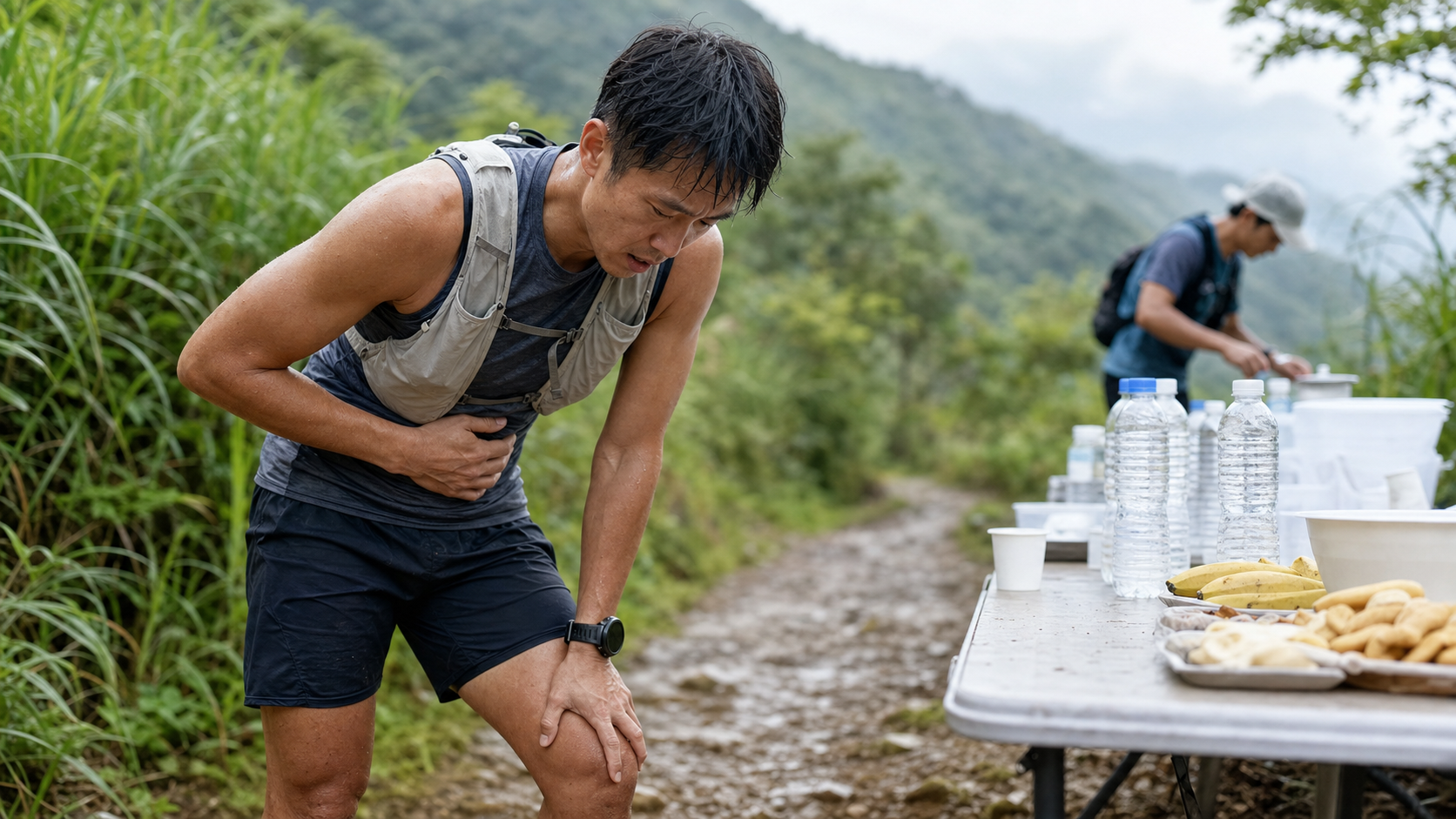
Prevalence of GI Issues in Ultramarathon Runners
According to international trail running research:
- 60-90% of ultramarathon runners experience at least one GI symptom
- 30-40% have their performance affected
- 10-20% DNF as a result
Common symptoms: nausea, vomiting, bloating, diarrhea, and gastroesophageal reflux.
The 5 Main Causes of GI Issues
1. Reduced Splanchnic Blood Flow
During exercise, blood is shunted to the muscles, and GI blood flow can drop by 60-80%. Over prolonged periods, this causes intestinal mucosal hypoxia and increased permeability (commonly known as leaky gut), triggering inflammation and discomfort.
2. Mechanical Vibration
The repetitive impact of running causes food in the stomach to slosh up and down, especially on downhill sections, stimulating the vomiting center.
3. Osmotic Imbalance
Consuming overly concentrated energy gels (>8% sugar concentration) causes water to remain in the stomach, slowing gastric emptying and leading to bloating and nausea.
4. Dehydration
When dehydrated to 2-3% of body weight, gastric emptying rate is cut in half. Food lingers and ferments, increasing gas and discomfort.
5. Psychological Stress
Pre-race anxiety elevates cortisol and adrenaline, causing abnormal gastric acid secretion + slowed gastric emptying.
Symptom Severity Classification
Mild (Does Not Affect Running Pace)
- Mild nausea, burping, bloating
- Food can still be taken in and reaches the stomach
Moderate (Affects Fueling)
- Strong nausea, no desire to eat anything
- Even trying to drink water causes queasiness
Severe (Affects Running Pace)
- Vomiting
- Abdominal pain, diarrhea
- Must walk
Emergency (Requires Dropping Out and Seeking Medical Attention)
- Continuous vomiting with inability to rehydrate
- Bloody stool, severe abdominal pain
- Dehydration + electrolyte imbalance
- Altered consciousness
Prevention Strategies
Prevention 1: Pre-Race Diet
| Time Point | Recommendation |
|---|---|
| 3 days before | Low-residue diet (fewer vegetables, less high-fiber food) |
| 1 day before | High-carb but low-fat, low-fiber |
| 4 hours before | Main meal of 300-400 kcal, low-fat low-fiber |
| 1 hour before | Small light snack (banana, bread) |
| 15 minutes before | Small sips of water or sports drink |
Avoid: spicy food, fried food, raw vegetables, coffee, alcohol, and excessive dairy.
Prevention 2: Fueling Formula
- Keep sugar concentration at 6-8%
- Glucose + fructose in a 2:1 ratio (higher absorption ceiling)
- Pair every 1g of carbs with 8-10ml of water
- Diversify (sweet → salty → liquid → solid)
Prevention 3: Gut Training
Start “practice eating” 6-8 weeks before the race:
- Start at 40g of carbs per hour
- Increase by 10g each week
- Reach the target amount (e.g., 90g) before race day
- Test tolerance for various foods
Prevention 4: Avoid New Things
Never try new foods on race day:
- New energy gel brands
- New flavors
- Sports drinks you’ve never had
- Unfamiliar local foods (especially at international races)
Prevention 5: Mental Relaxation
- Pre-race nervousness can trigger GI issues
- Deep breathing, light stretching, chatting with companions
- Don’t stay up late, don’t get overly excited
In-Race First Aid
Mild GI Management
- Walk for 5-10 minutes: reduce impact
- Sip ginger candy / peppermint candy
- Switch to cola (de-fizzed): sugar + caffeine + stomach relaxation
- Switch to salty foods: miso soup, potato chips, crackers
Moderate GI Management
- Stop running completely: sit down at an aid station for 5-10 minutes
- Drink water in small, frequent amounts (50-80ml at a time)
- Eat simple foods: white bread, potatoes
- Ginger candy / probiotic tablets
Severe GI Management
- Don’t rush to eat after vomiting: rest for 30 minutes
- Electrolyte replacement (sports drink diluted by half)
- Wipe face with cold water, cool down
- Seriously consider dropping out
Useful In-Race Remedies
- Probiotic tablets (more effective if started 1-2 weeks before the race)
- Ginger candy, peppermint candy, chewing gum: stimulate saliva, relax the stomach
- Cola (de-fizzed): the classic rescue drink
- TUMS / antacid tablets: neutralize stomach acid
- IV saline (race medical staff): for severe dehydration
Post-Race Recovery
Day 0
- Don’t force yourself to eat
- Sip water + electrolytes
- Probiotic drinks
Day 1-2
- Simple, gentle foods: congee, bread, white toast
- Avoid fried food, spicy food, raw vegetables
Day 3-7
- Gradually return to a normal diet
- Increase vegetable and fiber intake
- Supplement protein to repair tissue
When to See a Doctor?
- Vomiting persists within 48 hours after the race
- Bloody stool
- Severe abdominal pain that won’t subside
- Dark urine, very low urine output (severe dehydration)
- Abnormal heart rate, dizziness, fainting
At-Risk Groups
The following runners are more prone to GI issues:
- Those who suddenly increase training volume
- Highly anxious individuals
- Those with allergies (especially FODMAP sensitivity)
- Those with a cold or sleep deprivation before the race
- Women affected by their menstrual cycle
Conclusion
Ultramarathon GI issues are not a “willpower problem” — they are a physiological mechanism. Through pre-race dietary control, long-term gut training, diversified fueling, and mental relaxation, the incidence rate can be greatly reduced. Once it occurs, early intervention is more likely to save your race than toughing it out.
Related Reading
- Handling Nausea in Ultramarathons: On-the-Spot Responses and Fueling Adjustments for GI Discomfort
- Gastrointestinal Issues in Ultramarathons: Prevention and Treatment of GI Discomfort During Prolonged Exercise
- Post-Exercise GI Problems: How to Avoid Stomach Discomfort When Cycling and Running
- GI Distress During Running: A Complete Analysis of Causes and Prevention
約騎爆笑地獄梗 大腸怎麼了🤣 #公路車 #cycling
3 年前
一日北高/長距離團騎 常見問題補充篇 / 組團或跟團的眉角 / 壯車友容易被瘦車友慢性拉爆 / 原來屁股痛可能是這個原因...? / 風場配速法 / 公路車 / CT Yeh
2 年前
2026 輪霸西濱200K 挑戰VLOG / 第一集團 / 首次參加..經驗不足、膀胱不足 /死守6H內 / AI戰鬥力顯示系統 / 公路車 / CT Yeh
4 個月前
一日北高常見問題大集合 | 攻略 | 路線 | 訓練 | 補給 | 自行車 單車 | 一日雙城 | 雙塔 | TWB北高360 | 屁股痛
6 年前
戰略) Zwift Race 如何咬在第一集團 如何評估自己要開多少推力 (請開1.5倍速看)
7 年前
2016/4/20 - 中社路 夜騎 半年甩肉14KG 後測
10 年前
CT暗黑廚房) 車友必備 宇宙無敵鮮蚵湯 幫助訓練恢復 天然食補 好市多 超肥鮮蚵 破PR
7 年前
Never Stop 西進武嶺 前後雙機 完整全程錄影 訓練台 實境
8 年前