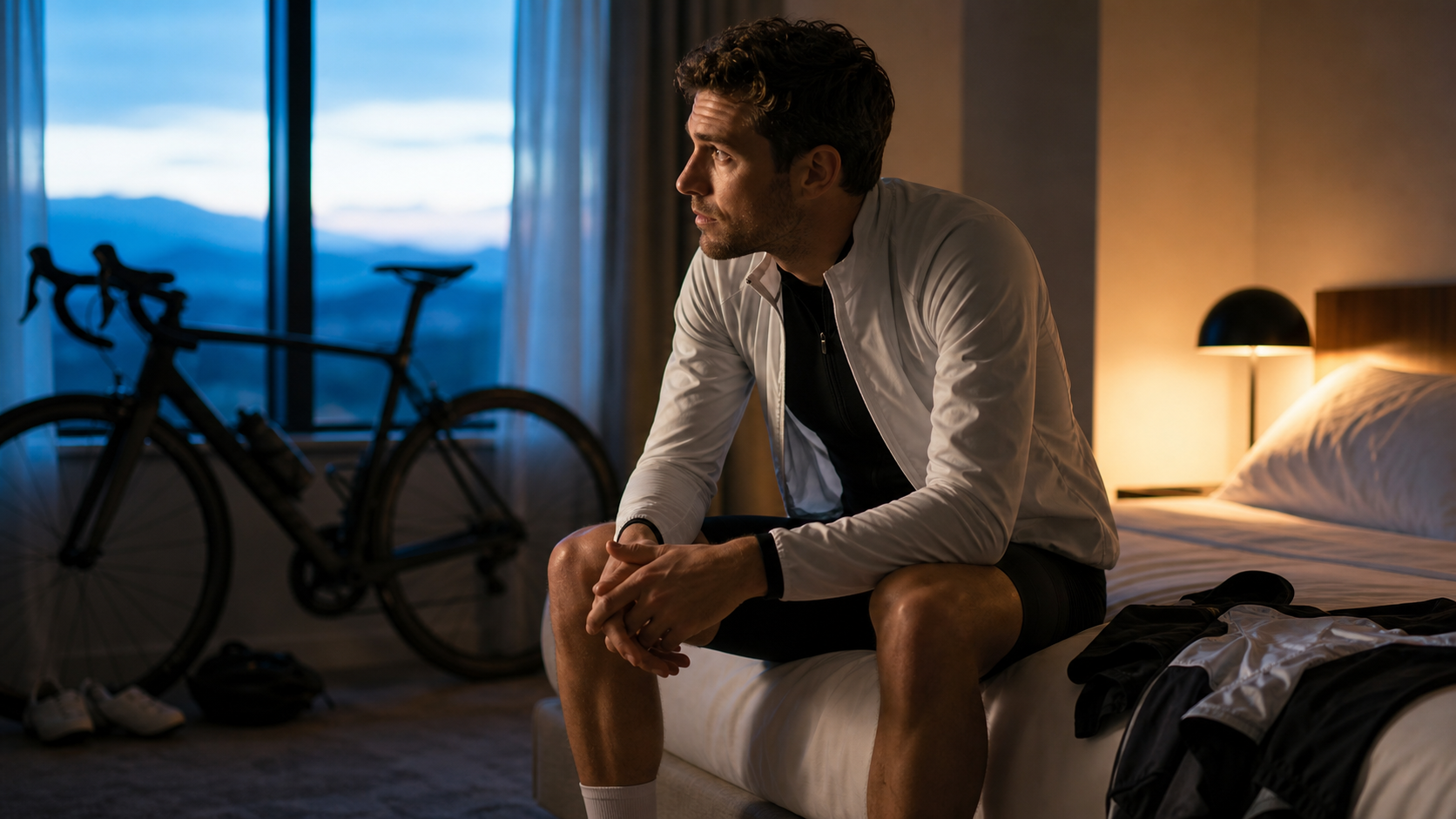
Sleep Changes During the Taper: Why You Get Insomnia and What to Do About It
“I sleep like a log during training, but once the taper starts, I’m wide awake at 3 AM”—this is a shared experience among endurance athletes. Taper insomnia is a physiological phenomenon, not a result of stress.
Why Insomnia Happens
Four key mechanisms:
1. Reduced Physical Fatigue
High-intensity training accumulates physical fatigue, which naturally brings deep sleep. After reducing volume, fatigue drops, and it takes longer to fall asleep, and sleep becomes lighter.
2. Cortisol Rhythm Reset
During the taper, cortisol (the stress hormone) returns to normal levels, but the body has adapted to a high-cortisol state. During the reset process, you may experience:
- Waking up at 3–4 AM (cortisol peak)
- Difficulty falling back asleep after waking
- Feeling more alert during the day instead
3. Increased Parasympathetic Nervous System Activity
Reduced volume lets the parasympathetic nervous system (the rest-and-digest system) take over again, which can cause:
- Higher heart rate variability (HRV) → a good thing
- Changes in body temperature during sleep → affects deep sleep cycles
4. Mixed Anxiety / Excitement
With race day approaching, the brain’s “race rehearsal” can disrupt sleep—this is the sleep version of Taper Madness.
Sleep Monitoring: What’s Normal
| Metric | Training Period | Taper Period | Is It Normal? |
|---|---|---|---|
| Time to fall asleep | 5–10 min | 15–30 min | Normal |
| Night wakings | 0–1 times | 1–3 times | Normal |
| Total sleep time | 7.5h | 6.5–7h | Slightly less, normal |
| HRV | High | Higher | Normal |
| Resting heart rate | 50 | 47 | Normal decrease |
Sleep Management for the 3 Nights Before Race Day
3 Days Before Race Day
- Maintain your usual sleep schedule (don’t go to bed early)
- Go to bed at 11:00 PM, wake up at 6:30 AM
2 Days Before Race Day (Most Critical)
This night is the real “decisive sleep”—research shows that sleep on the night before the race has limited impact on performance, but sleep two nights prior matters a lot.
- Go to bed at 10:30 PM
- No screens for 2 hours before bed
- Room temperature at 18–20°C
- Dark and quiet
1 Day Before Race Day
Most people sleep poorly this night—don’t panic:
- Go to bed at 9:30 PM, but allow yourself 30–60 minutes to fall asleep
- Don’t look at the clock
- Use breathing techniques (4-7-8 breathing) to relax
- Even if you only sleep 4–5 hours, race performance can still be maintained
Sleep Optimization Strategies
Diet
- Reduce caffeine 1 week before the race (from 200mg → 100mg)
- Include tryptophan in dinner (chicken, bananas, nuts)
- Avoid alcohol 2 days before the race (it disrupts REM sleep)
Behavior
- Take a 30–45 minute daytime walk in the sun (resets your circadian rhythm)
- No phone scrolling 1 hour before bed
- Take a hot bath before bed (the drop in body temperature after raising it induces sleepiness)
Supplements (Use with Caution)
- Magnesium (300–400mg): start 1 week before the race
- Glycine (3g): 30 minutes before bed
- It is not recommended to try new sleep supplements before the race
What to Do If You Can’t Sleep the Night Before the Race
- Don’t get up to read / look at your phone
- Do progressive muscle relaxation (from feet to head)
- Visualize the aid station at the middle of the race (a neutral image)
- Accept the fact that “lying down and resting is also recovery”
Conclusion
Taper insomnia is a sign that “your body is resetting”—it’s not high stress, and it’s not weak mental toughness. Make the most of the good sleep two nights before the race, accept the possible sleeplessness the night before, and you’ll find at the starting line—your body is more willing to cooperate than you think.
Related Reading
- Taper Madness: A Psychological Guide to Managing Pre-Race Anxiety and Irritability
- Physical Sensations During the Taper: Why You Feel “Heavy Legs” and “No Power”
- Sleep for Female Athletes: Luteal Phase Insomnia and Recovery Quality
- Maintaining Intensity During the Taper: Why Volume Drops but Intensity Can’t
[教學] Premiere 影片 手震 修正 教學 防抖 單眼 影像 GoPro 穩定 Video Stabilization
8 年前
CT暗黑廚房) 車友必備 宇宙無敵鮮蚵湯 幫助訓練恢復 天然食補 好市多 超肥鮮蚵 破PR
7 年前
西進武嶺 自製新版AI配速表產生器 x 賽前攻略 抱佛腳! 沒有功率計也可以產生配速表嗎?有什麼其他眉角賽前要注意的呢? | 西進武嶺 / 東進武嶺 KOM 攻略 | 公路車 | CT Yeh
4 年前
戰略) Zwift Race 如何咬在第一集團 如何評估自己要開多少推力 (請開1.5倍速看)
7 年前
西進武嶺 免費訓練分析服務 Intervals | 練不夠還是練過頭?你哪一種類型選手?AI模型告訴你! | 備戰神器 | 公路車 訓練 | CT Yeh
4 年前
CT 喇低賽) 單車 比賽總是沒照片? 攝影師的觀點大公開 姿勢就是力量! 請加速1.25倍收看
7 年前
16/02/16 - 夜訪中社路 緩慢進步中
10 年前
#公路車 #Fitting 靠人工智慧APP 幫你調整單車
6 年前