Summer Training Hydration Formula: Specific Milliliter Amounts Before, During, and After Workouts
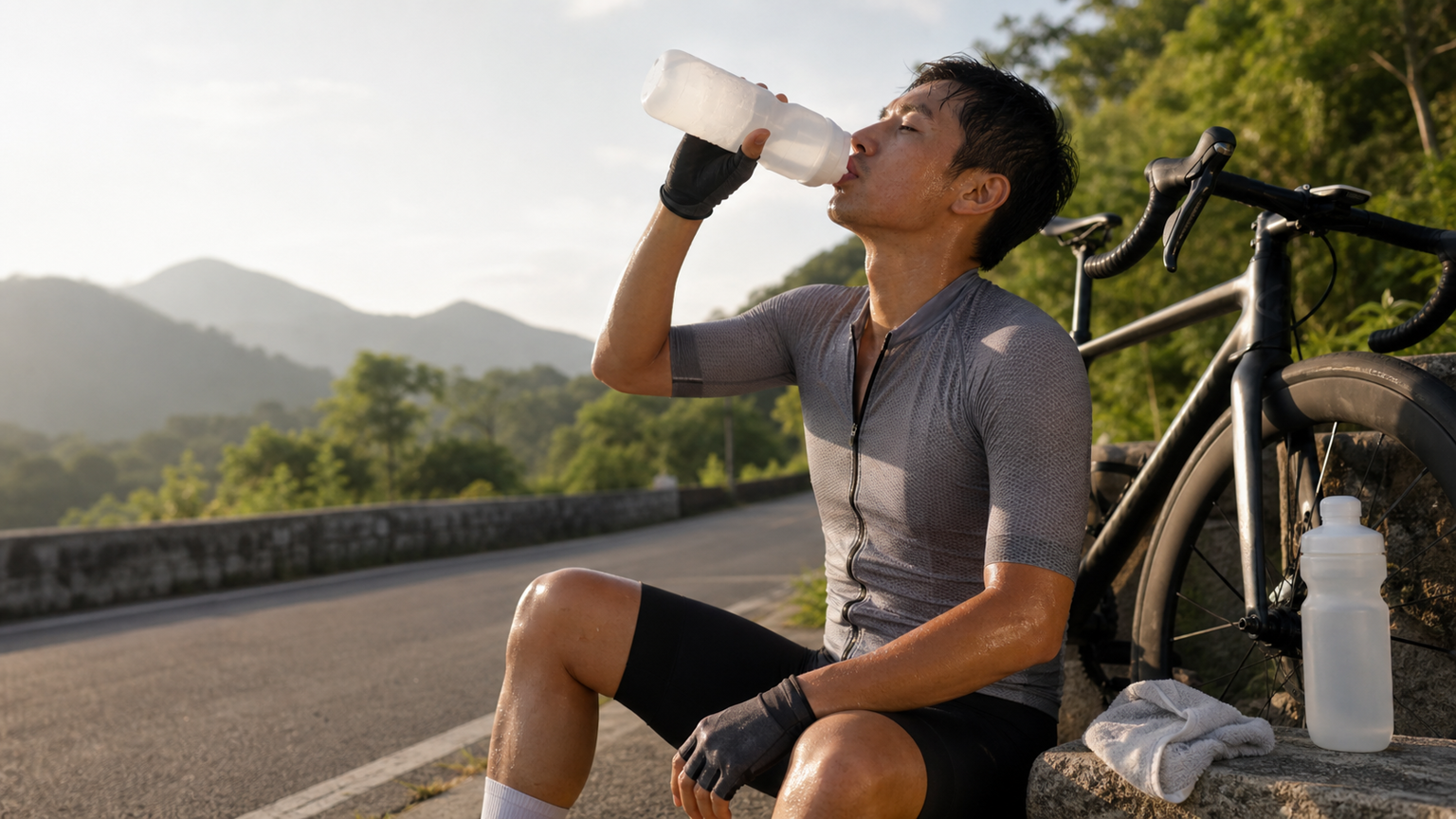
Why Summer Hydration Must Be Calculated
When the body loses 1% of its weight through dehydration, heart rate rises by 5 bpm; at 2% dehydration, pace capability drops by 10%; above 4% dehydration, you enter the heat exhaustion warning zone. A 70 kg runner running for 60 minutes in a 30°C environment may lose 1200-1600 ml of sweat, which requires advance planning rather than relying on thirst response.
Calculate Your Personal Sweat Rate
Test Method:
- Before training, fast and empty your bladder, then weigh yourself (W1)
- Perform 60 minutes of steady-intensity training, recording fluid intake (D, in ml)
- After training, dry off and weigh yourself again (W2)
- Sweat rate = (W1 - W2) × 1000 + D (in ml/hour)
Example: W1 = 70.0 kg, W2 = 69.0 kg, drank 400 ml during training → sweat rate = 1000 + 400 = 1400 ml/hour
Pre-Training Hydration (2-4 Hours Before Start)
| Body Weight | 2-4 Hours Before Training | 30 Minutes Before Training |
|---|---|---|
| 50 kg | 300-400 ml | 100 ml |
| 60 kg | 400-500 ml | 150 ml |
| 70 kg | 500-600 ml | 200 ml |
| 80 kg | 600-700 ml | 250 ml |
Key Point: Do not chug large amounts of water within 1 hour before training, or you will experience frequent urination during the session. Check urine color—pale yellow (like straw color) indicates proper hydration.
Hydration During Training (Every 15-20 Minutes)
Adjust based on sweat rate:
| Sweat Rate | Intake Every 15 Minutes | Total Per Hour |
|---|---|---|
| Below 800 ml/hr | 100-150 ml | 400-600 ml |
| 800-1200 ml/hr | 150-200 ml | 600-800 ml |
| 1200-1600 ml/hr | 200-250 ml | 800-1000 ml |
| Above 1600 ml/hr | 250 ml | 1000 ml (upper limit) |
Why the upper limit is 1000 ml/hr: The gastrointestinal tract absorbs fluid at a rate of approximately 800-1000 ml/hour. Exceeding this causes fluid to pool in the stomach, triggering runner’s stomach cramps.
Post-Training Hydration (Recovery Phase)
Formula: Body weight lost during training (kg) × 1500 ml
For example, if you weigh 1.5 kg less after training → replenish 2250 ml, consumed over 4-6 hours.
Why 1.5 times? Because the body continues to sweat and urinate after training, with a net absorption rate of approximately 67%.
What You Replenish Matters More Than How Much
For training sessions exceeding 60 minutes, sports drinks are recommended over plain water:
| Beverage Type | Sodium (mg/100ml) | Carbohydrates (g/100ml) | Best For |
|---|---|---|---|
| Plain Water | 0 | 0 | <60-minute training |
| Homemade Sports Drink | 50-70 | 6-8 | 60-90 minutes |
| Commercial Sports Drink | 40-50 | 6 | General use |
| Caffeinated Sports Drink | 40-50 | 6 | >90-minute races |
Homemade Sports Drink Recipe (1000 ml):
- Water 950 ml
- Salt 1.5 g (600 mg sodium)
- Honey or sugar 60 g
- Lemon juice 50 ml (potassium + flavor)
The Danger of Overhydration
Exercise-Associated Hyponatremia (EAH) has a prevalence of approximately 0.6-7% among marathon finishers, with fatal cases most commonly involving smaller runners, slower paces, and frequent plain water consumption.
Warning symptoms:
- Body weight after training is higher than before training
- Nausea, headache, confusion
- Swelling in fingers and ankles
Prevention principle: Body weight loss during training should not exceed 2%, nor should it increase by more than 1%.
Practical Hydration Plan Example
70 kg runner, 90-minute summer long run (sweat rate 1400 ml/hr):
- 2 hours before training: 500 ml water + 1 banana
- 30 minutes before training: 200 ml sports drink
- During training (every 20 minutes): 250 ml sports drink × 4 times = 1000 ml
- Within 1 hour after training: 500 ml sports drink + protein
- 2-4 hours after training: Replenish another 1500 ml of fluids with meals
Precise hydration isn’t just about “not being dehydrated”—it’s an invisible variable in athletic performance.
Related Reading
- The Science of Fluid Replacement: How to Calculate Personal Sweat Rate and Hydration Needs
- Running Hydration Strategies: Dehydration, Overdrinking, and Drinking to Thirst Principles
- Fluid Loss and Running Performance: Quantifying the Impact of Losing 1% of Body Weight
- Road Running Fluid Needs: Sweat Rate Testing and Per-Hour Fluid Intake Guidelines
西進武嶺 免費訓練分析服務 Intervals | 練不夠還是練過頭?你哪一種類型選手?AI模型告訴你! | 備戰神器 | 公路車 訓練 | CT Yeh
4 年前
#公路車 #Vo2Max #最大攝氧量 測驗 體驗 | 心肺測試
6 年前
CT暗黑廚房) 車友必備 宇宙無敵鮮蚵湯 幫助訓練恢復 天然食補 好市多 超肥鮮蚵 破PR
7 年前
2016/4/20 - 中社路 夜騎 半年甩肉14KG 後測
10 年前
靠單車減肥35公斤 心得分享與整理
7 年前
西進武嶺 自製新版AI配速表產生器 x 賽前攻略 抱佛腳! 沒有功率計也可以產生配速表嗎?有什麼其他眉角賽前要注意的呢? | 西進武嶺 / 東進武嶺 KOM 攻略 | 公路車 | CT Yeh
4 年前
實景訓練台) 彰化經典百K 高強度喵團 90分鐘 跟著一起練功 2019 Indoor workout Changhua Classic 100 Taiwan
7 年前
2016/05/13 單車 冷水坑下滑
10 年前