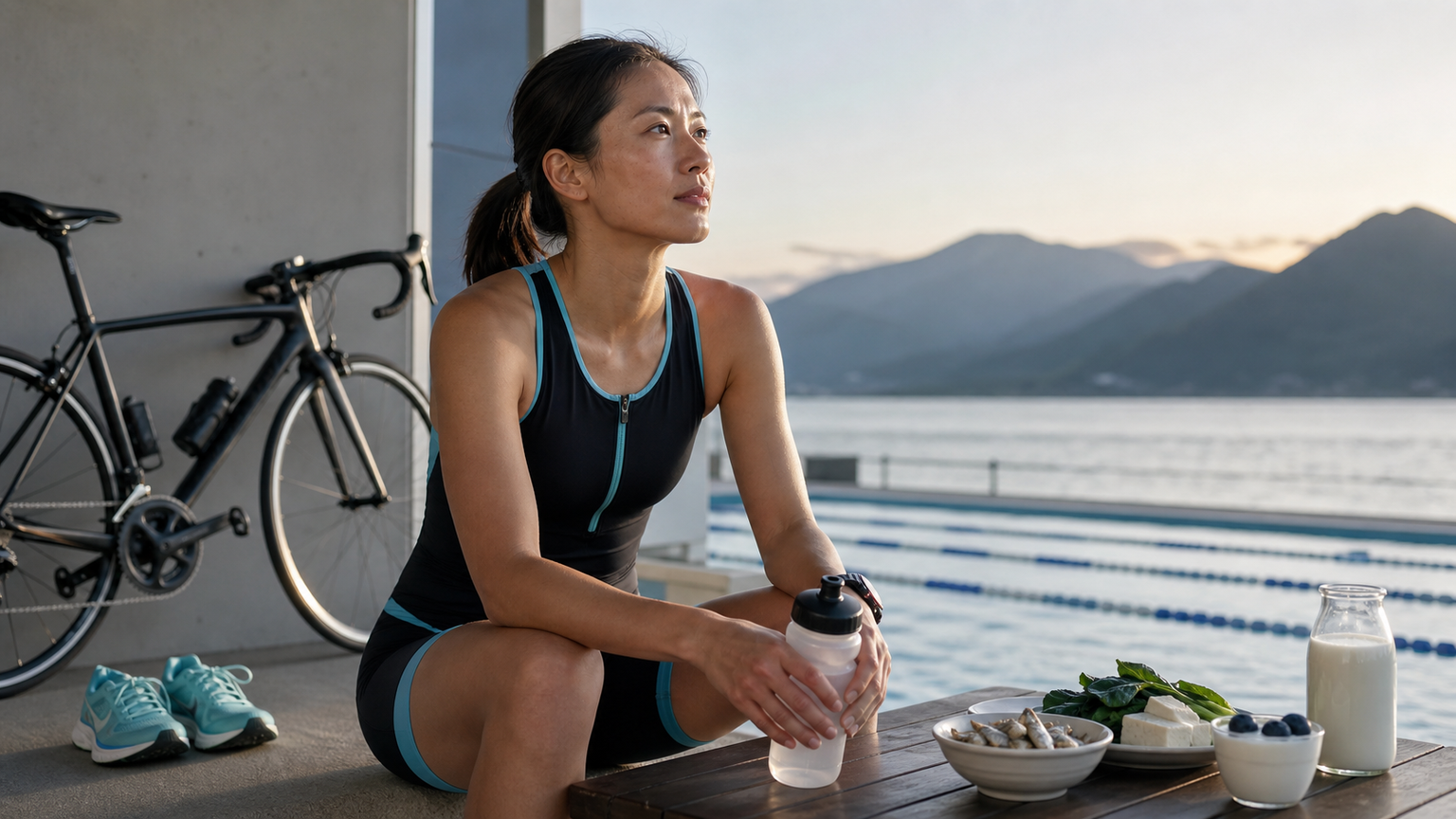
A Counterintuitive Fact
A 2015 Norwegian study found that female cyclists have 10–15% lower bone density than sedentary women. This overturns the common assumption that “athletes have strong bones.” The reasons are:
- Cycling is non-weight-bearing: Lacks the impact and tensile stimulation bones need
- Prolonged aerobic exercise combined with energy deficiency: Lower estrogen levels
- Calcium loss through sweat: Can reach 40–60 mg per hour
- Gastrointestinal intolerance: Dietary calcium intake is often low
The Bone Density Spectrum Across Triathlon Disciplines
| Discipline | Bone Density Impact | Main Reason |
|---|---|---|
| Running | Positive (tibia, femur) | Strong impact loading |
| Cycling | Negative (lumbar spine, hip) | No impact + prolonged energy expenditure |
| Swimming | Neutral to negative | Buoyancy reduces bone loading |
| Triathlon (combined) | Depends on running proportion | Higher risk for those who ride more and run less |
Calcium Requirements for Female Athletes
| Population | Calcium Recommendation (mg/day) |
|---|---|
| General adult women | 1000 |
| Female athletes (moderate intensity) | 1200 |
| Female endurance athletes (>10 h/week) | 1300–1500 |
| Menstrual dysfunction or low EA | 1500 (plus Vit D) |
| Menopausal female athletes | 1500–1800 |
Dietary Sources of Calcium
High-Calcium Foods
- Cheese 30g: 200 mg
- Milk 240 ml: 300 mg
- Yogurt 200g: 250 mg
- Firm tofu 100g: 140 mg (calcium-salt coagulated)
- Dried small fish 30g: 500 mg
- Black sesame 1 tablespoon: 90 mg
- Chinese kale, bok choy 1 cup: 150–200 mg
Factors That Inhibit Absorption
- Oxalates (spinach, amaranth)
- Phytates (whole grains, legumes—soaking can reduce)
- Excess protein (>2.5 g/kg)
- High sodium intake (>3500 mg/day)
- Caffeine >300 mg/day (increases urinary calcium by 6 mg per cup)
Vitamin D: Calcium’s Partner
- Without Vit D, calcium absorption is only 10–15%
- With adequate Vit D, absorption can reach 30–40%
- Over 80% of female athletes in Taiwan are Vit D deficient (<30 ng/mL)
- Recommended target: serum 25(OH)D 40–60 ng/mL
- Supplementation: 1000–2000 IU/day; 4000–5000 IU short-term for those deficient
A Bone Insurance Plan for Female Triathletes
1. At Least 2 Impact Training Sessions Per Week
- Jump rope 5–10 minutes
- Box jumps
- Short, high-speed runs
- Incorporate these into a cycling-dominant training week
2. 2 Resistance Training Sessions Per Week
- Squats, deadlifts, overhead presses (multi-joint, large muscle groups)
- 70–85% 1RM × 6–10 reps × 3–4 sets
- Superior to aerobic exercise for bone density stimulation
3. Meet Daily Dietary Targets
- One serving of dairy at both breakfast and dinner
- Nuts and dried small fish as snacks
- Take supplements in divided doses (absorption decreases with single doses >500 mg)
4. DXA Scans
- Every 2 years after age 30
- Annually for those with a history of stress fractures or menstrual dysfunction
- Assessment sites: lumbar spine, hip
Stress Fractures: A Warning Light
Common stress fracture sites in female athletes:
| Site | Clinical Significance |
|---|---|
| Metatarsals | Training volume, running shoe issues |
| Tibia | Cumulative running impact |
| Sacrum, femoral neck | RED-S, low estrogen warning sign |
| Ribs | Common in cyclists |
When a sacral or femoral neck stress fracture appears, RED-S is almost certainly present—initiate a comprehensive intervention immediately.
Don’t Wait Until You Fracture to Act
Bone density is like a savings account—the more you deposit when you’re young, the more you’ll have in reserve later. Peak bone mass is reached at age 30, then declines year after year. Female triathletes: don’t skip the weight room.
Related Reading
- Strength Training for Female Endurance Athletes: Special Considerations for Relative Energy Deficiency and Bone Density
- Bone Density and Endurance Sports: The Effects of Long-Distance Running and Cycling on Bone
- Calcium and Vitamin D: The Battle to Protect Bone Density in Endurance Athletes
- The Bone Density Crisis in Cyclists: Why Pure Cyclists Need to Add Strength Training
相關影片
訂閱CT的頻道 一日北高/長距離團騎 常見問題補充篇 / 組團或跟團的眉角 / 壯車友容易被瘦車友慢性拉爆 / 原來屁股痛可能是這個原因...? / 風場配速法 / 公路車 / CT Yeh
2 年前
靠單車減肥35公斤 心得分享與整理
7 年前
一日北高常見問題大集合 | 攻略 | 路線 | 訓練 | 補給 | 自行車 單車 | 一日雙城 | 雙塔 | TWB北高360 | 屁股痛
6 年前
CT 喇低賽) 武嶺牽車 才是王道 西進牽車四小時內秘訣 攝手位置 如何判斷 防抽筋小秘訣
7 年前
單車 一日北高 ( 雙城 ) 肥宅雙人瘋狂行 紀錄片 REACTO
10 年前
CT 喇低賽) 單車 比賽總是沒照片? 攝影師的觀點大公開 姿勢就是力量! 請加速1.25倍收看
7 年前
一日北高前的西濱集訓 | 跟著11小時軍團 | 300W踩不動的大逆風 | 輪車破風差幾瓦?
6 年前
CT暗黑廚房) 車友必備 宇宙無敵鮮蚵湯 幫助訓練恢復 天然食補 好市多 超肥鮮蚵 破PR
7 年前