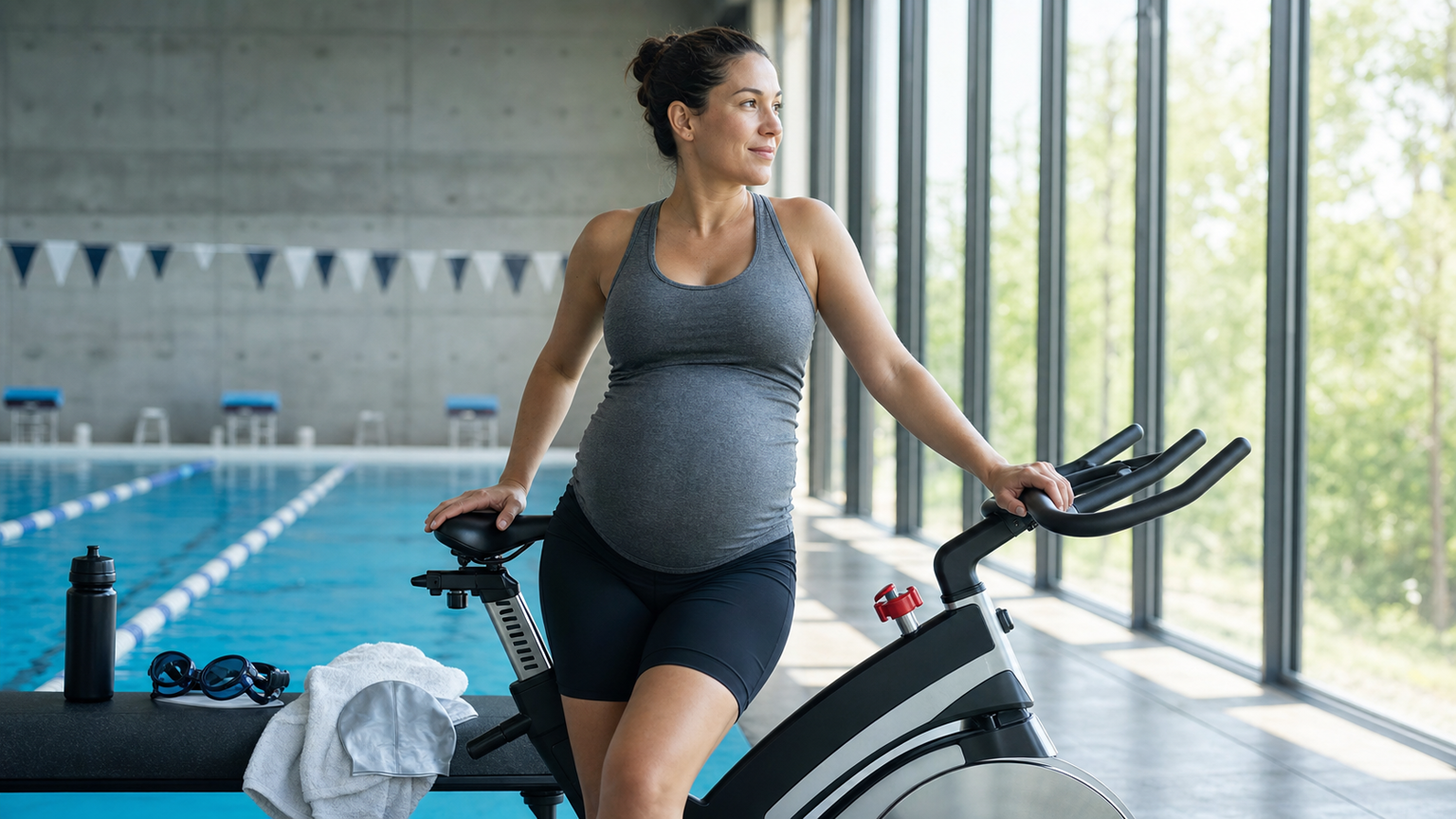
The Medical Consensus on Exercise During Pregnancy
The ACOG (American College of Obstetricians and Gynecologists) 2020 guidelines clearly state:
- Women with uncomplicated pregnancies should exercise regularly
- Moderate-intensity aerobic exercise for 150 minutes/week is the baseline
- Resistance training, yoga, and swimming are all encouraged
- “Guidelines designed for athletes” were also incorporated into the update
But pregnancy management for endurance athletes requires more nuance.
Physiological Changes Across the Three Trimesters
| Stage | Key Changes | Training Adjustments |
|---|---|---|
| First Trimester (Weeks 1–12) | Fatigue, nausea, miscarriage risk | Reduce volume by 30–50%, intensity can be maintained, avoid dehydration |
| Second Trimester (Weeks 13–27) | Blood volume +30–50%, cardiac output ↑, balance begins to be affected | Stabilize volume, gradually reduce intensity, adjust posture |
| Third Trimester (Weeks 28–40) | Uterus compresses abdominal cavity, relaxin ↑, venous return ↓ | Significantly reduce impact, avoid supine positions, maintain postural awareness |
Heart Rate Is No Longer a Good Indicator
The traditional “pregnancy heart rate cap of 140” has been abandoned. The reasons are:
- Increased blood volume → heart rate is 10–20 bpm higher at the same intensity
- Individual variation is enormous
- Cardiorespiratory adaptations mean elite athletes naturally have lower RPE
New Standard: Rating of Perceived Exertion (RPE)
- Target RPE 6–7/10 (able to speak in full sentences)
- “Talk Test”: able to hold a conversation but not sing
- Use RPE as the primary monitoring tool instead of heart rate
Adjustments for Each of the Three Disciplines
Running
- Can continue in the first trimester but reduce volume
- Second trimester: many begin to experience pelvic discomfort and need a pelvic support belt
- Third trimester: most switch to walking + aqua running
- Avoid: high-intensity intervals, long downhill descents, high-impact trail running
Cycling
- Indoor triathlon bikes are safest (no risk of falling)
- Second trimester posture adjustments: raise handlebars, change saddle position
- Third trimester: switch to indoor stationary bikes or recumbent bikes
- Avoid: outdoor road cycling (especially for beginners), mountain biking, mass-start races
Swimming: The Queen of Pregnancy Exercise
- Buoyancy reduces joint load
- Excellent heat dissipation
- Full-body exercise
- Can continue until one week before delivery
- Avoid: diving, deep diving, overheated pools (>32°C)
Red Flag Signs Requiring Immediate Cessation of Exercise
Stop immediately and seek medical attention if any of the following occur:
- Vaginal bleeding or amniotic fluid leakage
- Regular uterine contractions
- Persistent headache, visual disturbances
- Chest pain, severe shortness of breath
- Unilateral calf swelling and pain (warning sign of blood clot)
- Decreased fetal movement
- Severe dizziness or fainting
Temperature Management: Core Guidelines
- Core body temperature must not exceed 39°C
- Indoor exercise: avoid high heat and humidity, pay attention to heat dissipation
- Saunas and hot baths are prohibited
- The first trimester is most critical (neural tube development)
- Hydration: increase intake by an additional 300–500 ml/day compared to pre-pregnancy
Resistance Training Adapted for Pregnancy
Benefits:
- Prevents lower back pain and pelvic pain
- Maintains a foundation for postpartum recovery
- Improves insulin sensitivity
- Reduces the risk of gestational diabetes
Adjustments:
- First trimester: can maintain original intensity, avoid breath-holding
- Second trimester: switch to machines, reduce weight, increase repetitions (12–15 reps)
- Third trimester: avoid supine positions (compression of major vessels when lying on the back)
- Completely avoid: Valsalva maneuvers, box jumps, unstable single-leg movements
Weight Management
For women with a normal BMI, the recommended gestational weight gain is 11.5–16 kg. Athletes tend to gain weight at the lower end of the range, but don’t aim for “no weight gain”—the fetus, placenta, amniotic fluid, and increased blood volume alone account for 7–8 kg.
The Psychological Aspect
Many female athletes experience the following during pregnancy:
- Anxiety about losing their identity
- Discomfort with body changes
- Worry about returning to performance
- A sense of isolation from training peers
Recommendation: Seek out an OB-GYN or sports psychologist who has worked with athletes, and join pregnancy exercise communities (such as The Performance Doula).
A Shift in Perspective
Pregnancy is not a “training pause,” but rather a “change in training goals”—shifting from performance enhancement to building reserves for postpartum recovery. View these 40 weeks as an “investment in becoming a stronger mother-athlete after delivery.”
Related Reading
- Endurance Exercise During Pregnancy: A Safety Framework for Intensity, Temperature, and Maternal Hemodynamics
- Prenatal and Postpartum Endurance Training: Safety Boundaries and Return-to-Sport Timeline
- Exercise During Pregnancy and Postpartum Return: A Complete Guide for Endurance Athletes
- Exercise and Pregnancy: A Safety Guide for Exercising While Pregnant—A Comprehensive Analysis from Coaching and Sports Science Perspectives
西進武嶺 免費訓練分析服務 Intervals | 練不夠還是練過頭?你哪一種類型選手?AI模型告訴你! | 備戰神器 | 公路車 訓練 | CT Yeh
4 年前
JE22 百里任務體驗,心跳不能過150,三小時內有可能...? 沒有天時地利難度有多高? / 公路車 / CT Yeh
1 年前
[教學] Premiere 影片 手震 修正 教學 防抖 單眼 影像 GoPro 穩定 Video Stabilization
8 年前
#公路車 #Vo2Max #最大攝氧量 測驗 體驗 | 心肺測試
6 年前
FTL 與 SYB 車隊專訪 西進武嶺 實用攻略分享! 2小時 如何練?!你不知道的眉角!新手準備武嶺必看 EP1 | 實力派女車友 | 精華版 | 公路車 | CTYeh
4 年前
靠單車減肥35公斤 心得分享與整理
7 年前
福隆鐵人團練隨拍
8 年前
3D 列印車褲墊 / 舒適改善? / 無痕 x 分區壓縮 / ATK & Decider系列 / JE22黑科技 / #公路車 #CTYEH
11 個月前