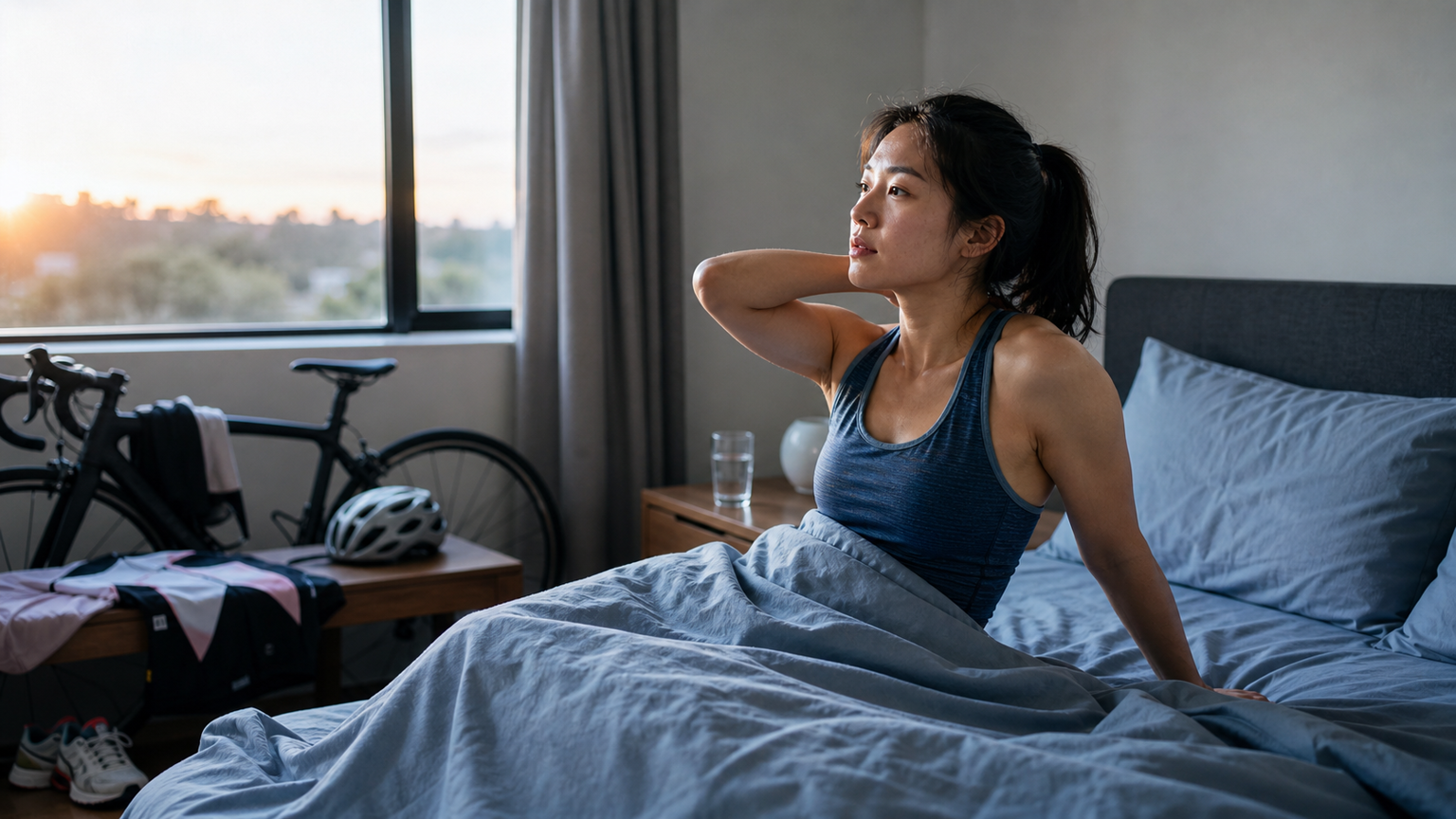
Why Do Female Athletes Sleep Differently?
Sleep is important for all athletes, but women face additional challenges:
- The menstrual cycle affects core body temperature
- Progesterone affects GABA receptors
- Estrogen affects serotonin and melatonin
- Low ferritin affects restless legs syndrome
- Insomnia caused by PMS
Menstrual Cycle and Sleep Data
| Phase | Sleep Onset Time | Deep Sleep Ratio | Night Wakings | Total Sleep |
|---|---|---|---|---|
| Early Follicular Phase | Standard | Standard | Fewest | Best |
| Ovulation | Slightly Delayed | Slightly Reduced | Slightly Increased | Slightly Reduced |
| Early-to-Mid Luteal Phase | Average | Down 5–10% | Increased | Affected by Core Temperature |
| Late Luteal Phase (PMS) | Extended by 30–60 Minutes | Significantly Reduced | Significantly Increased | Reduced by 30–60 Minutes |
| 3 Days Before Menstruation | Affected by Cramps | Reduced | Increased | Reduced |
Physiological Mechanisms of Luteal Phase Insomnia
1. Elevated Core Body Temperature
The body needs core temperature to drop by 0.5°C before sleep to initiate drowsiness. Basal body temperature is 0.3–0.5°C higher during the luteal phase, limiting the temperature drop, which makes falling asleep difficult.
2. Progesterone Withdrawal
Progesterone is a natural GABA receptor agonist (sedative effect). In the late luteal phase, progesterone drops rapidly, like suddenly stopping a medication, causing anxiety and insomnia.
3. Changes in Melatonin Secretion
Estrogen affects melatonin, and secretion decreases slightly in the late luteal phase.
Luteal Phase Sleep Optimization Strategies
Environmental Adjustments
- Lower room temperature to 18–20°C (1°C lower than usual)
- Cooling bedding, cooling pillows
- Warm bath before bed (warming up first, then body temperature drops faster after getting out)
- Avoid electric blankets and overly thick duvets
Supplements (Supported by Scientific Evidence)
- Magnesium 200–400 mg: Promotes relaxation and deep sleep (magnesium glycinate has good absorption)
- Vitamin B6 50–100 mg: Improves PMS-related insomnia
- Glycine 3 g: Lowers core body temperature, improves sleep quality
- L-Theanine 200–400 mg: Reduces anxiety, improves sleep continuity
- Melatonin 0.3–1 mg: Low dose, short-term use only when necessary
Dietary Adjustments
- Add complex carbohydrates to dinner during the luteal phase (boosts serotonin precursor tryptophan)
- Avoid caffeine after 14:00 (metabolism is slower during the luteal phase)
- Limit alcohol (alcohol disrupts REM sleep)
- Avoid large meals 3 hours before bed
The Dialectic of Training Load and Recovery
Common mistake: poor sleep during the PMS phase of the luteal phase → fatigue the next day → pushing through high-intensity training anyway → even worse sleep.
The correct sequence:
- Poor sleep in the late luteal phase → a natural response
- Adjust training to low-to-moderate intensity and technical drills
- Move intensity training to the follicular phase
- Accept cyclical differences in recovery
- After menstruation (early follicular phase) is actually the best time to “catch up on sleep”
Ferritin and Restless Legs Syndrome (RLS)
The rate of RLS in female athletes is about 2 times that of men. The main cause is iron deficiency.
Symptoms:
- Discomfort, twitching, or tingling in the calves before falling asleep
- The urge to move for relief
- Affects sleep onset and sleep continuity
Check: Iron supplementation is needed when ferritin is < 50 μg/L. RLS usually improves significantly after 6–12 weeks of iron supplementation.
HRV Monitoring and the Cycle
When using HRV monitoring (such as Garmin, Whoop, Oura), keep in mind:
- HRV naturally drops 5–15% during the luteal phase (not overtraining)
- HRV briefly rises during ovulation
- HRV may suddenly drop before menstruation (PMS effect)
Don’t let HRV dictate your judgment—interpret it together with your cycle.
Sleep Management Before Triathlon Camps / Races
One Week Before the Race
- Ensure 7.5–9 hours of sleep
- Know in advance where race day falls in your cycle
- Racing in the late luteal phase: start sleep protection 3–5 days in advance
What If You Sleep Poorly the Night Before the Race?
- Don’t over-worry: Research shows that sleep the night before a race does not affect performance—the 2 nights before matter most
- Going to bed especially early 2 nights before the race is key
- The night before the race: relax, stay off your phone, don’t review tomorrow
One Key Concept
Sleep is not a binary question of “enough or not enough,” but a refined management of “quality and timing.” For female athletes, sleep management itself is part of training.
Related Reading
- Sleep Optimization for Female Runners: The Impact of Hormonal Cycles on Sleep Quality
- Sleep, Recovery, and Hormonal Interactions in Female Endurance Athletes: The Underrated Performance Variable
- Hydration Needs for Female Athletes: Fluid Strategies During Menstruation
- Menstrual Cycle and Training: Differences in Training Adaptation Between the Follicular and Luteal Phases
西進武嶺 免費訓練分析服務 Intervals | 練不夠還是練過頭?你哪一種類型選手?AI模型告訴你! | 備戰神器 | 公路車 訓練 | CT Yeh
4 年前
FTL 與 SYB 車隊專訪 西進武嶺 實用攻略分享! 2小時 如何練?!你不知道的眉角!新手準備武嶺必看 EP1 | 實力派女車友 | 精華版 | 公路車 | CTYeh
4 年前
CT暗黑廚房) 車友必備 宇宙無敵鮮蚵湯 幫助訓練恢復 天然食補 好市多 超肥鮮蚵 破PR
7 年前
CT Talk) 數據面窺看 武嶺大神們 平時的備戰 共通點 (娛樂性質XD)
7 年前
[教學] Premiere 影片 手震 修正 教學 防抖 單眼 影像 GoPro 穩定 Video Stabilization
8 年前
CT 喇低賽) 單車 比賽總是沒照片? 攝影師的觀點大公開 姿勢就是力量! 請加速1.25倍收看
7 年前
iPhone 12 Pro 夜間騎車動態錄影 效果屌打 GoPro Hero 9 | 公路車 團練
5 年前
一日北高常見問題大集合 | 攻略 | 路線 | 訓練 | 補給 | 自行車 單車 | 一日雙城 | 雙塔 | TWB北高360 | 屁股痛
6 年前