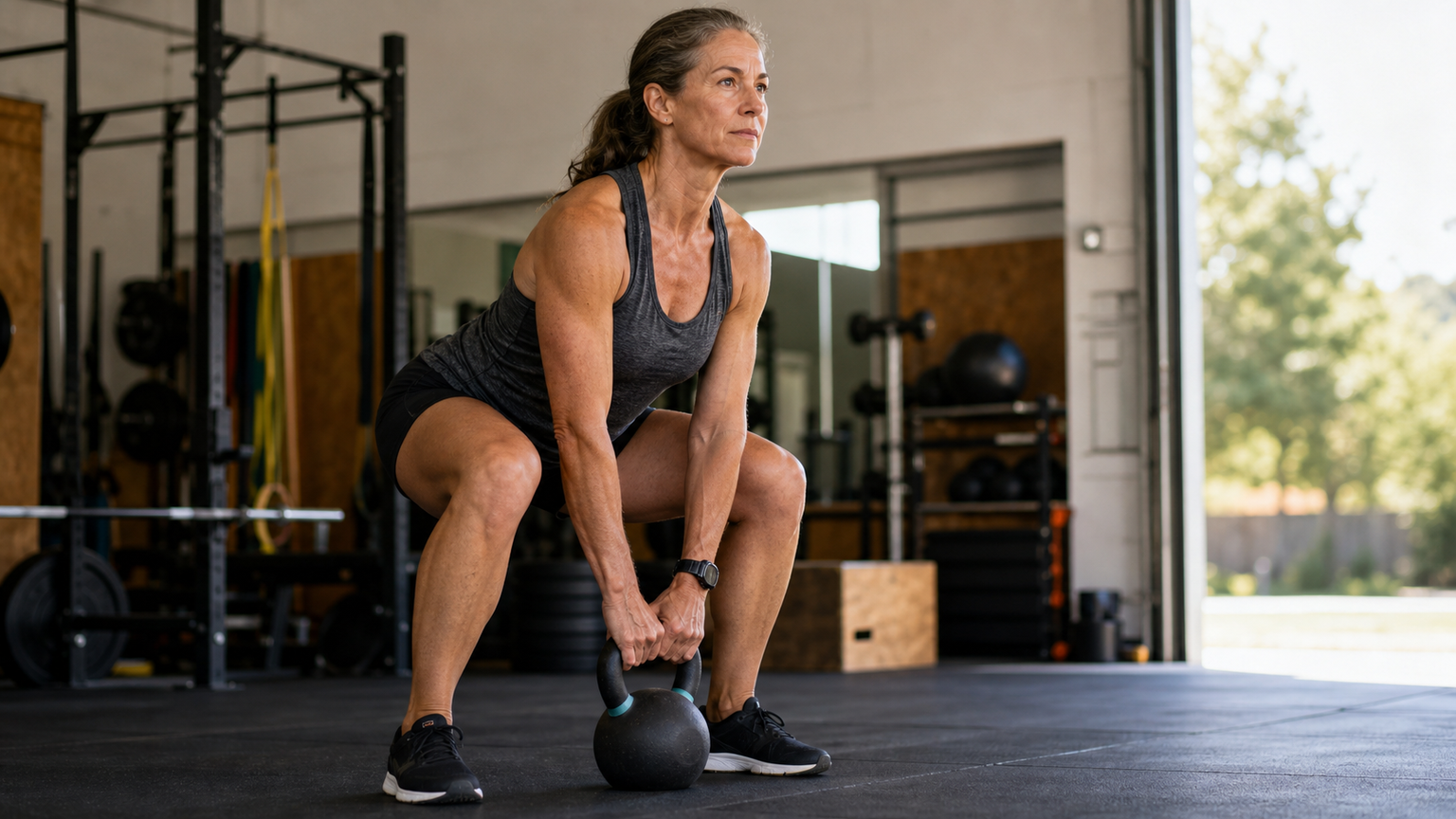
It’s Not “Getting Old”—The Rules Have Changed Due to Hormones
Menopause typically occurs between the ages of 45 and 55, with estrogen and progesterone gradually declining, leading to systemic changes in the body. For athletes, this is not a signal to retire, but a moment for “recalibration.”
Defining the Three Stages
| Stage | Age | Hormonal Characteristics | Training Focus |
|---|---|---|---|
| Perimenopause | 40–50 | Dramatic hormonal fluctuations, irregular cycles | Adapt to changes, increase strength training |
| Menopause | Confirmed 12 months without menstruation | Stable, low estrogen levels | High-intensity intervals + heavy weight training |
| Postmenopause | 50+ | Continuously low estrogen | Maintain performance + prevent bone loss |
Specific Impacts of Declining Estrogen
| System | Change | Impact on Athletes |
|---|---|---|
| Muscles | Protein synthesis decreases by 8–10% | 1–3% annual muscle loss, requiring more stimulation |
| Bones | Bone density decreases by 1–2% per year | Increased fracture risk, requiring impact training |
| Cardiovascular | Reduced vascular elasticity | Slower recovery from high-intensity efforts |
| Body Temperature | Dysregulation of the heat dissipation center | Hot flashes, overheating during exercise |
| Body Composition | Accumulation of abdominal fat | Changes in appearance even if weight remains stable |
| Recovery | Increased inflammatory response | More rest days needed between major training sessions |
| Sleep | Reduced deep sleep, waking up at night | Accumulated fatigue, reduced training quality |
Principles for Adjusting Training
1. The Importance of Weight Training Doubles
Menopause is a critical period for muscle loss. Research shows that weight training can almost completely offset this loss:
- At least 3 resistance training sessions per week (previously 2 might have sufficed, now 3 are needed)
- Increased intensity: 75–90% of 1RM
- Focus on compound movements: squats, deadlifts, pushes, pulls
- Incorporate explosive movements: box jumps, medicine ball throws (beneficial for bone density and neuromuscular efficiency)
2. High-Intensity Intervals Are Superior to LSD
Previously, progress was accumulated through “training volume,” but after menopause, this can be counterproductive:
- High-intensity intervals stimulate more growth hormone
- HIIT is more effective for bone density
- Prolonged slow running can actually elevate cortisol levels
Recommendation: Reduce the proportion of long slow distance training and increase sessions like 4x4 minutes at 90% VO2max, Tabata, and hill sprints.
3. Increased Protein Requirements
- Increase from 1.6 g/kg to 1.8–2.2 g/kg
- 30–40 g of protein per meal
- Consider 30 g of slow-release protein before bed (casein, Greek yogurt)
4. Extended Recovery Time
- 48–72 hours needed between two high-intensity training sessions (previously might have been 24–48)
- Increase recovery techniques: cold therapy, massage, yoga
- Accept that training volume “no longer increasing” is also a form of progress
Hormone Replacement Therapy (HRT) and Athletic Performance
Consensus since 2023: For suitable women, the benefits of HRT outweigh the risks. Effects on athletes include:
- Maintaining bone density
- Slowing muscle loss
- Improving sleep (indirectly enhancing performance)
- Reducing the degree to which hot flashes affect exercise
- Slight protective effect on VO2max
Note: Personal medical history, family history, and cardiovascular status determine suitability, and this must be discussed with a gynecologist.
The Critical Period for Calcium and Vitamin D
- Calcium: 1500–1800 mg/day
- Vitamin D: 2000–4000 IU/day (targeting blood levels of 40–60 ng/mL)
- Vitamin K2: 100 μg/day (helps direct calcium into bones rather than blood vessels)
Hot Flashes and Exercise
Managing sudden hot flashes during exercise that affect performance:
- Pre-cooling strategies: ice vests, ice-cold drinks before competition
- Schedule training for early morning or evening (avoid high temperatures)
- Athletic shirts made with phase-change materials
- Enhance heat dissipation and hydration during competition
The Psychological Aspect
Common issues for menopausal female athletes:
- Accepting a decline in performance
- The emotional impact of changes in weight/appearance
- Feelings of loss when comparing oneself to younger athletes
- Redefining “success”
Recommendation: Join peer athletic communities (masters category), set age-graded goals, and embrace a new identity.
The Potential of Masters Sports
International track and field statistics show:
- Age-graded marathon performance for women aged 50–60 can still improve
- Female cyclists at age 60 can still complete an Ironman
- The 5K record holder for women aged 70 has run under 22 minutes
The curve of athletic performance decline is not a steep drop, but rather a slow descent that is partially controllable.
A Word of Encouragement
Menopause is not the end of an athletic career, but halftime in a game where the rules have changed. Those who know how to rewrite the rules of the game can continue to win.
Related Reading
- Menopause and Endurance: Challenges for Muscles, Bones, and Body Temperature After Estrogen Decline
- Menopausal Female Runners: The Impact of Hormonal Changes on Running Performance
- Hormonal Changes in Senior Athletes: The Impact of Declining Testosterone on Training Recovery
- Menopausal Female Runners: Training Wisdom Amidst Hormonal Changes
西進武嶺 免費訓練分析服務 Intervals | 練不夠還是練過頭?你哪一種類型選手?AI模型告訴你! | 備戰神器 | 公路車 訓練 | CT Yeh
4 年前
2025 自行車錶排行榜 兩萬車友大數據 / Garmin Bryton 排名會大洗牌嗎? / 全新的碼表前身分析 /公路車 / CT Yeh
1 年前
單車AI教練!全新 ChatGPT4o 幫你分析訓練成果!排武嶺課表,分析騎車姿勢! 太神了! / 公路車 / CT Yeh / feat. 緯緯
2 年前
FTL 與 SYB 車隊專訪 西進武嶺 實用攻略分享! 2小時 如何練?!你不知道的眉角!新手準備武嶺必看 EP1 | 實力派女車友 | 精華版 | 公路車 | CTYeh
4 年前
[教學] Premiere 影片 手震 修正 教學 防抖 單眼 影像 GoPro 穩定 Video Stabilization
8 年前
靠單車減肥35公斤 心得分享與整理
7 年前
一日北高/長距離團騎 常見問題補充篇 / 組團或跟團的眉角 / 壯車友容易被瘦車友慢性拉爆 / 原來屁股痛可能是這個原因...? / 風場配速法 / 公路車 / CT Yeh
2 年前
崇越盃武嶺冠軍高手 賽前JJSC 群峰會精華!對應大數據分析,會有落差嗎?/ feat. JJSC中部公路車約騎 /公路車 / CT Yeh
2 年前