Ultramarathon Night Refueling: Caffeine Use Strategy and Timing Control for Night Running Segments
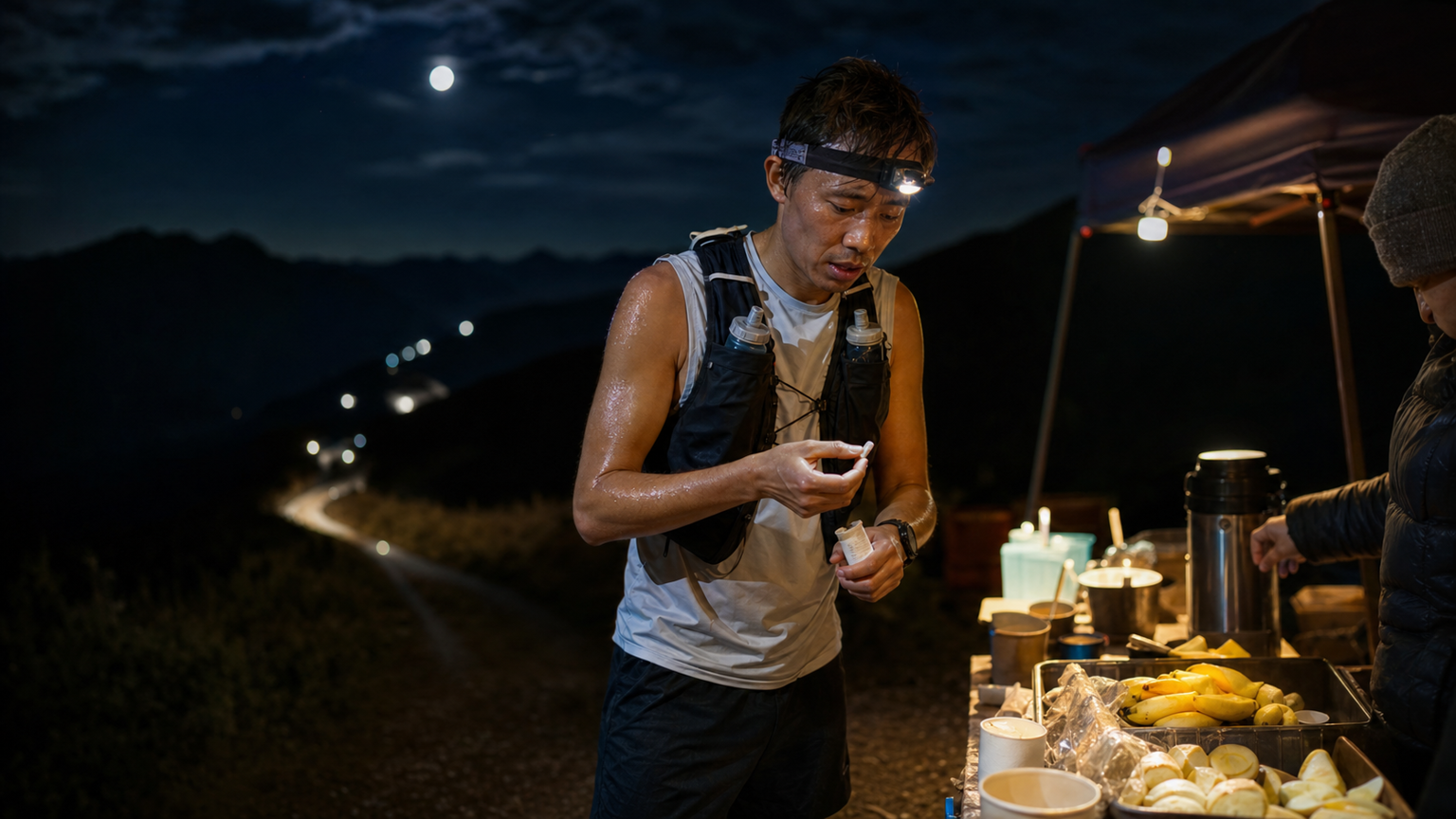
Ultramarathon Nighttime Refueling: Caffeine Use Strategy and Timing Control for Night Running Segments
Introduction
At 2 a.m., you’ve been running for over 18 hours. Your legs are heavy, your eyelids are drooping, and your judgment is starting to blur. This is the cruelest test of ultramarathon running—not just physical endurance, but the ultimate challenge of mental and willpower limits. At this moment, caffeine is your most powerful legal ally, but it’s a double-edged sword: used correctly, it provides 4–6 hours of alertness and performance enhancement; used incorrectly, it may fail at critical moments or even disrupt post-race recovery.
1. The Performance Mechanism of Caffeine in Exercise
Caffeine works by blocking adenosine receptors. Adenosine is the neurotransmitter responsible for fatigue; once caffeine occupies its receptors, the perception of fatigue is delayed. For ultramarathon runners, the main benefits include:
- Reduced perceived exertion (RPE lowered by 1–2 points)
- Improved cognitive function and decision-making ability
- Enhanced exercise economy (improved muscle contraction efficiency)
- Increased fat oxidation rate (helps spare glycogen)
The half-life of caffeine is approximately 5–6 hours, meaning that 5–6 hours after ingestion, half the concentration is still present in the bloodstream. This characteristic is crucial for planning nighttime usage timing.
2. Timing Strategies for Nighttime Caffeine Use
The Golden Time Window
Most ultramarathon runners experience their sleepiness trough between 1–4 a.m. (corresponding to the first to second deep sleep stages of a normal sleep cycle). Recommended caffeine usage plan:
| Timing | Recommended Dose | Expected Duration of Effect | Notes |
|---|---|---|---|
| 1 hour before the night run begins | 100mg | Until 3–4 a.m. | Avoid excessive fluid intake |
| 1–2 a.m. (trough period) | 100–150mg | Lasts until before dawn | Pair with a small amount of carbohydrates |
| First light after dawn (optional) | 50–100mg | Supplements final-leg motivation | Can be skipped if finishing at 7–8 a.m. |
Important: If you need to fall asleep normally after the race, the last caffeine intake should be 6 hours before finishing.
Caffeine Naïve Protocol
If you habitually drink coffee daily, it is recommended to stop caffeine intake 5–7 days before the race to allow adenosine receptor sensitivity to recover, which can significantly enhance caffeine’s effectiveness during the race.
3. Choosing Caffeine Sources
Comparison of Common Sources
- Caffeine capsules: Precise dosing (usually 50mg or 100mg), no extra calories, recommended for ultramarathon use
- Energy gels (caffeinated versions): Simultaneously provide 25g carbs + 50–75mg caffeine, highly convenient
- Espresso shots (small bottles): Commonly found in Taiwanese convenience stores, inconsistent dosing, higher gastrointestinal irritation
- Energy drinks (Red Bull, etc.): High sugar content and carbonation, significant stomach irritation during nighttime exercise, not recommended
- Caffeine pills (Vivarin/generic brands): Easy to carry, but watch out for sugar and fillers
Practical choices for Taiwanese runners: Caffeinated energy gels (such as GU Jet Blackberry) or pre-portioned caffeine capsules, paired with sports drinks at aid stations.
4. Integrated Nighttime Refueling Strategy
Caffeine used alone has limited effect; it needs to be paired with a complete nighttime refueling plan:
- Continuous carbohydrate intake: On an empty stomach, caffeine amplifies gastrointestinal discomfort. Consume 15–25g of carbohydrates before each caffeine intake
- Maintain hydration: Caffeine has a mild diuretic effect; still maintain 300–500mL of fluid intake per hour during the night
- Electrolyte monitoring: Thermoregulation mechanisms differ at night; even if sweat output may be lower, electrolytes still need to be replenished regularly
Example Nighttime Refueling Schedule (assuming nightfall at 8 p.m., running until noon the next day)
- 20:00 Nightfall, start using headlamp, consume 100mg caffeinated energy gel
- 22:00 Aid station, banana + electrolyte drink
- 00:00 Aid station, white rice ball + electrolytes, consume 100mg caffeine capsule
- 02:00 On the move, energy gel (non-caffeinated) + water
- 04:00 Aid station, banana + sports drink, optionally consume 50mg caffeine
- 06:00 Dawn, gradually return to normal refueling rhythm
5. Caffeine Precautions and Contraindications
- Total daily intake should not exceed 400mg (may be slightly relaxed to 500mg on ultramarathon race day)
- Runners sensitive to caffeine (palpitations, hand tremors) should reduce the dose to 50mg
- Patients with gastroesophageal reflux disease (GERD): Caffeine relaxes the lower esophageal sphincter; use with particular caution at night
- Do not consume caffeine when experiencing severe nausea, as it will worsen gastrointestinal discomfort
Conclusion
Caffeine use during the nighttime segment is the aspect of ultramarathon refueling strategy that requires the most individualized adjustment. By testing your own response to caffeine through simulated training (long-distance night runs) and finding the optimal timing and dosage, you can transform the nighttime segment from your most dreaded challenge into your competitive advantage.
Related Reading
- The Impact of Caffeine on Road Running Performance: Research Recommendations on Pre-Race Timing and Dosage
- Caffeine Strategies for Road Running: The Scientific Basis for Pre-Race Timing and Dosage
- Caffeine Supplementation Strategies for Cycling: Benefits, Timing, and Side Effect Management
- Caffeine Strategies in Trail Racing: When to Use It, How Much, and Which Pitfalls to Avoid
西進武嶺 免費訓練分析服務 Intervals | 練不夠還是練過頭?你哪一種類型選手?AI模型告訴你! | 備戰神器 | 公路車 訓練 | CT Yeh
4 年前
CT暗黑廚房) 車友必備 宇宙無敵鮮蚵湯 幫助訓練恢復 天然食補 好市多 超肥鮮蚵 破PR
7 年前
CT 喇低賽) 武嶺牽車 才是王道 西進牽車四小時內秘訣 攝手位置 如何判斷 防抽筋小秘訣
7 年前
live) 超越北高 之一日北高12小時 策略
7 年前
2016/4/20 - 中社路 夜騎 半年甩肉14KG 後測
10 年前
Live) 備戰2019彰化經典百K 賽前攻略 (已完賽請看新影片
7 年前
iPhone 12 Pro 夜間騎車動態錄影 效果屌打 GoPro Hero 9 | 公路車 團練
5 年前
FTL 與 SYB 車隊專訪 西進武嶺 實用攻略分享! 2小時 如何練?!你不知道的眉角!新手準備武嶺必看 EP1 | 實力派女車友 | 精華版 | 公路車 | CTYeh
4 年前