Thermoregulation Issues for Older Cyclists: Safe Body Temperature Management Strategies for Summer Riding
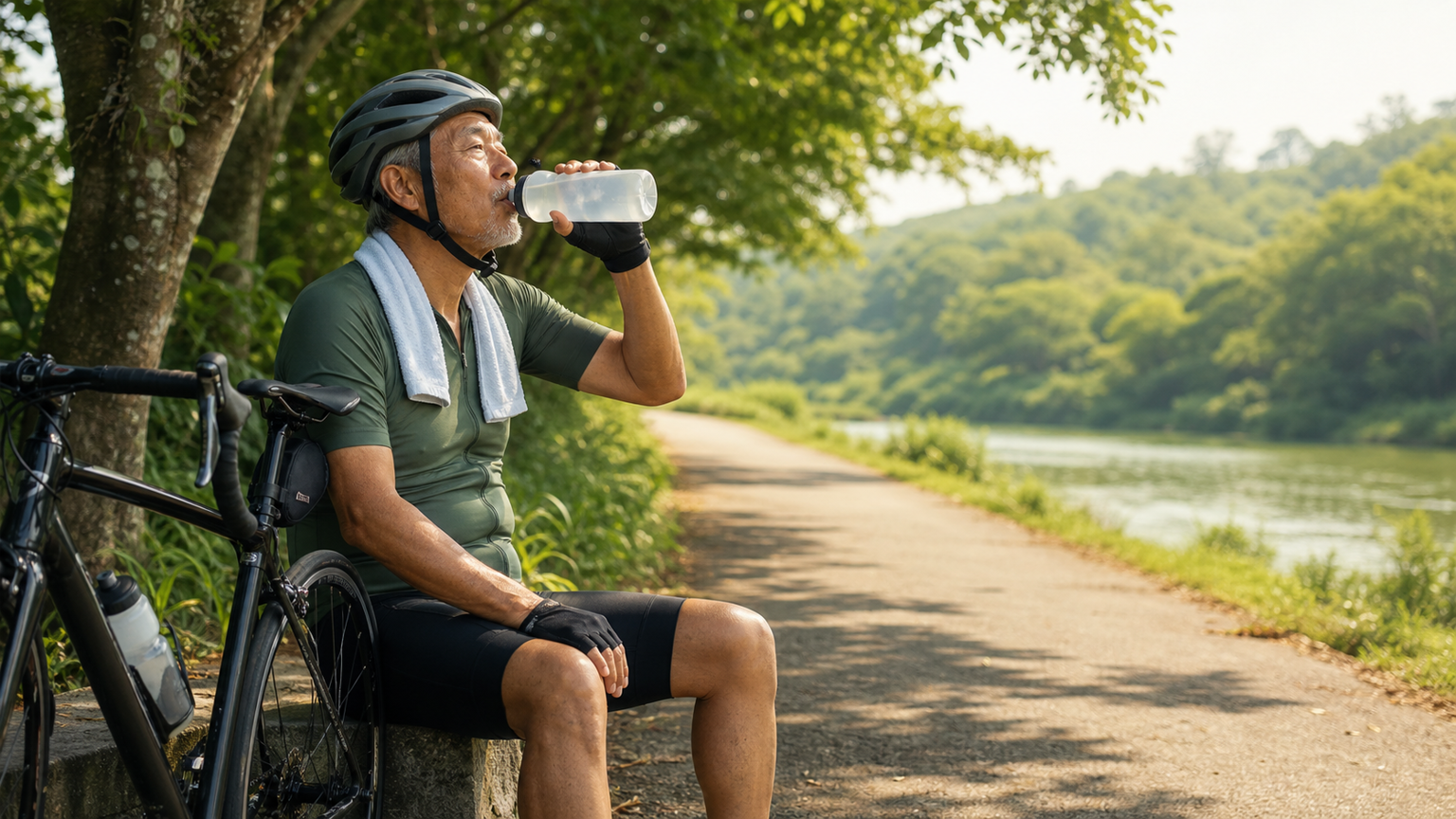
Introduction
Every summer, Taiwan’s news features cases of heat exhaustion and heatstroke among outdoor exercisers, with a disproportionately high percentage involving older adults. For cyclists, prolonged exercise in high-temperature environments without adequate heat dissipation capacity can push core body temperature past safe thresholds in a short time, leading to heatstroke in mild cases and cardiac events in severe ones. Understanding the thermoregulatory disadvantages of older adults and taking preventive measures is the foundation of safe summer cycling.
Why Thermoregulation Declines in Older Adults
The human body dissipates heat through three main pathways during exercise: sweat evaporation, skin radiation, and convection. Older adults face disadvantages in all of these areas:
- Decline in sweat gland density and activity: The number of sweat glands per unit area and their output in people over 65 is 20 to 30% lower than in younger individuals
- Sluggish skin vasodilation response: The response time for blood vessels to dilate and dissipate heat through the skin after a thermal stimulus is prolonged
- Delayed thirst sensation: When plasma osmolality rises, older adults feel thirst later than younger people, making them prone to unconscious dehydration
- Reduced cardiac reserve: In high heat, the heart must simultaneously supply both working muscles and skin for heat dissipation, placing a dual burden on the aging heart
- Medication effects: Common geriatric medications (diuretics, antihistamines, beta-blockers) can impair thermoregulatory capacity
Heat Injury Risk Analysis for Summer Cycling in Taiwan
| Environmental Conditions | Risk Level | Recommended Actions |
|---|---|---|
| Temperature <30°C, humidity <70% | Low | Normal hydration, watch for fatigue |
| Temperature 30–33°C, humidity 70–80% | Moderate | Shorten riding time, increase hydration frequency |
| Temperature >33°C, humidity >80% | High | Limit riding to before 6 a.m. or after dusk |
| Heat index (apparent temperature) >38°C | Very High | Recommend stopping outdoor cycling for those over 65 |
In Taiwan, the combination of midday temperatures and humidity from July to September often pushes the apparent temperature above 38°C. Older cyclists should assess conditions carefully.
Safe Summer Cycling Strategies
Timing Your Ride
- Best window: 5 to 7 a.m. (within 2 hours after sunrise), when temperatures are lowest and radiant heat is still weak
- Second-best window: 6 to 8 p.m. (around sunset), when radiant heat has dissipated, but watch for visibility
- Avoid: 10 a.m. to 4 p.m., when apparent temperatures are highest in Taiwan’s summer
Hydration Plan
Older cyclists should take a more proactive approach to hydration rather than relying solely on thirst:
- Before the ride: Drink 500 ml of water 30 to 60 minutes before departure
- During the ride: Consume 150 to 250 ml every 15 to 20 minutes; do not wait until thirsty
- Electrolyte replacement: For rides exceeding 60 minutes, replace at least one bottle of water with a sodium-containing electrolyte drink (to avoid hyponatremia)
- After the ride: Drink 750 ml of water for every 0.5 kg of body weight lost (estimated by the difference in weight before and after)
Choosing Cooling Gear
- Ventilated helmet: Ensure the helmet has adequate ventilation ports; avoid closed-shell road helmets
- Cooling sleeves/arm covers: The sun-protection arm sleeves common in Taiwan’s cycling culture also provide insulation, but choose breathable fabrics
- Cooling neck towel: The neck is a key heat-dissipation area; a damp, cold towel wrapped around the neck is highly effective
- Rest at aid stations: During long rides, stop for 10 to 15 minutes at shaded aid stations to allow core body temperature to drop
Early Warning Signs of Heat Injury
Older cyclists should make sure their riding companions are aware of the following warning signs and stop immediately to take action:
- Dizziness, headache: Early signs of altered blood flow distribution to the brain
- Sudden cessation of sweating: May indicate the onset of heat exhaustion or pre-heatstroke
- Flushed skin that feels hot to the touch: Core body temperature may have exceeded 38.5°C
- Confusion, slurred speech: Emergency situation—stop immediately, move to shade, and call for help
- Nausea, vomiting: Common symptoms of heat exhaustion
Emergency response: Move to a shaded area, rehydrate generously (if still conscious), apply ice packs to the neck/armpits/groin, and call 119.
Special Considerations for Medication Users
Older cyclists taking the following medications should exercise extra caution:
- Diuretics (e.g., Furosemide): Increase the risk of dehydration
- Anticholinergic drugs: Suppress sweating function
- Beta-blockers: Reduce heart rate response, masking the cardiac warning signs of heat injury
- Certain psychiatric medications: Affect the hypothalamic thermoregulatory center
It is recommended to proactively inform your primary care physician about your medication use before summer cycling and ask whether your riding plan needs adjustment.
Practical Tips
- Get adequate sleep the night before a summer ride (sleep deprivation reduces heat tolerance)
- Pre-cool in an air-conditioned environment at home: wear an ice vest or hold ice packs for 15 minutes before departure to delay the rise in core body temperature
- When riding solo, inform family of your route and expected return time
- Keep your phone fully charged and save emergency contact numbers
Conclusion
Taiwan’s summer is beautiful yet scorching. Older cyclists do not need to give up outdoor riding, but they do need more meticulous preparation. Choosing the right time, hydrating proactively, understanding warning signs, and adjusting your gear can make summer cycling a safe and enjoyable exercise habit. Safety is always the best equipment.
Related Reading
- Preventing Heat Exhaustion While Cycling: Thermoregulation and Hydration Strategies for Summer Rides
- Cycling Heat Stress and Core Temperature Management: The Physiological Challenges of Summer Riding in Taiwan
- Physiological Adaptation to High-Heat Riding: The Science of Heat Dissipation and Hydration in Summer Training
- Survival Guide for Hot-Weather Cycling: Heat Dissipation Strategies and Heatstroke Prevention in Summer Training
一日北高/長距離團騎 常見問題補充篇 / 組團或跟團的眉角 / 壯車友容易被瘦車友慢性拉爆 / 原來屁股痛可能是這個原因...? / 風場配速法 / 公路車 / CT Yeh
2 年前
一日北高常見問題大集合 | 攻略 | 路線 | 訓練 | 補給 | 自行車 單車 | 一日雙城 | 雙塔 | TWB北高360 | 屁股痛
6 年前
單車 一日北高 ( 雙城 ) 肥宅雙人瘋狂行 紀錄片 REACTO
10 年前
靠單車減肥35公斤 心得分享與整理
7 年前
CT暗黑廚房) 車友必備 宇宙無敵鮮蚵湯 幫助訓練恢復 天然食補 好市多 超肥鮮蚵 破PR
7 年前
2016/4/20 - 中社路 夜騎 半年甩肉14KG 後測
10 年前
4K 東眼山 x 水蜜桃冰沙 百人單車約騎! 操完再吃冰 多爽快
7 年前
#公路車 #Fitting 靠人工智慧APP 幫你調整單車
6 年前