Recovery Strategy After Plyometric Training: A 48-Hour Muscle Repair Guide Following High-Intensity Explosive Work
Why Is Recovery Especially Important After Plyometric Training?
Plyometric training is dominated by eccentric loading — during the landing phase, the muscle generates force while lengthening, and this contraction pattern causes far more damage to muscle fibers than traditional aerobic training.
Characteristics of the micro-damage caused by eccentric loading:
- Disruption of the Z-disk in muscle fibers
- Temporarily increased permeability of the muscle cell membrane (CK enzyme released into the blood)
- Local inflammatory response, producing prostaglandins and cytokines
- This damage peaks 24–48 hours after training (delayed onset muscle soreness, DOMS)
Importantly, this damage process is the prerequisite for supercompensation, not an injury to be avoided entirely. The goal of recovery is to let the repair process run its full course while preventing the damage from escalating into a genuine injury.
0–6 Hours: The Immediate Recovery Window
The first 6 hours after training are the most metabolically active repair window, known as the “anabolic window.”
Nutritional Replenishment
Protein (most important):
- Consume 20–40 grams of high-quality protein within 30–60 minutes after training
- Recommended sources: whey protein powder (fastest absorption), 2–3 eggs, soy milk + tofu
- Leucine content is key: each meal needs at least 2–3 grams of leucine to fully trigger muscle protein synthesis (MPS)
Carbohydrates:
- Replenish muscle and liver glycogen: 0.5–1.0 g of carbohydrate per kg of body weight
- Recommended: bananas, white rice, sports drinks
Fluids and electrolytes:
- For every 0.5 kg of body weight lost, replenish 600 ml of fluid
- Sodium (the electrolyte lost most in sweat): sports drinks or salt tablets
Light Cool-Down and Movement
A light 15-minute walk or bike ride after training (below 50% of max heart rate) can:
- Accelerate lactate clearance (metabolic clearance, not “flushing out”)
- Maintain blood circulation in the lower limbs, helping carry away metabolic waste
- Prolonged static stretching is not recommended — stretching right after training may actually worsen the damage
6–24 Hours: The Deep Repair Phase
The Key Role of Sleep
70–80% of growth hormone (GH) secretion occurs during the first 2–3 hours of deep sleep. Nighttime sleep after plyometric training is the primary window for muscle repair, so make sure to:
- Sleep duration: 7–9 hours
- 1 hour before bed: consume 30–40 grams of casein protein, such as Greek yogurt or casein powder — its slow digestion provides a continuous supply of amino acids during sleep
- Avoid alcohol: even a small amount of alcohol can suppress GH secretion by up to 70%
- Sleep environment: temperature 16–19°C, fully dark, quiet
Anti-Inflammatory Nutrition Strategy
| Nutrient | Food Sources | Function |
|---|---|---|
| Omega-3 fatty acids | Salmon, flaxseed oil, walnuts | Reduces inflammatory cytokines (IL-6) |
| Vitamin C | Kiwifruit, oranges, guava | Precursor for collagen synthesis |
| Curcumin | Turmeric, curry | Inhibits the NF-κB inflammatory pathway |
| Magnesium | Nuts, dark leafy greens | Muscle relaxation, nerve recovery |
| Vitamin D | Sunlight, mackerel | Regulates muscle fiber repair |
Note: Overusing antioxidant supplements (such as high-dose vitamin C/E) may actually suppress post-training adaptation signaling (ROS is a trigger for part of the adaptation process), so it is best to obtain these nutrients primarily from food sources.
24–48 Hours: The Active Recovery Phase
This phase is the peak of DOMS, and many athletes find that “even walking feels hard.” The following strategies can effectively shorten this period of discomfort:
Active Recovery:
- 20–30 minutes of low-intensity aerobic activity (walking, cycling, swimming)
- Intensity: heart rate < 120 bpm, or “easy conversational pace”
- Mechanism: promotes blood circulation and accelerates waste metabolism without adding new muscle damage
Cold Water Immersion:
- Water temperature 10–15°C, immerse for 10–15 minutes
- Can significantly reduce the degree of DOMS (by roughly 20–30%)
- Drawback: overly frequent use may reduce long-term adaptation effects, so it is best reserved for periods of dense competition during peak season
Massage and Myofascial Release:
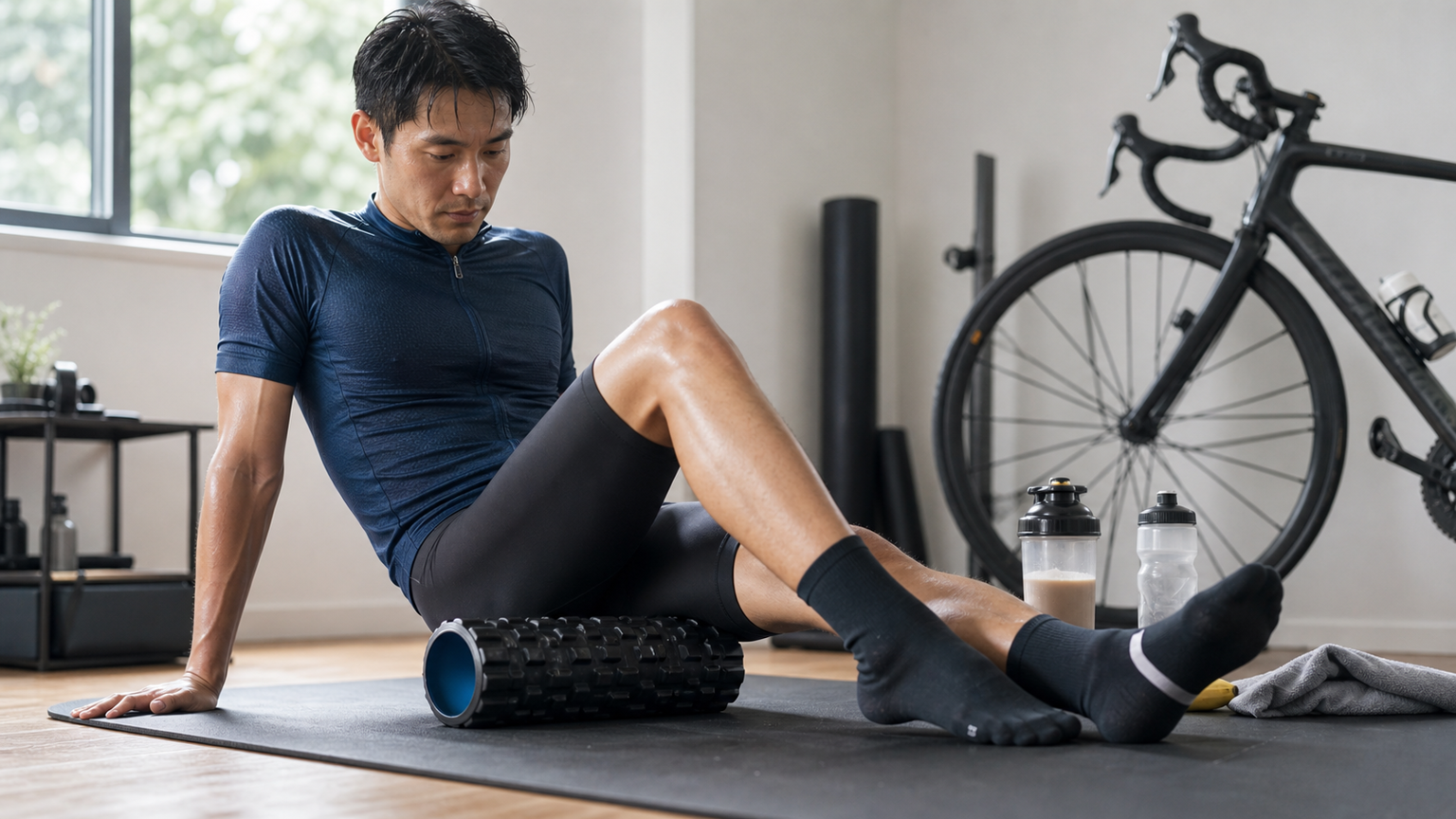
- Foam roller: 30–60 seconds per major muscle group, helping improve blood flow and tissue gliding
- Deep massage: if available, sports massage can more effectively clear local metabolic waste
Static Stretching (only appropriate at this stage):
- Perform static stretching only 24 hours or more after training
- Hold each position for 30–45 seconds, aiming for a “comfortable stretch sensation” rather than pain
When Can You Train for Explosive Power Again?
Simple guiding principles:
- Subjective DOMS drops to 0–2 (on a 0–10 scale)
- Vertical jump height returns to pre-training level (can be measured to confirm)
- Muscles are no longer tender to the touch
Generally, well-adapted athletes can perform their next plyometric session after 48 hours; beginners or those experiencing especially severe post-training soreness should wait 72 hours.
Conclusion
Half the effect of plyometric training comes from “training,” and the other half comes from “recovery.” Precisely executing the 48-hour recovery window strategy — immediate protein replenishment, optimized sleep, an anti-inflammatory diet, and active recovery — allows the supercompensation benefit of every session to be maximized. Treat recovery as part of training, not a luxury that can be skipped.
Related Reading
西進武嶺 免費訓練分析服務 Intervals | 練不夠還是練過頭?你哪一種類型選手?AI模型告訴你! | 備戰神器 | 公路車 訓練 | CT Yeh
4 年前
一日北高/長距離團騎 常見問題補充篇 / 組團或跟團的眉角 / 壯車友容易被瘦車友慢性拉爆 / 原來屁股痛可能是這個原因...? / 風場配速法 / 公路車 / CT Yeh
2 年前
多機位拍片神器 DJI Action 2 拍出速度張力感 | 類空拍機視角 4陣列麥克風超強降風噪 實測! | 公路車 | CT Yeh
3 年前
FTL 與 SYB 車隊專訪 西進武嶺 實用攻略分享! 2小時 如何練?!你不知道的眉角!新手準備武嶺必看 EP1 | 實力派女車友 | 精華版 | 公路車 | CTYeh
4 年前
live) 超越北高 之一日北高12小時 策略
7 年前
西進武嶺 自製新版AI配速表產生器 x 賽前攻略 抱佛腳! 沒有功率計也可以產生配速表嗎?有什麼其他眉角賽前要注意的呢? | 西進武嶺 / 東進武嶺 KOM 攻略 | 公路車 | CT Yeh
4 年前
實景訓練台) 彰化經典百K 高強度喵團 90分鐘 跟著一起練功 2019 Indoor workout Changhua Classic 100 Taiwan
7 年前
2021 96聯賽 桃園市長盃 4K多視角實況 當天選手瓦數/推力比/均速/時間 即時數據分析 | 公路車 | CT Yeh
5 年前