Youth Strength Training: Safety Guidelines and Exercise Selection for Kids Starting Weight Training After Age 12
Introduction
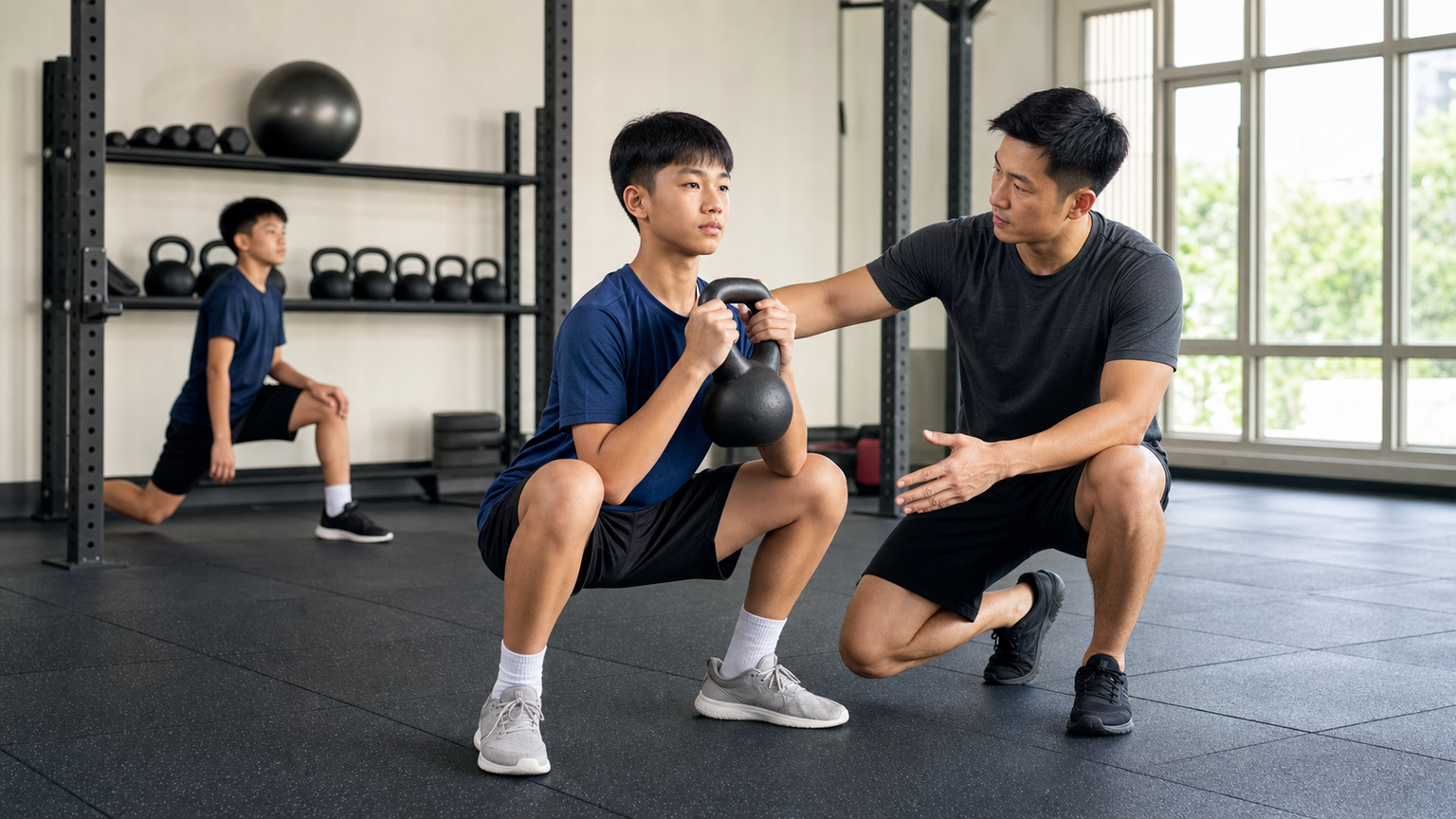
“Weight training compresses the growth plates and stunts a child’s growth” — this is one of the most common concerns Taiwanese parents raise about youth strength training. Yet modern sports medicine research has long made clear: strength training done under proper guidance and with appropriate loads does not suppress growth. On the contrary, it can promote bone density development, strengthen joints and ligaments, and significantly reduce the risk of sports injury.
What is genuinely dangerous is improper strength training — excessive loads, incorrect technique, and unsupervised training without adult oversight. This article provides the most practical strength-training safety guide for young athletes and parents in Taiwan.
Busting the Myth: Does Weight Training Really Stunt Growth?
In 2011, the American Academy of Pediatrics (AAP) formally updated its position: supervised resistance training for youth is safe, and can begin as early as age 7–8 in the form of bodyweight training, with moderate external loading introduced after age 12.
The risk of growth plate injury comes from excessive compressive loading, not from loading in general. Squats, deadlifts, and similar movements performed with correct technique place far less stress on the growth plates than impact-based activities like running or jumping.
Age-Based Strength Training Recommendations
| Age | Training Format | Recommended Load | Weekly Frequency | Primary Goal |
|---|---|---|---|---|
| 12–13 years | Primarily bodyweight training | No external load | 2–3 sessions | Building movement patterns |
| 14–15 years | Low load, high repetitions | 30–50% of 1RM | 2–3 sessions | Reinforcing technique, proprioception |
| 16–17 years | Moderate load, technique refinement | 50–70% of 1RM | 3–4 sessions | Functional strength |
| 18+ years | Progressive resistance training | 60–85% of 1RM | 3–5 sessions | Sport-specific strength |
Safety Guidelines: Confirm Before Every Session
Technique Before Load
This is the single most important principle in youth strength training. Never increase the weight until movement technique is fully correct. Evaluation criteria:
- Neutral spine maintained throughout (no rounding, no excessive arching)
- Full range of motion completed (squat to parallel or below)
- Movement quality on rep 10 matches rep 1
If form breaks down by the 10th repetition, the load has exceeded the athlete’s current technical capacity and should be reduced.
Essential Foundational Movement Patterns
Youth strength training should be built around the following six fundamental movement patterns, rather than isolated muscle exercises:
- Squat pattern: bodyweight squat, split squat, Bulgarian split squat
- Hip thrust/bridge pattern: glute bridge, single-leg glute bridge
- Hinge pattern: Romanian deadlift, good morning
- Push pattern: push-up, dumbbell bench press
- Pull pattern: assisted pull-up, row
- Core stability: plank, side plank, dead bug
High-Risk Movements to Avoid (Ages 12–15)
The following movements demand advanced technique or place greater stress on the growth plates. It is recommended to introduce them only once technical proficiency has matured:
- Barbell back squat → substitute with dumbbell squat or front squat initially
- Traditional (loaded) deadlift → start with the hex bar deadlift or Romanian deadlift
- Olympic lifts (snatch, clean and jerk) → require long-term guidance from a specialized coach
- Behind-the-neck press → places excessive stress on the cervical spine
Recovery and Periodization
Youth recovery capacity differs from that of adults. Key recovery principles include:
- At least 48 hours between sessions targeting the same muscle group: for example, if squats are done Monday, legs should not be trained again until at least Wednesday
- A deload week every 8–10 weeks: reduce training volume to 60% of normal to allow full adaptation
- Strength training should not immediately follow high-intensity aerobic work: adequate energy reserves are needed to execute technique safely
- Keep sessions to 45–60 minutes: overly long sessions reduce training efficiency
The Importance of Supervision
Youth athletes should not perform loaded strength training without adult supervision. Options currently available in Taiwan for youth strength training include:
- School physical education classes: some high schools have incorporated functional fitness training into the curriculum
- Private gym youth programs: confirm the coach holds relevant certification (such as NSCA-CSCS)
- Youth training at sports centers: some municipal sports centers offer dedicated youth strength training programs
Practical Recommendations
- Start with bodyweight training: push-ups, squats, and lunges build a movement foundation without any equipment
- Log every session: recording load, reps, and movement quality helps coaches assess progress
- Complement, don’t replace, aerobic training: strength training supplements athletic capacity rather than substituting for cardio
- Listen to the body’s signals: joint pain (as distinct from muscle soreness) is a signal to stop immediately
Conclusion
Properly implemented youth strength training is one of the most widely agreed-upon injury prevention strategies in sports science today. Starting strength training after age 12 under the guidance of a qualified coach helps children build a strong physical foundation and prepares them for future athletic performance. The weight itself is not the enemy — poor technique is. Let children begin by learning correct movement patterns, and build a foundation of strength that benefits them for a lifetime.
Related Reading
- The Growth Plate Myth in Youth Strength Training: What Does the Research Actually Say
- Youth Sports Science: Training Principles During Development — Growth Plates, Early/Late Maturation, and the Safety of Youth Strength Training
- Youth Endurance Training: Growth Plates, Training Volume Limits, and the “Early Maturation Trap”
- Youth Basketball U12-U16 Development: Don’t Let Kids Overtrain During Growth
一日北高/長距離團騎 常見問題補充篇 / 組團或跟團的眉角 / 壯車友容易被瘦車友慢性拉爆 / 原來屁股痛可能是這個原因...? / 風場配速法 / 公路車 / CT Yeh
2 年前
一日北高常見問題大集合 | 攻略 | 路線 | 訓練 | 補給 | 自行車 單車 | 一日雙城 | 雙塔 | TWB北高360 | 屁股痛
6 年前
滑雪新手們慘摔學習全紀錄(請開字幕),滑雪好好玩 | Snowboard + Ski | 岩原 スキー場 | 滑雪APP使用 | GoPro Max
6 年前
一日北高前的高裝檢 | 北高 360 | 挑戰11小時的裝備 | 一日雙塔 | 補給
6 年前
CT 喇低賽) 武嶺牽車 才是王道 西進牽車四小時內秘訣 攝手位置 如何判斷 防抽筋小秘訣
7 年前
[教學] Premiere 影片 手震 修正 教學 防抖 單眼 影像 GoPro 穩定 Video Stabilization
8 年前
FTL 與 SYB 車隊專訪 西進武嶺 實用攻略分享! 2小時 如何練?!你不知道的眉角!新手準備武嶺必看 EP1 | 實力派女車友 | 精華版 | 公路車 | CTYeh
4 年前
教學) 如何做出專業 慢動作 影片 Slow Motion 120fps GoPro 7 ActionCam AX700 A99II
7 年前