Youth Competitive Swimming: The Impact of Swim Team Training Volume on Academics and Balancing Strategies
Introduction
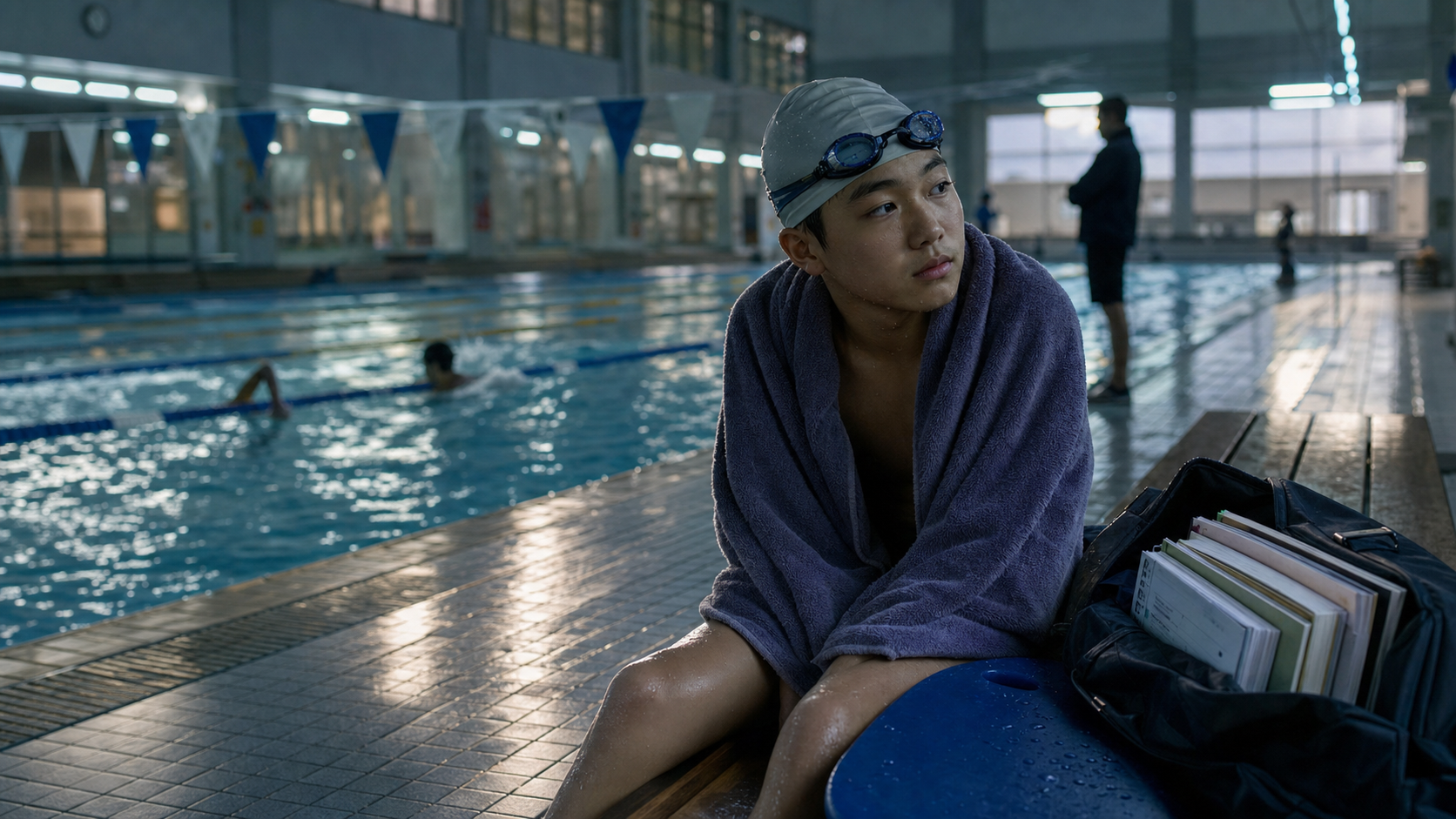
“Swim team practice runs from 5:00 to 7:00 in the morning and 4:00 to 6:00 in the afternoon—two sessions a day.” This is the daily routine for many competitive swimmers in Taiwan. Such a training regimen stems from the unique nature of competitive swimming: scarce pool lane resources, large competition fields, and the traditional belief in early specialization. However, when a middle school student must wake up before dawn to swim, swim again after school, and still complete their academic work in the remaining time, balancing physical training, academics, and social life becomes the core challenge every swimming family faces.
This article does not aim to deny the training demands of competitive swimming, but rather to provide scientifically grounded balancing strategies that allow Taiwanese swimming families to maintain training quality while safeguarding their children’s academic development and overall quality of life.
The Reality: Training Volume in Taiwanese Competitive Swim Teams
Based on common training schedules across swim teams in Taiwan:
| Level | Weekly Training Sessions | Daily Duration | Weekly Swimming Distance | Other Training |
|---|---|---|---|---|
| Local Development Team | 5–8 sessions | 1.5–2 hours | 20,000–35,000 meters | Land training 1–2 sessions |
| County/City Representative Team | 8–10 sessions | 2 hours | 35,000–50,000 meters | Land training 2 sessions |
| National Key Development Program | 10–12 sessions | 2–2.5 hours | 50,000–70,000 meters | Land training 3 sessions |
A middle school student has approximately 112 usable hours per week (168 hours minus 56 hours of sleep). With about 45 hours spent at school and 15–25 hours on training, the time available for studying, socializing, and leisure is extremely limited.
Research Findings on Training Volume and Academics
Related studies present conflicting results:
Aspects Where Training May Be Beneficial
- Regular exercise enhances cognitive function and working memory
- Builds time management and self-discipline skills that transfer to academics
- Highly motivated children often excel in both sports and academics (though attention must be paid to the direction of causality)
Negative Effects of Excessive Training Volume
- Sleep deprivation (morning training at 5:00 AM makes it impossible to achieve 9–10 hours of sleep) directly impairs memory and learning efficiency
- Time compression leads to poorer study quality (studying while fatigued results in low efficiency)
- Failure to properly taper before exams leads to both fatigue and declining grades
Balancing Strategy One: Establishing Open Communication with Coaches
Many parents are reluctant to discuss training volume adjustments with coaches, fearing they will be seen as “not committed enough” or pushed out of the training program. However, a mature youth sports coach should be receptive to the following types of communication:
How to Communicate with Coaches
A suggested communication framework:
- Frame the discussion around the child’s long-term development rather than short-term convenience: “We want our child to develop long-term in competitive swimming, but the current training schedule is causing insufficient sleep, and I’m concerned this will affect recovery quality.”
- Provide concrete data: Track the child’s sleep hours, academic performance changes, and training feedback so the discussion is evidence-based.
- Make specific requests rather than general complaints: “Could we reduce the number of morning practices in the week before exams?” instead of “The training volume is too much.”
Training Adjustment Agreement During Exam Periods
It is recommended to establish the following with the coach in advance:
- During the week before major school exams, reduce morning practices from 5 sessions per week to 2–3 sessions
- During exam week, maintain only afternoon technique sessions and cancel long-distance endurance sessions
- After exams, gradually return to normal training volume over a 2-week period
Balancing Strategy Two: Time Optimization, Not Time Sacrifice
Many swimmers’ academic difficulties stem not from “insufficient time” but from low learning efficiency within the limited time available.
Methods for High-Efficiency Learning
| Situation | Strategy |
|---|---|
| After returning home from training (fatigued state) | Handle review and memorization-type assignments rather than learning new concepts |
| Lunch break | 20-minute nap + 10 minutes of light review |
| Weekend long-distance training days | Focus on assignments requiring deep thinking |
| Waiting time before training | Mobile learning apps, audio memorization |
| Commuting time | Audio recordings for review or podcast-style learning |
Proactively Informing Teachers
Have the child proactively inform each subject teacher at the beginning of the semester that they are a competitive swimmer. Most teachers, once aware of the situation, will offer more flexibility regarding make-up work and supplementary sessions. This requires initiative from the child and is also a good opportunity to develop communication skills.
Balancing Strategy Three: Sleep Is the Non-Negotiable Baseline
Training at 5:00 AM means the child must wake up at 4:30 AM. To maintain 9 hours of sleep, they would need to go to bed at 7:30 PM—which is nearly impossible for middle school students with homework and study demands.
This reality makes “morning practice” the core structural issue behind Taiwanese swimmers’ academic problems. Chronic sleep deprivation (less than 8 hours) significantly reduces:
- Cognitive function and memory (directly impacting academics)
- Immune function (increasing the frequency of illness-related school absences)
- Recovery capacity (diminishing training effectiveness)
- Emotional stability (affecting teacher-student and parent-child relationships)
Recommendation: If a child needs to wake up before 5:00 AM more than 3 days per week, the family should seriously evaluate whether the current training level suits the child’s overall development, rather than simply rationalizing it as a “competitive necessity.”
Practical Recommendations
- Create a family “Training and Academics Board”: Hold a weekly family meeting every Sunday to discuss the week’s exams and homework priorities, and adjust training participation accordingly.
- Build a cooperative relationship with the homeroom teacher: Keeping the school informed about the child’s athletic commitments helps secure necessary flexibility when needed.
- Regularly assess overall condition: At the end of each semester, parents, the child, and the coach should jointly evaluate academic performance, physical condition, and psychological state.
- Give the child the right to say “I need rest”: Establish a family culture where the child does not feel guilty for expressing the need to rest.
Conclusion
Competitive swimming requires extensive training time—this is an unchangeable fact. But how to ensure that, within this reality, children still maintain a solid academic foundation, adequate sleep, and a long-term passion for swimming is a challenge every swimming family must actively manage. Balance does not happen naturally; it requires continuous communication, mutual understanding among parents, coaches, and the child, and the wisdom and courage to make trade-offs when necessary.
Related Reading
- Balancing Academics and Training for Swimmers: Practical Time Management Strategies
- Youth Swimming Training: Recommended Training Volume by Age Group and Technical Development Priorities
- Taiwan’s Youth Swimming Development System: Differences Between School Swim Teams and Clubs
- Technical Priority Strategies for Youth Swimmers: Balancing Quantity vs. Quality
live) 超越北高 之一日北高12小時 策略
7 年前
Live) 備戰2019彰化經典百K 賽前攻略 (已完賽請看新影片
7 年前
一日北高前的西濱集訓 | 跟著11小時軍團 | 300W踩不動的大逆風 | 輪車破風差幾瓦?
6 年前
一日北高前的高裝檢 | 北高 360 | 挑戰11小時的裝備 | 一日雙塔 | 補給
6 年前
一日北高常見問題大集合 | 攻略 | 路線 | 訓練 | 補給 | 自行車 單車 | 一日雙城 | 雙塔 | TWB北高360 | 屁股痛
6 年前
西進武嶺 免費訓練分析服務 Intervals | 練不夠還是練過頭?你哪一種類型選手?AI模型告訴你! | 備戰神器 | 公路車 訓練 | CT Yeh
4 年前
一日北高 11小時 賽後心得分享篇 | TWB北高360 | 一日雙城 | 單車 | 公路車
6 年前
一日北高/長距離團騎 常見問題補充篇 / 組團或跟團的眉角 / 壯車友容易被瘦車友慢性拉爆 / 原來屁股痛可能是這個原因...? / 風場配速法 / 公路車 / CT Yeh
2 年前