Youth to Elite Adult Competition: The Training Volume Transition and Coaching Role at Ages 17–22
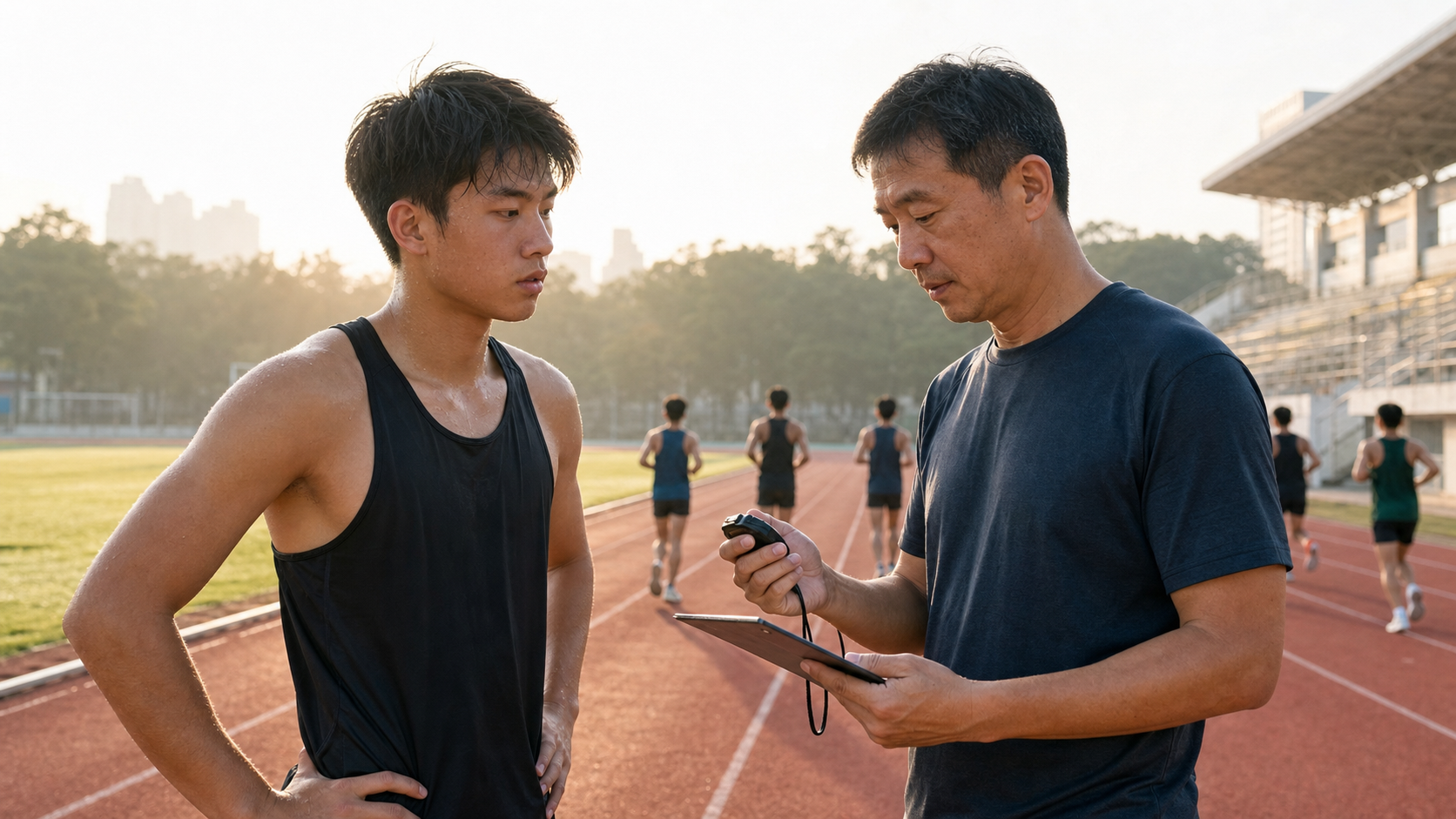
Introduction
Every year, a cohort of youth competitive athletes turns 18 and transitions overnight from “dominant champion” in the junior ranks to “rookie” in the senior category. This shift is not merely a change in age number—it is a comprehensive upgrade in training volume, competitive intensity, and psychological pressure.
Research indicates that ages 17–22 represent the highest dropout rate among competitive athletes: many who excelled in their youth exit the sport during this transition due to injury, abrupt jumps in training volume, temporary regression in competitive results, or because they “can no longer find meaning in running and swimming.” This represents a massive waste of talent and a fundamental challenge to the entire youth development system.
This article will deeply analyze the key challenges of the 17–22 transition period, along with concrete strategies that coaches, parents, and athletes themselves can adopt.
Why Is 17–22 the Most Critical Transition Period?
Physiological Changes
| Physiological Change | Impact on Training | Transition Challenge |
|---|---|---|
| Growth plates gradually close (ages 17–18) | Can withstand higher training loads | Coaches may increase training volume too quickly |
| Pubertal hormones peak | Strength and aerobic capacity improve significantly | Recovery needs may be underestimated |
| Nervous system matures | Technical movements become more stable | Movement patterns need re-optimization |
| Bone density accumulation enters its final phase | Bones can better withstand compressive loads | Earlier bone density deficits become apparent now |
Psychological Changes
Competition during the youth years typically occurs within a “peer group”—opponents are the same age, and the damage from failure is relatively manageable. Upon entering senior competition:
- Opponents far surpass you in training years and physical maturity
- External expectations (family, school, media) increase dramatically
- Anxiety about career prospects begins to emerge
- Self-doubt peaks: “Am I really capable?”
Environmental Changes
Many Taiwanese youth athletes face the following after high school graduation:
- Losing the systematic training environment of high school upon entering university
- Shifting from “student-athlete” to “self-managed athlete”
- Training resources (pool time, track, team) may diminish
- The life decision of “is sport worth continuing?”
Scientific Guidelines for the Training Volume Leap
The transition from youth training volume to adult training volume should not be completed within a single year, but rather through a progressive 2–3 year approach.
Recommended Training Volume Progression (Using Long-Distance Running as an Example)
| Age | Weekly Mileage | Increase |
|---|---|---|
| 17 (Grade 12) | 50–60 km | Baseline |
| 18 (Freshman) | 65–75 km | +15–20% |
| 19 (Sophomore) | 80–90 km | +15–20% |
| 20 (Junior) | 90–110 km | Approaching adult training volume |
| 21–22 | 110–130 km+ | Full adult training volume |
Key Principle: Even after bones have fully matured, connective tissue (tendons, ligaments) adapts more slowly than muscle; abrupt increases in training volume will still lead to overuse injuries.
The Coach’s Critical Role During the Transition
Shifting from “Directive” to “Facilitative”
The coach-athlete relationship during the youth years is typically highly directive: the coach designs the training plan and the athlete executes it. However, upon entering senior competition, if this model does not change, the athlete will never develop the ability to train autonomously—and once they change coaches or land in an unsupported environment (such as university), their performance will collapse.
A mature transition-period coach should progressively:
- Involve the athlete in designing the training plan
- Teach the athlete to understand the “why” of training, not just execute the “what”
- Build the athlete’s self-monitoring skills (heart rate, HRV, RPE scales)
Managing Expectations Around Temporary Performance Regression
During the first 1–2 years in the senior category, many athletes’ relative results (rankings among peers) will temporarily regress, because the average level of the senior field is far higher than the junior field. Coaches must:
- Inform athletes in advance that this is a normal phenomenon
- Shift evaluation criteria from “ranking” to improvement in personal absolute performance (PB)
- Help athletes find new sources of motivation within higher-level competition
Identifying and Supporting “Late Bloomers”
Some athletes are not particularly outstanding during their youth, but experience a major physical surge during the physiological maturation of ages 17–22. These “late bloomers” require coaches to have sufficient patience and discernment, and not to abandon their development early.
The Unique Challenges of University Athletes
Within Taiwan’s university system, training support for athletes varies enormously: some universities have dedicated physical education departments and complete athletic facilities, but most student-athletes outside of PE departments must balance academics, training, and social life on their own.
Self-Directed Training Strategies for University Athletes
- Seek out university club or varsity team resources: Many universities have track & field, swimming, cycling, and other varsity teams that provide facilities and training partners
- Maintain the coaching relationship: Even after starting university, maintaining remote communication with your former high school coach 2–3 times per month helps sustain training direction
- Develop the ability to create self-directed training plans: This is the most important skill transfer from youth to adulthood
- Make full use of university athletic facilities: Gym, pool, and track access is typically cheaper and more convenient than commercial facilities
Maintaining Motivation During the Transition
Motivational collapse is rarely sudden; it accumulates over time. Below are common sources of motivational erosion and corresponding strategies:
| Source of Motivational Erosion | Corresponding Strategy |
|---|---|
| Sharp drop in ranking after entering the senior category | Measure progress by personal PBs, not rankings |
| Training isolation (lack of teammates) | Proactively build a training partner network |
| Questioning “what’s the point of sport?” | Clearly establish short-, medium-, and long-term competitive goals |
| Career planning anxiety | Explore sport-related career paths (coaching, sports science, sports journalism) |
| Frustration during injury recovery | Establish a psychological support system for post-injury recovery |
Practical Recommendations
- Conduct a “career planning conversation” at ages 17–18: Coaches and parents should proactively discuss the long-term meaning of sport with the child, giving them the opportunity to express their own thoughts
- Document training milestones: Every personal record achieved in training or competition should be recorded and celebrated
- Maintain cross-year long-term goals: A long-term goal like “I want to reach XXX standard by age 24” can carry you through short-term setbacks
- Build an identity beyond sport: Ensure the child has interests and sources of fulfillment outside of sport, so that athletic failure does not lead to a total collapse
- Seek psychological counseling when necessary: The psychological pressure of the transition sometimes requires professional help; Taiwan already has sport psychology counseling services available
Conclusion
The 17–22 transition period is the most critical developmental stage for youth competitive athletes—and the time when they are most likely to be lost. Successfully navigating this transition requires a scientific training volume progression, a mature evolution of the coaching relationship, and the development of the athlete’s own motivation and autonomy. Whether or not they ultimately pursue a professional athletic career, the self-discipline, resilience, and long-term thinking learned during this stage will be among life’s most precious assets. Youth who successfully navigate this transition become not only better athletes, but better people.
Related Reading
- Youth Endurance Training: Growth Plates, Training Volume Limits, and the “Early Maturation Trap”
- Transition Training for Swimmers: Bridging from Season End to the New Season
- Youth Endurance Training Safety Guidelines: Growth-Period Load, Early Specialization, and Long-Term Development
- Youth Basketball U12-U16 Development: Don’t Overtrain Kids During Their Growth Years
西進武嶺 免費訓練分析服務 Intervals | 練不夠還是練過頭?你哪一種類型選手?AI模型告訴你! | 備戰神器 | 公路車 訓練 | CT Yeh
4 年前
昇陽SYB車隊 & Fuji 菁英選手們的趣味經驗分享,長知識了!市民車友必看~ 一路被拉爆後才給問 | 戀戀197 武嶺 凸台經驗分享 | 公路車 | CT Yeh
4 年前
一日北高/長距離團騎 常見問題補充篇 / 組團或跟團的眉角 / 壯車友容易被瘦車友慢性拉爆 / 原來屁股痛可能是這個原因...? / 風場配速法 / 公路車 / CT Yeh
2 年前
單車AI教練!全新 ChatGPT4o 幫你分析訓練成果!排武嶺課表,分析騎車姿勢! 太神了! / 公路車 / CT Yeh / feat. 緯緯
2 年前
FTL 與 SYB 車隊專訪 西進武嶺 實用攻略分享! 2小時 如何練?!你不知道的眉角!新手準備武嶺必看 EP1 | 實力派女車友 | 精華版 | 公路車 | CTYeh
4 年前
滑雪新手們慘摔學習全紀錄(請開字幕),滑雪好好玩 | Snowboard + Ski | 岩原 スキー場 | 滑雪APP使用 | GoPro Max
6 年前
一日北高 2022 廢物伙伴年度大戲 | 我們跨越濁水溪了 | 尖叫雞變滴雞精 | 公路車 | CT Yeh
3 年前
2025南庄山水悠遊行 仙山KOM 網路直播! / 男菁英組A / 女菁英組A
9 個月前