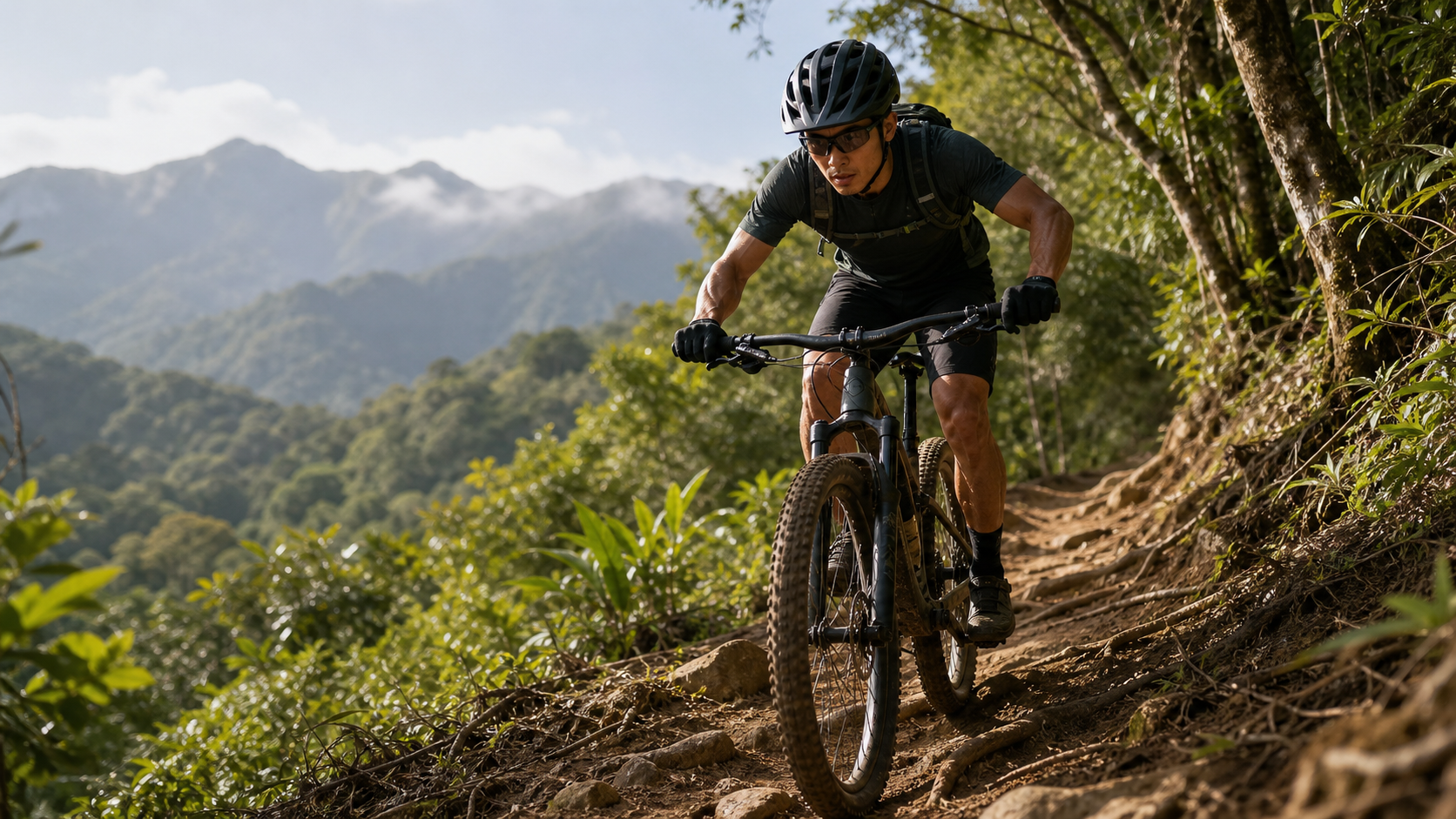
MTB Fitness Training: Designing a Weekly Plan for Power and Endurance
MTB riding has fundamentally different physical demands compared to road riding. Road racing requires the ability to sustain high power output (high threshold endurance); MTB trails consist of a series of short, high-intensity bursts (technical sections, steep climbs, quick accelerations) interspersed with moderate-intensity cruising. This “intermittent peak” energy pattern requires training both aerobic base endurance and neuromuscular power—two seemingly contradictory systems.
The weekly plan designed in this article is suitable for: Taiwanese MTB enthusiasts who can dedicate 8–12 hours per week to training, with the goal of improving performance on technical sections and endurance on long mountain rides.
The Three Core Energy Systems in MTB Fitness
Before designing the plan, it’s important to understand the three main energy systems involved in MTB:
| Energy System | Duration | MTB Application | Training Method |
|---|---|---|---|
| Phosphocreatine (ATP-PC) | 0–10 seconds | Jumps, hard accelerations, short explosive climbs | Maximal power sprints (<10 seconds) |
| Anaerobic Glycolytic | 10 seconds–3 minutes | Full-effort technical sections, steep climb sprints | 30-second–2-minute interval training |
| Aerobic System | 3 minutes and above | Long climb cruising, long-distance rides | Low-intensity long duration, tempo training |
Effective MTB training requires balancing these three systems rather than focusing on just one.
Base Weekly Plan Design (8–10 hours/week)
The following plan is designed for an 8–10 week base training period and suits the schedule of a typical Taiwanese working professional:
Monday: Active Recovery (60 minutes)
- Very low-intensity riding (heart rate below 65% of max HR)
- Can be flat riding or a slow, easy trail spin
- The goal is to promote blood flow and aid recovery, not to accumulate training load
- Can be substituted with a 30-minute easy jog
Tuesday: Neuromuscular Power (90 minutes)
- 20-minute warm-up (gradually increasing intensity)
- Main set: 8 × 10-second all-out sprints, with 4–5 minutes of recovery between each (must be fully recovered)
- Sprints can be done on a short, steep hill (8–12% grade) to simulate the explosive demands of technical sections
- 15-minute cool-down at low intensity
- Key point: sprint quality over quantity—if the later sprints feel significantly weak, stop immediately rather than forcing through
Wednesday: Aerobic Base (120 minutes)
- Keep the entire session in the “aerobic zone” (65–75% of max HR, an intensity where you can hold a normal conversation)
- Choose a route with some rolling terrain, avoiding completely flat roads
- This is the most important yet most overlooked training session: many riders go either too hard or too easy, and staying precisely in the aerobic zone takes practice
- Recommended routes in Taiwan: flat farm roads, riverside bike paths, gentle forest trails
Thursday: Rest or Light Stretching (0–30 minutes)
- Complete rest or only static stretching (especially hamstrings, glutes, hip flexors)
- No riding
Friday: Lactate Threshold Training (75 minutes)
- 15-minute warm-up
- Main set: 2 × 20-minute tempo riding (threshold intensity, heart rate around 85–90% of max HR, able to speak in short sentences but not hold a full conversation)
- 5-minute rest between sets
- 10-minute cool-down
- Recommended routes in Taiwan: forest trails or mountain roads with sustained climbs where you can maintain a steady intensity
Saturday: Long Technical Ride (3–4 hours)
- Primarily moderate intensity (70–80% of max HR), interspersed with technical sections
- This is the training session closest to real MTB riding conditions
- Try to include a complete combination of: climbing + descending + technical sections
- Recommend riding with friends for safety and motivation
Sunday: Active Recovery or Complete Rest (0–60 minutes)
- Decide based on fatigue levels after Saturday
- If Saturday’s ride was high intensity, complete rest is recommended
- If feeling good, 30–45 minutes of low-intensity activity can aid recovery
Strength Training for Specific Technical Movements
In addition to on-bike training, the following key strength exercises can be done indoors to strengthen the muscle groups needed for MTB technique:
- Squat: Mimics the leg-loading pattern when shifting weight rearward on descents; 3 sets × 8–10 reps per week
- Deadlift: Trains the posterior chain (glutes, hamstrings)—the core muscles for MTB descending and explosive pedaling
- Bulgarian Split Squat: Addresses pedaling asymmetry; 3 sets × 10 reps per side
- Farmer’s Carry: Improves core stability and forearm grip strength, which is crucial on long, rough rides
Adapting the Plan to Taiwan’s Climate
Taiwan’s climate characteristics require some adjustments to the plan:
- Summer (June–September): Move high-intensity training to before 6 AM or after 5 PM to avoid the effects of temperature differences exceeding 10–15°C on heart rate
- Plum Rain Season (May–June): Substitute technical section training with indoor trainer sessions for aerobic work to maintain fitness
- Winter (December–February): Cooler temperatures make this an ideal time for high-intensity training; use this window for more threshold and intensity work
Measuring Progress
Several indicators to evaluate the effectiveness of the plan:
- FTP (Functional Threshold Power): Test every 6–8 weeks, if you have a power meter
- Heart Rate vs. Speed: On the same route, a lower heart rate at the same speed indicates improved aerobic efficiency
- Feel on Technical Sections: Passing through more easily and needing to dismount less often is the most direct indicator of technical fitness improvement
Conclusion
There are no shortcuts to MTB fitness training, but it doesn’t need to be complicated either. The core is: sufficient aerobic base training (Wednesday, Saturday) + targeted power training (Tuesday) + adequate recovery time (Monday, Thursday, Sunday). In Taiwan’s riding environment, technical skill is just as important as fitness—making training time include both technical practice and physical conditioning is the most efficient path to improvement.
Related Reading
單車AI教練!全新 ChatGPT4o 幫你分析訓練成果!排武嶺課表,分析騎車姿勢! 太神了! / 公路車 / CT Yeh / feat. 緯緯
2 年前
單車 一日北高 ( 雙城 ) 肥宅雙人瘋狂行 紀錄片 REACTO
10 年前
西進武嶺 免費訓練分析服務 Intervals | 練不夠還是練過頭?你哪一種類型選手?AI模型告訴你! | 備戰神器 | 公路車 訓練 | CT Yeh
4 年前
單車元宇宙新霸主?TrainingPeaks Virtual 實測 / Zwift 完美平替? 還是超越?/ 有台灣國旗!前身 indieVelo / 公路車 / CT Yeh
1 年前
一日北高常見問題大集合 | 攻略 | 路線 | 訓練 | 補給 | 自行車 單車 | 一日雙城 | 雙塔 | TWB北高360 | 屁股痛
6 年前
#公路車 #Fitting 靠人工智慧APP 幫你調整單車
6 年前
一日北高/長距離團騎 常見問題補充篇 / 組團或跟團的眉角 / 壯車友容易被瘦車友慢性拉爆 / 原來屁股痛可能是這個原因...? / 風場配速法 / 公路車 / CT Yeh
2 年前
一日北高前的高裝檢 | 北高 360 | 挑戰11小時的裝備 | 一日雙塔 | 補給
6 年前