The Progressive Principle of Long-Distance Swim Training: Applying a 10% Weekly Training Volume Increase to Swimming
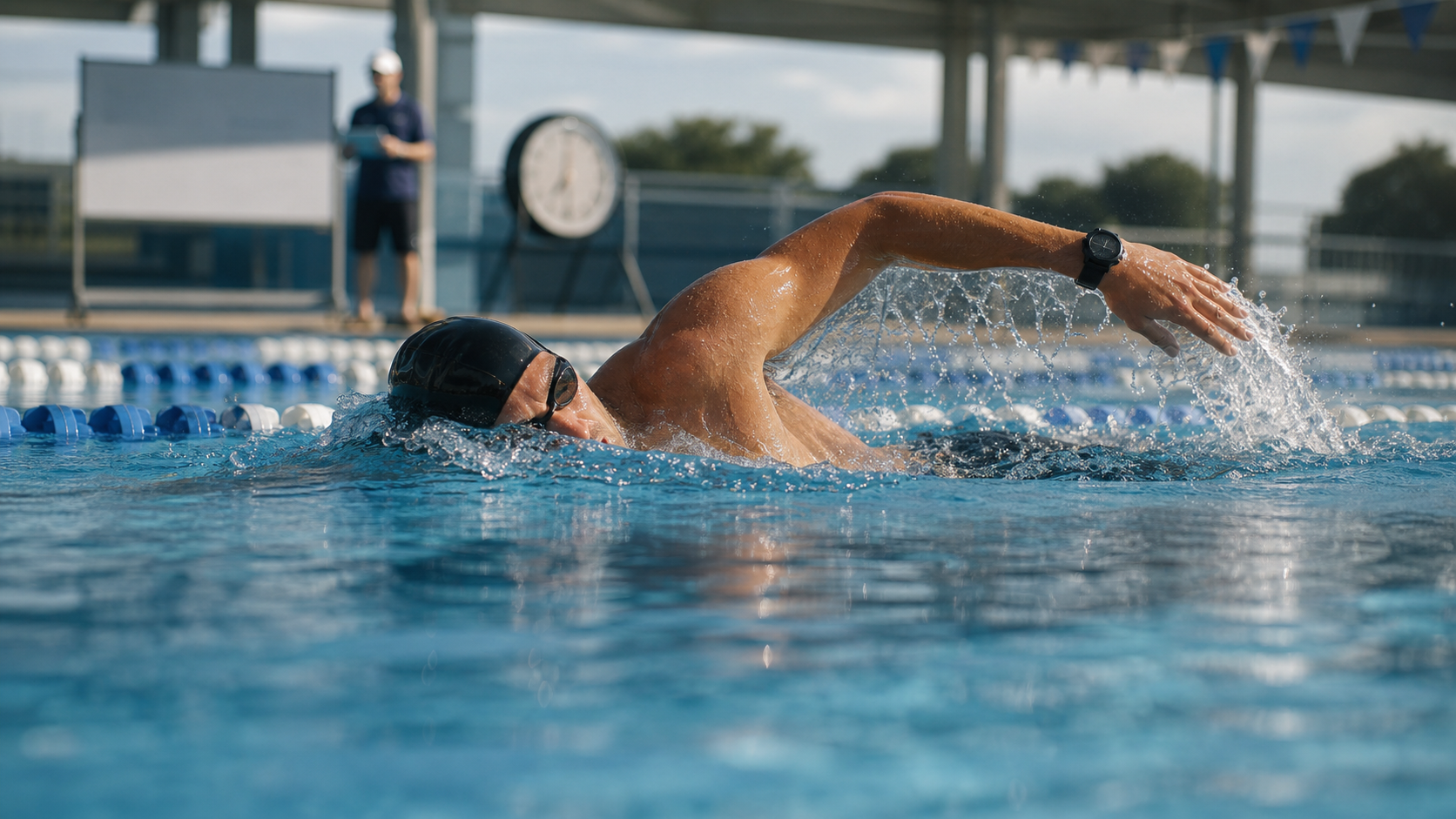
Why Does Training Volume Need a Plan?
Swimming may appear to be a low-impact sport, but long-distance swimming places considerable cumulative stress on the rotator cuff, neck, and core. Many amateur swimmers rush to ramp up volume during race preparation, jumping from 5,000m to 12,000m per week within two weeks—only to face shoulder inflammation and overuse tendon injuries, forcing them to take even longer breaks from training. The Progressive Overload Principle tells us: the body needs time to adapt to new training stimuli, and an excessively rapid increase in training volume is a major risk factor for injury.
The Origin of the 10% Rule and Its Applicability to Swimming
The “no more than 10% increase in weekly training volume” guideline was originally proposed by sports medicine researchers in running injury studies and has since been widely applied across endurance sports. Swimming’s musculoskeletal loading pattern differs from running, focusing primarily on the upper body and core, but connective tissue and tendons still require time to adapt—typically 2–4 times slower than the cardiorespiratory system.
Therefore, even if you “feel like you can swim more from a cardio standpoint,” it doesn’t mean your rotator cuff, cervical spine, and core stabilizers are ready to handle a higher training load. The 10% rule provides a safe buffer.
The Baseline for Calculating Training Volume
In swimming, training volume is typically measured by distance (meters) or time (minutes):
| Measurement Method | Best Suited For | Example |
|---|---|---|
| Distance (meters) | Pool training, precise lap counting | This week 15,000m → next week max 16,500m |
| Time (minutes) | Open water training | This week 180 minutes → next week max 198 minutes |
| Number of repeats | Short-distance interval sets | This week 60 × 50m → next week max 66 repeats |
It is recommended to use distance as the primary tracking metric, as it is independent of pace and more objectively reflects training volume.
A Practical Example of Progressive Increases
Suppose a swimmer preparing for a triathlon (1,500m swim) currently swims 8,000m per week, with 16 weeks until race day:
- Weeks 1–4 (Base Phase): 8,000 → 8,800 → 9,700 → 10,700m (+10% per week)
- Week 5 (Recovery Week): Drop back to 8,000m (a deload week every 4 weeks)
- Weeks 6–9 (Build Phase): 10,700 → 11,800 → 13,000 → 14,300m
- Week 10 (Recovery Week): Drop back to 10,000m
- Weeks 11–14 (Peak Phase): 13,000 → 14,300 → 15,700 → 17,000m (personal peak week)
- Weeks 15–16 (Taper Phase): Reduce to 10,000m → 6,000m (pre-race taper)
This structure embodies the “3 weeks of loading + 1 week of recovery” periodization model, currently the most recommended long-distance training structure in sports science.
Balancing Quality and Quantity in Increases
The progressive principle isn’t just about “swimming more meters”—it also requires maintaining intensity distribution:
- Prioritize Z2 training when increasing volume: New mileage should ideally be completed as easy aerobic swimming; don’t fill the added volume with high-intensity work.
- Keep high-intensity repeats stable: The number of interval sets and repeats per week should not increase simultaneously during volume build-up—only after volume has leveled off should you consider raising intensity.
- Monitor Total Stress Score (TSS): The same 10,000m done entirely in Z2 versus half in Z4 places vastly different stress on the body. When increasing volume, ensure intensity doesn’t climb in tandem.
Which Signals Indicate You’re Increasing Too Fast?
Here are warning signs that your body is telling you “training volume is increasing too quickly”:
- Resting heart rate rises more than 5–7 bpm: Morning resting heart rate is noticeably above baseline for two consecutive days.
- Pain in the front or top of the shoulder: The rotator cuff is under stress beyond its capacity.
- Declining sleep quality: You’re exhausted but can’t fall asleep, or you wake up feeling even more tired.
- Noticeable drop in per-repeat pace: Swimming slower despite the same effort indicates insufficient recovery.
- Loss of training motivation: Mental burnout is an early sign of overtraining and should not be ignored.
If you experience two or more of the above, maintain this week’s current mileage without increasing; if you experience three or more, consider an active recovery week.
Practical Recommendations
- Keep a training log: After each swim, record distance, intensity distribution, and how you feel; tally the weekly total once a week.
- Plan in four-week blocks: A cycle of 3 weeks of loading + 1 week of recovery gives the body periodic opportunities for supercompensation.
- Don’t chase lost training: After a week off for any reason, resume at 70–80% of your pre-break volume—don’t try to “make it up.”
- Shoulder strengthening is essential: During volume build-up, add 2–3 rotator cuff strengthening sessions per week (band external rotations, YTW exercises, etc.) to prevent shoulder injuries.
- Listen to your body, not just the numbers: 10% is a ceiling, not a target. Some weeks adding 5%, some weeks holding a plateau—these are all correct decisions.
Conclusion
Progressively increasing swim training volume is an art that requires patience. The 10% rule may seem conservative, but it’s your best guarantee of steady improvement over a 16–20 week race preparation without interruption from injury. Truly great long-distance swimmers are often not the ones who train the hardest, but those who train the smartest, get injured the least, and accumulate the highest total volume over time.
Related Reading
- The Progressive Principle of Swim Training Volume: The Safe Upper Limit for Weekly Increases
- The Overload Principle in Swim Training: How to Safely Increase Training Volume
- Swim Training Volume Management: Progressive Principles for Weekly Kilometers and Fatigue Monitoring
- Increasing Swim Training Volume: Why Sudden Mileage Spikes Cause the Most Injuries
西進武嶺 免費訓練分析服務 Intervals | 練不夠還是練過頭?你哪一種類型選手?AI模型告訴你! | 備戰神器 | 公路車 訓練 | CT Yeh
4 年前
一日北高/長距離團騎 常見問題補充篇 / 組團或跟團的眉角 / 壯車友容易被瘦車友慢性拉爆 / 原來屁股痛可能是這個原因...? / 風場配速法 / 公路車 / CT Yeh
2 年前
16/02/16 - 夜訪中社路 緩慢進步中
10 年前
[教學] Premiere 影片 手震 修正 教學 防抖 單眼 影像 GoPro 穩定 Video Stabilization
8 年前
一日北高常見問題大集合 | 攻略 | 路線 | 訓練 | 補給 | 自行車 單車 | 一日雙城 | 雙塔 | TWB北高360 | 屁股痛
6 年前
FTL 與 SYB 車隊專訪 西進武嶺 實用攻略分享! 2小時 如何練?!你不知道的眉角!新手準備武嶺必看 EP1 | 實力派女車友 | 精華版 | 公路車 | CTYeh
4 年前
#公路車 #西進武嶺 配速配瓦實驗 坡度分析 四小時內攻略 建大盃 NeverStop #西進武嶺攻略
6 年前
一日北高前的西濱集訓 | 跟著11小時軍團 | 300W踩不動的大逆風 | 輪車破風差幾瓦?
6 年前