Land-Based Aerobic Supplement for Swim Training: Arranging Running or Cycling as Auxiliary Aerobic Work for Swimming
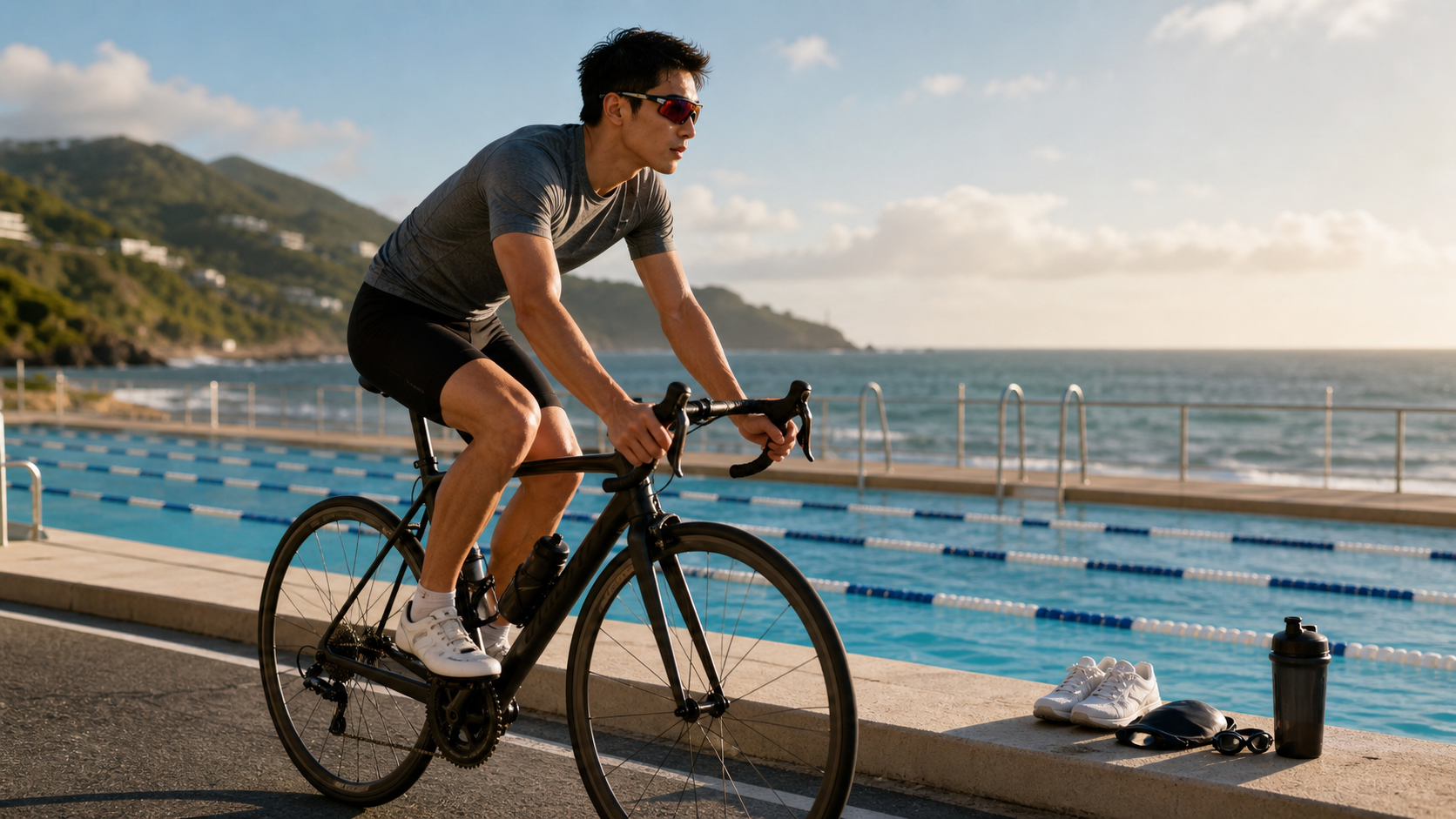
Why Do Swimmers Need Land-Based Aerobic Training?
Pure swim training has its limitations: when weekly training volume is constrained by recovery capacity or pool time, adding more swim sets isn’t always a viable option. In such cases, land-based aerobic training (running or cycling) can serve as an effective supplementary stimulus for the cardiorespiratory system, offering the following advantages:
- Increases total aerobic training volume without adding stress to the swimmer’s shoulders: Rotator cuff fatigue is the primary limiting factor when increasing swim volume, whereas land-based aerobic work primarily loads the legs and heart.
- Strengthens leg propulsion: Swimming kick efficiency is highly correlated with lower-limb strength, and the leg strengthening from running and cycling helps improve kick effectiveness.
- Improves cardiac output: Aerobic adaptations of the cardiorespiratory system exhibit cross-training effects across disciplines; running-induced cardiorespiratory adaptations can partially transfer to swimming performance.
- Psychological variety: Long-term, monotonous swim training can lead to mental fatigue; land-based aerobic work provides training diversity.
Running vs. Cycling: Which Is Better for Swimmers?
| Comparison Item | Running | Cycling |
|---|---|---|
| Joint Impact | Moderate (knees, ankles) | Low (virtually no joint impact) |
| Cardiorespiratory Stimulation Efficiency | High | High (requires longer duration to achieve the same cardiorespiratory stimulus) |
| Kick Muscle Strengthening | Moderate (hip flexors, quadriceps) | High (quadriceps, glutes) |
| Recovery Cost | Moderate to high | Low to moderate |
| Technical Barrier | Low | Moderate (requires equipment) |
| Suitable Scenarios for Swimmers | Aerobic base supplementation, when fatigue is low | High-mileage recovery weeks, knee-sensitive individuals |
Recommendation: If the swimmer is not a triathlete, cycling is generally the safer aerobic supplement choice, as its low joint impact avoids adding lower-limb joint stress on top of the shoulder load from swim training.
How to Integrate Land-Based Aerobic Work into a Swim Training Week?
Land-based aerobic training should follow the principle of “supplement, not replace”:
Principle 1: Perform land-based aerobic work on non-primary swim days
High-intensity swim workout days (T-pace, VO2max) should not include land-based aerobic work simultaneously. Land-based aerobic training is best suited for easy swim days or rest days.
Principle 2: Land-based aerobic intensity should be primarily Z2
As supplementary training, the goal is to increase total aerobic volume, with intensity primarily in Z2 (60–70% of max heart rate), adding one Z3 tempo run/ride occasionally each week.
Principle 3: Start running volume low
If a swimmer does not normally run, suddenly adding running training most easily causes knee and Achilles tendon injuries. It is recommended to start with 20–30 minutes per session, increasing by no more than 10% per week.
Integrated Example: 5 Sessions per Week (Swim-Focused + Cycling Supplement)
Goal: Increase total aerobic volume without adding shoulder stress from swimming
| Training Day | Training Content | Intensity | Duration |
|---|---|---|---|
| Monday | Swim Z2 aerobic base | Z2 | 60 minutes |
| Tuesday | Easy cycling Z2 | Z2 | 45 minutes |
| Wednesday | Swim T-pace workout | Z3–Z4 | 55 minutes |
| Thursday | Cycling + easy run (brick training) | Z1–Z2 | 30 min ride + 20 min run |
| Friday | Rest | — | — |
| Saturday | Long-distance swim Z2 | Z2 | 75 minutes |
| Sunday | Easy run or cycling | Z1 | 30–40 minutes |
Special Considerations for Triathletes
For triathletes, training across all three disciplines inherently requires integration. Within swim training, there are several special integration considerations with land-based training:
- Brick Training: Running immediately after cycling simulates leg adaptation during the “T2 transition” in racing. This is essential for triathletes to practice, but unnecessary for pure swimmers.
- Swimming’s Priority in Triathlon: Swimming is the weakest discipline for many triathletes; allocating the most training time to it remains the priority principle. Excessive land-based aerobic work can crowd out swim training time.
- Seasonal Periodization Integration: During the swim base phase (12 weeks out), more land-based aerobic work can be arranged; during the build phase (8 weeks out from race), swimming should be the absolute focus.
Practical Recommendations
- Ensure the quality of primary swim sessions before adding land-based aerobic work: If your current swim training volume already leaves you fatigued, do not add land-based aerobic work first; prioritize resolving recovery issues from swim training.
- Perform dynamic warm-ups before and after running: Swimmers often lack lower-limb joint mobility. Do 5–10 minutes of dynamic stretching before running (hip circles, ankle activation) to reduce injury risk.
- Avoid high-intensity swimming the day after land-based aerobic work: Even if cycling fatigue is not obvious, the cardiac and metabolic systems still need recovery time.
- Within the monthly cycle, increase land-based aerobic work during recovery weeks and decrease it during build weeks: Swim mileage is already high during build weeks, so land-based aerobic work should step back; during recovery weeks, swim volume is low, so land-based aerobic work can be moderately increased.
Conclusion
Land-based aerobic training is a powerful supplementary tool within a swimmer’s training system, but it must be used with the positioning of “supplementing what swimming lacks, rather than replacing swimming.” The cardiorespiratory stimulation, lower-limb strengthening, and psychological variety from cycling and running help swimmers expand total aerobic training volume without adding shoulder stress, building a more solid foundation for long-distance swimming performance.
Related Reading
- Swim Cross-Training for Cardiorespiratory Fitness: Running vs. Cycling Comparison
- Swimming as Cross-Training for Runners: How to Effectively Supplement Aerobic Capacity
- Swimming and Running Cross-Training: How to Improve Overall Cardiorespiratory Endurance
- Cross-Discipline Training for Swimmers: The Supporting Role of Running and Cycling
靠單車減肥35公斤 心得分享與整理
7 年前
#公路車 #Fitting 靠人工智慧APP 幫你調整單車
6 年前
Zwift 元宇宙單車世界 如何與全世界同步騎車運動
6 年前
一日北高前的高裝檢 | 北高 360 | 挑戰11小時的裝備 | 一日雙塔 | 補給
6 年前
CT暗黑廚房) 車友必備 宇宙無敵鮮蚵湯 幫助訓練恢復 天然食補 好市多 超肥鮮蚵 破PR
7 年前
大家都在開箱的...單車用藍芽對講耳機真的有幫助嗎? SENA BiKom 20 長距離旅遊 & 海鷗繞圈賽 實際體驗心得 / 公路車 / CT Yeh
9 個月前
#公路車 #Vo2Max #最大攝氧量 測驗 體驗 | 心肺測試
6 年前
一起升級!海鷗盃LSD團練...JJSC Zone2招待 騎到手抖 / 公路車 / CT Yeh
1 天前