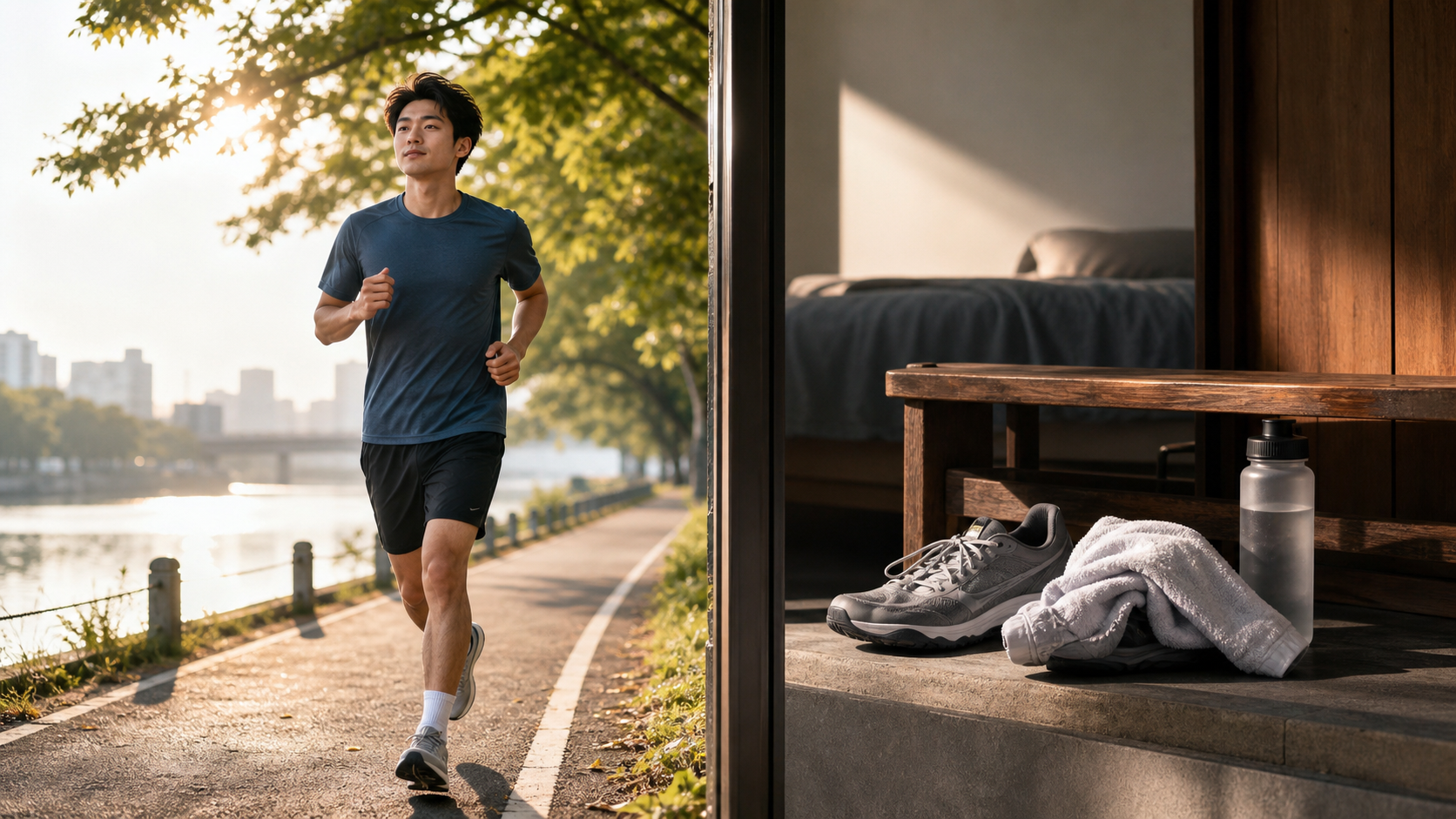
Active Recovery vs. Passive Rest: Scientific Comparison of Jogging Recovery and Complete Rest
Introduction
The day after training, you face a choice: put on your running shoes and go for a 30-minute jog, or stay home and rest properly? This seemingly simple question is backed by a wealth of sports science.
“Active Recovery” and “Passive Rest” are the most frequently discussed contrasts in recovery strategies. Both have scientific support; the choice depends on your training intensity, personal condition, and current recovery needs. Let’s analyze the differences from a scientific perspective.
Physiological Mechanisms of Active Recovery
Accelerating Lactate Metabolism
After high-intensity running, muscles accumulate large amounts of lactate, which is partly responsible for the burning sensation and fatigue. Research shows that low-intensity exercise (50 to 60% of maximum heart rate) can significantly accelerate lactate clearance, about 60% faster than complete static rest.
This is because low-intensity exercise maintains adequate blood circulation, allowing lactate to be transported to the liver and other muscle groups for metabolism, rather than stagnating in local tissues.
Promoting Lymphatic Circulation
Unlike the circulatory system, the lymphatic system has no “pump” and relies entirely on muscle contraction to drive lymph fluid flow. Gentle exercise can effectively stimulate lymphatic circulation, helping to clear metabolic waste and inflammatory factors accumulated after exercise.
Psychological Benefits
For many runners, “completely staying still on rest days” can actually cause psychological stress. Light active recovery activities help maintain the habit of “staying active every day” while not adding physical burden, having a positive impact on mental health.
The Necessity of Passive Rest
Passive rest is not a synonym for laziness. In some cases, complete rest is the best choice:
Foundation for Repair
Deep sleep (especially slow-wave sleep and REM sleep) is the most active period for muscle protein synthesis. Growth hormone secretion during sleep is more than 10 times that during wakefulness. Any form of “recovery activity” cannot replace high-quality sleep.
Central Nervous System Recovery
Muscle soreness is only the surface phenomenon of fatigue; central nervous system (CNS) fatigue is often overlooked. After high-intensity interval training or competition, the CNS needs complete rest to recover effectively. Forcing active recovery may prolong the CNS fatigue period.
Comparison of the Two Recovery Methods
| Comparison Item | Active Recovery | Passive Rest |
|---|---|---|
| Lactate Clearance Speed | Faster (about 60% faster) | Slower |
| Muscle Repair Efficiency | Moderate | High (especially during sleep) |
| Psychological Feeling | More Positive | Varies by Individual |
| Suitable Timing | After mild to moderate training | After high-intensity training, during injury |
| Energy Consumption | Small amount | None |
| Execution Difficulty | Requires active planning | Simple |
Correct Intensity for Active Recovery
The most common mistake in active recovery is “too high intensity,” mistakenly believing that “jogging recovery” means running at a normal pace. In reality, the intensity of active recovery should be:
- Heart Rate Zone: 50 to 60% of maximum heart rate (e.g., if maximum heart rate is 180bpm, recovery run heart rate should be between 90 and 108bpm)
- Pace Perception: Able to converse easily, completely effortless
- Duration: 20 to 40 minutes is sufficient; no need for longer
- Alternative Options: Swimming, cycling, yoga, and light walking are all excellent active recovery methods
How to Determine Which Method to Choose?
Choose Active Recovery When:
- Previous day’s training was moderate-intensity run (e.g., easy long run)
- Muscles feel slightly tight but no significant soreness
- Resting heart rate is normal (within ±5bpm of personal average)
- HRV (Heart Rate Variability) is within normal range
Choose Passive Rest When:
- Previous day was high-intensity interval or competition
- Muscles have significant DOMS (Delayed Onset Muscle Soreness)
- Resting heart rate is more than 5bpm above average
- Feeling particularly fatigued or emotionally low
- Have minor injury or joint discomfort
Practical Advice
Principles for Designing a Weekly Recovery Plan:
- Monday (Day After Hard Session): Choose passive rest or ultra-light active recovery (a walk is sufficient)
- Wednesday (After Moderate Training): Schedule 30 minutes of active recovery jogging or swimming
- After Running That Evening: Regardless of which recovery method, ensuring 7 to 9 hours of sleep is the most important
- Prioritize Body Signals: The plan is a guide; body sensation is the final judge
- Try Cross-Training: Swimming is a perfect active recovery method for runners; buoyancy reduces joint burden, and water resistance promotes blood circulation
Conclusion
Active recovery and passive rest are not opposing choices, but two different tools in the recovery toolbox. Smart runners know how to flexibly choose based on training intensity, physical condition, and goals, rather than stubbornly adhering to one method.
Remember: The best recovery strategy is the one you can consistently execute.
Related Topics
- Active Recovery vs. Passive Recovery: What Science Says
- Recovery Period Management for Interval Training: Comparison of Active Recovery vs. Passive Rest Effects
- Active Recovery After Running: 10-Minute Jog vs. Complete Rest Effect Comparison
- Active Recovery After Running: Comparison of Recovery Benefits of Jogging, Swimming, and Cycling
靠單車減肥35公斤 心得分享與整理
7 年前
白沙屯媽祖進香在家走!UREVO 坡度自調走步機 / 可連接訓練遊戲APP MyWhoosh / 邊看直播邊走起來 / CT Yeh
11 個月前
多機位拍片神器 DJI Action 2 拍出速度張力感 | 類空拍機視角 4陣列麥克風超強降風噪 實測! | 公路車 | CT Yeh
3 年前
CT暗黑廚房) 車友必備 宇宙無敵鮮蚵湯 幫助訓練恢復 天然食補 好市多 超肥鮮蚵 破PR
7 年前
DJI OSMO Action 3 新韌體超強! 2.5H續航!運動攝影新神器!超強快充!今年不換GoPro了🤣| 公路車 | CT Yeh
3 年前
西進武嶺 免費訓練分析服務 Intervals | 練不夠還是練過頭?你哪一種類型選手?AI模型告訴你! | 備戰神器 | 公路車 訓練 | CT Yeh
4 年前
大家都在開箱的...單車用藍芽對講耳機真的有幫助嗎? SENA BiKom 20 長距離旅遊 & 海鷗繞圈賽 實際體驗心得 / 公路車 / CT Yeh
9 個月前
2019 柯P 超越北高 第一集團實錄 (11小時實錄請參考另一部影片) 一日雙城 一日北高 NeverStop Taiwan Long Distance Cycling Challenge
7 年前