Round-Island Refueling Strategy: Daily Calorie Requirement Calculation and Convenience Store Refueling Tips
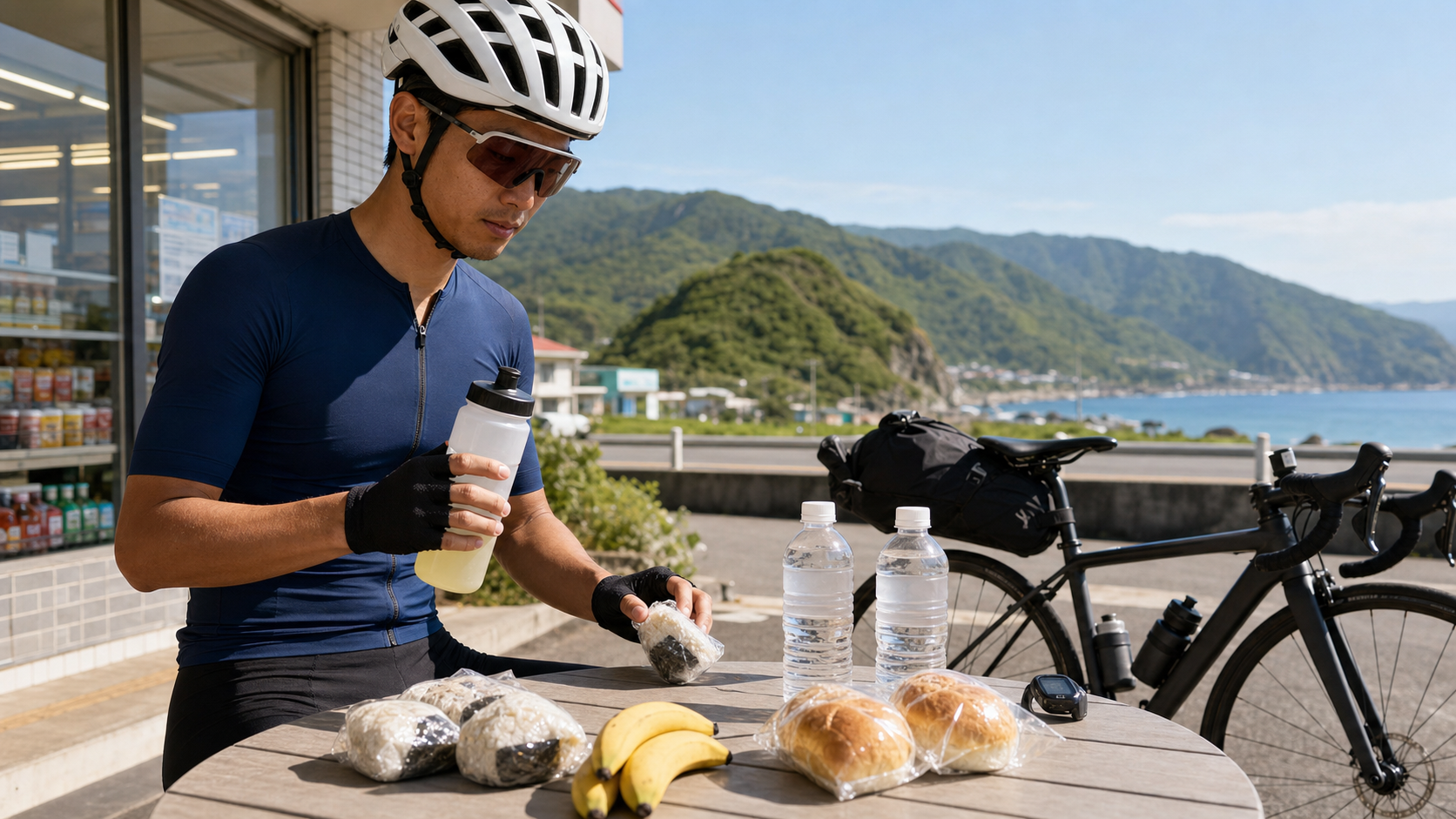
Round-the-Island Fueling Strategy: Daily Calorie Needs and Convenience Store Refueling Tips
Introduction
The worst situation on a cycling trip around the island isn’t a flat tire—it’s “bonking”—when the glycogen in your muscles runs out and both your brain and legs lose power at the same time. It’s a desperate feeling of total weakness, where you can’t push the pedals and even flat roads feel like climbs.
The key to avoiding a bonk lies in the timing and quality of your fueling, not just how much you eat. One of the biggest advantages of cycling around Taiwan is that there’s a convenience store every 30 to 50 kilometers, making your fueling strategy highly flexible.
Estimating Daily Calorie Needs
Daily calorie expenditure during a round-the-island trip depends on riding distance, terrain, and individual body weight. Here’s a general estimation formula:
Baseline expenditure: Body weight (kg) × Riding distance (km) × 0.7 = Cycling calories (kcal)
For example, a 70 kg rider doing 90 km per day:
70 × 90 × 0.7 ≈ 4,410 kcal (cycling expenditure)
Adding a basal metabolic rate of about 1,800 kcal, the total daily intake needed is approximately 3,500–4,500 kcal (net intake after accounting for fat-burning).
| Daily Distance | Cycling Calories Burned (70kg) | Recommended Calorie Intake |
|---|---|---|
| 70 km | Approx. 3,430 kcal | 3,000–3,500 kcal |
| 90 km | Approx. 4,410 kcal | 3,500–4,200 kcal |
| 110 km | Approx. 5,390 kcal | 4,200–5,000 kcal |
Note: These are only estimates; actual expenditure varies greatly depending on climbing, wind resistance, and riding efficiency. Heart rate or power meters provide the most accurate reference.
Fueling Timing: Don’t Wait Until You’re Hungry
The golden rule of cycling fueling is to “refuel before you feel hungry.” The reason is that by the time you feel hunger, your blood sugar has already started to drop. It takes 15–20 minutes to recover energy after refueling, and during that time you may have already ridden into a dangerous state.
Recommended Fueling Rhythm
- 30 minutes before departure: Eat a carbohydrate-rich breakfast (rice balls, bread, bananas)
- Every 45–60 minutes of riding: Take in a small snack (100–150 kcal)
- Every 90 minutes of riding: Stop for a proper refueling break and drink 500 ml of water
- Lunch (main meal): Choose a high-carb, moderate-protein combination (bento boxes, noodles)
- Within 1 hour of arriving at accommodation: Eat protein-rich food to aid muscle recovery (eggs, tofu, meat)
Convenience Store Refueling Guide
Taiwan’s convenience stores are the best logistical base for round-the-island cyclists. Here are the most practical options at 7-Eleven and FamilyMart:
Foods Suitable for Taking Along While Riding
- Onigiri (rice balls): Carbs + a little protein, easy to eat, about 200–250 kcal
- Sweet potato (available at 7-Eleven): Low-GI carbs, prevents sudden blood sugar drops
- Bananas: Quick sugar replenishment, potassium helps prevent leg cramps
- Dark chocolate: Fat + carbs, good to eat before climbs
- Small packs of salted nuts: Replenish electrolytes and fat
Hydration Strategy
- Drink at least 500–750 ml of fluid every hour
- When sweating heavily, add sports drinks (such as舒跑 or寶礦力) to replenish electrolytes
- Avoid drinking large amounts of sugary drinks, which can cause bloating and discomfort
Lunch Main Meal Options
| Meal Type | Calorie Estimate | Pros and Cons |
|---|---|---|
| Braised pork rice + soup | Approx. 600–800 kcal | Enough carbs, great value |
| Bento box (convenience store hot food) | Approx. 700–900 kcal | Convenient and quick, but low in vegetables |
| Noodle shop / rice noodle soup | Approx. 500–700 kcal | Easy to digest, but lower in protein |
| Oden + rice ball | Approx. 500–600 kcal | Quick fix, good for when you’re in a hurry |
Three Often-Overlooked Fueling Details
-
Proper use of caffeine: Drinking a cup of black coffee (about 100 mg of caffeine) 30 minutes before riding can boost performance, but avoid drinking it after 3 PM to prevent affecting sleep quality at night.
-
Sodium replenishment: A full day of riding and sweating can cause a loss of 1,000–2,000 mg of sodium. Taiwanese food tends to be salty, so regular meals usually cover this, but if you’re only eating light convenience store food, remember to add extra salt (carry a small pack of salt, or eat salty snacks like fried chicken).
-
Gastrointestinal adaptation: After several consecutive days of high-intensity riding, some people experience stomach discomfort and loss of appetite. If you find you don’t want to eat, forcing yourself to consume liquid foods (congee, soy milk) is better than eating nothing at all.
Conclusion
There’s no complicated science to round-the-island fueling—the core is just one phrase: “Refuel regularly; don’t wait until you’re hungry.” Taiwan has one of the highest convenience store densities in the world, and that’s the biggest advantage for round-the-island cyclists. Learn to make good use of this resource, and you’ve already solved the most common energy problem on the road. Do your calculations before you set off, ride with peace of mind on the road, and let food be your fuel for moving forward, not an extra worry.
Related Reading
- Round-the-Island Fueling Strategy: Daily Calorie Needs and the Convenience Store Dependency Culture
- Energy Fueling Plan for Cycling Around the Island: Precise Carb Calculations and Practical Strategies for 150 km Per Day
- Diet Management for Multi-Day Rides: Daily Calorie and Fueling Planning for Round-the-Island Trips
- Carbohydrate Strategies for Long-Distance Riding: Hourly Intake and Digestion
單車 一日北高 ( 雙城 ) 肥宅雙人瘋狂行 紀錄片 REACTO
10 年前
一日北高常見問題大集合 | 攻略 | 路線 | 訓練 | 補給 | 自行車 單車 | 一日雙城 | 雙塔 | TWB北高360 | 屁股痛
6 年前
CT暗黑廚房) 車友必備 宇宙無敵鮮蚵湯 幫助訓練恢復 天然食補 好市多 超肥鮮蚵 破PR
7 年前
大武山20%魔王陡坡【JJSC南台灣遊騎Day2】!屁股真的要裂開了...凡士林抹滿也沒用?神秘金教堂還有超便宜夜市
3 個月前
金門 ! 我騎過最棒的離島了 / 最後可以騎車上金門大橋的機會!?/ 公路車 / CT Yeh
1 年前
台北闊瀨陡坡 騎旅 / 日本單車雜誌編輯車友臨時加入!/ 髮香才是最強的 / feat. 北迴歸線小隊 / 公路車 CT Yeh
6 個月前
水金九不厭五分 10度寒流冷到不願停!feat. 卡卡 / 公路車 / CT Yeh
6 個月前
一日北高/長距離團騎 常見問題補充篇 / 組團或跟團的眉角 / 壯車友容易被瘦車友慢性拉爆 / 原來屁股痛可能是這個原因...? / 風場配速法 / 公路車 / CT Yeh
2 年前