Patrick Lange's Marathon Segment Strategy: Breaking Down How to Run Sub-2:40 in an Ironman Marathon
Introduction
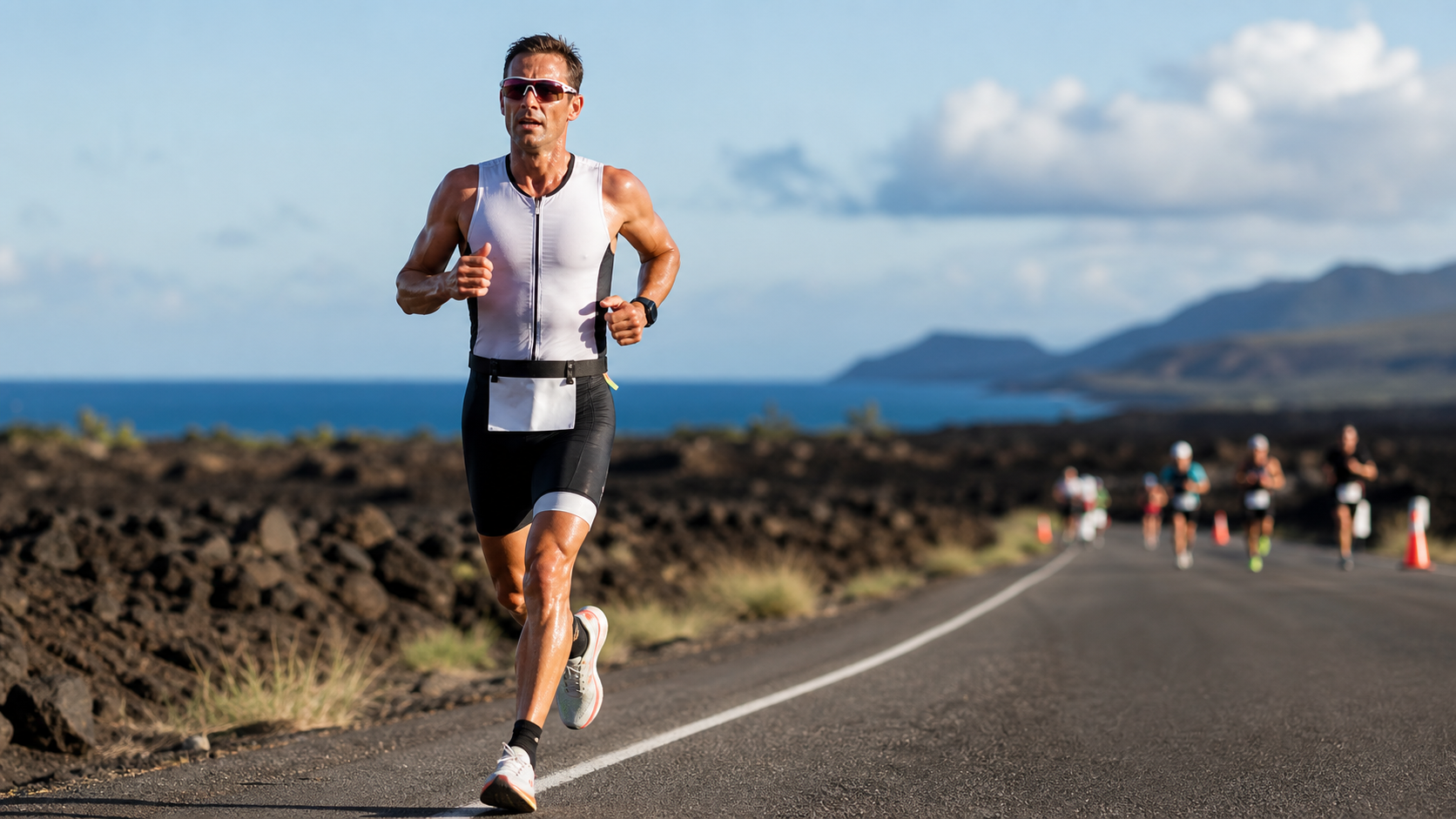
Patrick Lange, born in Germany in 1986, is renowned in the triathlon world for his astonishing marathon ability. At the 2017 IRONMAN World Championship (Kona), he completed the marathon leg in 2 hours 39 minutes 45 seconds, breaking the world record for a full-distance triathlon marathon leg and securing the title that year with an overall time of 7 hours 52 minutes 39 seconds. In 2018, he conquered Kona once again, becoming a two-time world champion. Why is Lange’s running ability so exceptional? This is not merely a matter of talent—it is a highly precise combination of strategy and training.
Background Data Behind the Record-Breaking Run Leg
To understand how remarkable Lange’s marathon leg truly is, let’s first look at some comparative data:
| Comparison Item | Value | Notes |
|---|---|---|
| Lange’s Kona marathon leg | 2:39:45 | After completing 3.86km swim + 180km bike |
| Men’s professional marathon world record (2017) | ~2:02 | Standalone marathon race |
| Typical good amateur marathon | 3:00–3:30 | Standalone marathon race |
| Average Kona marathon finish time | ~3:45–4:30 | Age-group athletes |
Bike Leg Pacing: Saving Energy for the Run
The biggest secret behind Lange’s successful marathon leg lies in his restraint on the bike leg. He typically does not chase a high ranking on the bike, but strictly controls his power output:
- Bike leg power is controlled at approximately 72–74% of FTP (around 230–245 watts)
- Kona bike leg finish time is approximately 4 hours 20 minutes, not elite-level
- His legs feel “fresher” than other athletes’ when leaving T2
This strategy of “sacrificing the bike leg to gain on the run” requires immense race discipline—even when watching rivals fly past on the bike, he must resist the urge to chase.
Run Leg Pacing Strategy: The Negative Split Principle
Lange’s marathon strategy employs the “Negative Split” principle: running the second half faster than the first half.
- First 10 km: Starts at a pace of approximately 3:50 min/km, feeling comfortable
- Middle section, 11–30 km: Gradually accelerates to 3:45 min/km, overtaking one opponent after another
- Final 10 km: Pace increases to 3:35–40 min/km, entering “run mode”
This late-race acceleration strategy relies on several important prerequisites:
- Energy management on the bike leg must be precise to avoid excessive glycogen depletion
- Pace judgment in the early part of the run leg requires extensive race experience
- Nutrition strategy must align with the acceleration plan, ensuring adequate energy before speeding up
Running Training Characteristics
Lange’s running training has several distinctive features:
- Brick training at the core: 2–3 brick sessions per week involving running directly after cycling, simulating the heavy-leg feeling in racing
- Running volume is not excessive: Approximately 80–100 km per week, prioritizing quality over quantity
- Marathon-pace training: 20–30 km target-pace sessions performed in a fatigued state to improve pace awareness
- High-intensity intervals: 1–2 sessions per week of 400m or 1km repeat intervals to maintain running speed reserve
Precision in Energy Nutrition Strategy
Completing a full-distance triathlon requires approximately 7,000–9,000 calories, and the nutrition strategy directly impacts run leg performance:
- On the bike leg, consumes approximately 80–90 grams of carbohydrates per hour (mainly from energy gels and sports drinks)
- On the run leg, takes a gel or banana every kilometer or at every aid station
- Electrolyte supplementation to prevent muscle cramps, especially critical in Kona’s high temperatures
Run Leg Optimization Advice for Taiwanese Athletes
- Incorporate brick running sessions late in long-distance training blocks to familiarize the body with fatigue transitions
- Learn the pacing discipline of “rather gain time on the run than let the bike leg ruin your run”
- Calculate your personal optimal pace and set your marathon leg target pace with a 10% conservative buffer
- Maintain a consistent nutrition schedule on race day; do not change strategy based on race conditions
Conclusion
Behind Patrick Lange’s record-breaking marathon lies extreme restraint in bike leg pacing and immense trust in his running ability. He has proven that in triathlon, “the power of waiting” is more decisive than “the impulse to lead.” For Taiwanese athletes looking to improve their long-distance triathlon performance, Lange’s strategy offers a clear path: ride conservatively, run explosively.
Related Reading
- Anne Haug’s Race Strategy: An In-Depth Analysis of the Women’s Triathlon World Champion’s Racing Style
- Jan Frodeno’s Training Philosophy: A Complete Breakdown of the Fastest Male Triathlete’s Preparation Methods
- The Art of IRONMAN 226 Full-Distance Pacing: How to Keep the Final Marathon from Becoming a Death March
- Ironman Full-Distance Pacing: Breaking 226 km into Nine 90-Minute Blocks
西進武嶺 世界紀錄挑戰!破2:30 ?!一群人推著一個夢上山 直播精華版 / ft. 張翰允 & 台視主播魏于恬 & KPLUS / #cycling 公路車 CT Yeh
2 個月前
2019 夏季KOM 5小 完賽心得 準備攻略 東進武嶺 夏季登山王之路 Taiwan KOM Challenge
7 年前
Live) 備戰2019彰化經典百K 賽前攻略 (已完賽請看新影片
7 年前
2023 台灣KOM自行車登山王挑戰 (AI修復版) / Taiwan KOM Challenge / Live 實況直播 / 班傑明刷破大會成績全記錄
2 年前
西進武嶺 免費訓練分析服務 Intervals | 練不夠還是練過頭?你哪一種類型選手?AI模型告訴你! | 備戰神器 | 公路車 訓練 | CT Yeh
4 年前
Never Stop 西進武嶺 前後雙機 完整全程錄影 訓練台 實境
8 年前
2021 96聯賽 桃園市長盃 4K多視角實況 當天選手瓦數/推力比/均速/時間 即時數據分析 | 公路車 | CT Yeh
5 年前
如果Pogačar騎西進武嶺可以多快?會破2嗎?各種情況深度推估探討 / 公路車 / CT Yeh
2 年前