The Grassroots Popularization of Triathlon: How Age Group Athletes Achieve Good Results in Amateur Competition
Introduction
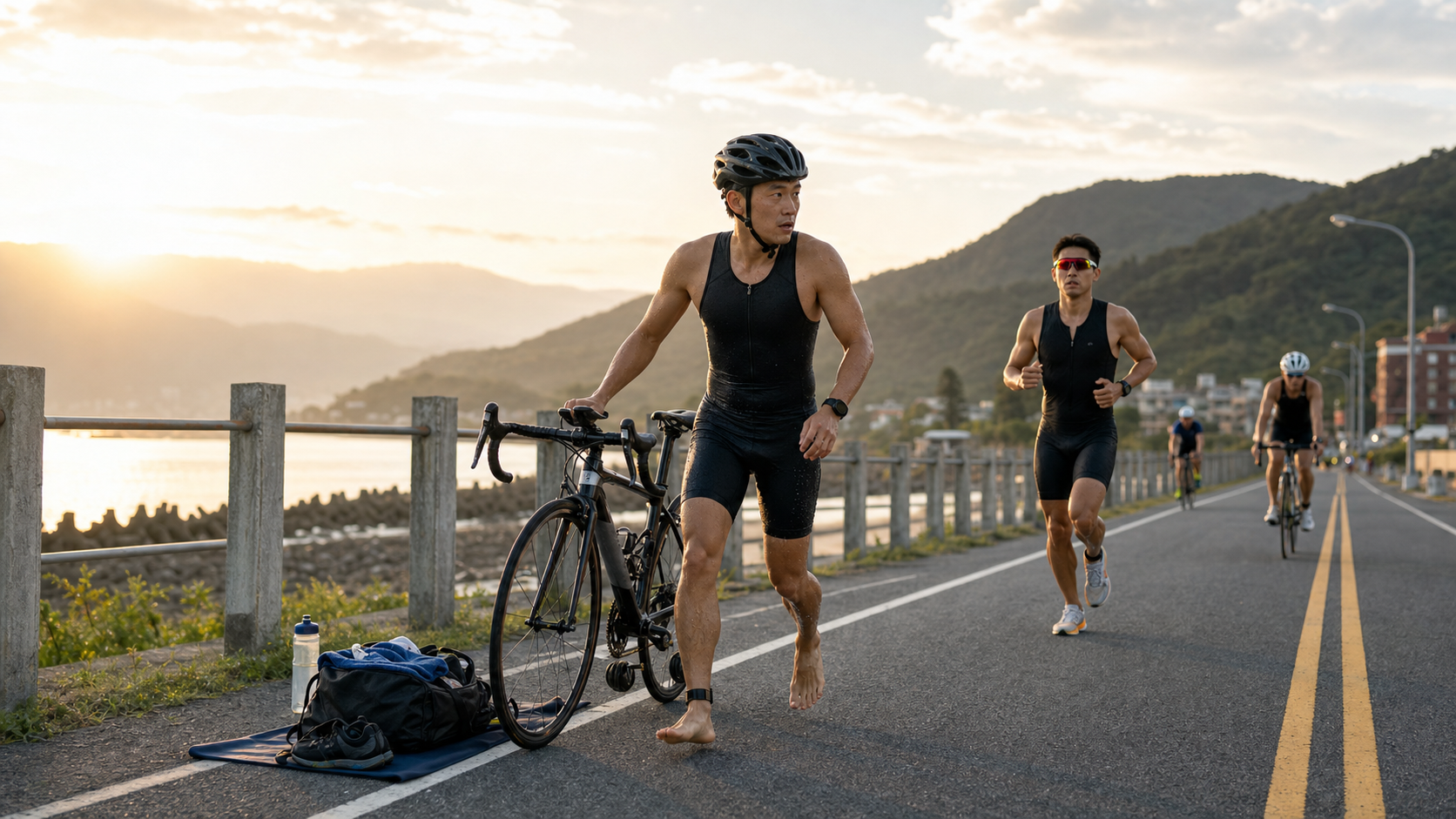
At the IRONMAN World Championship, professional athletes account for less than 5% of the field, while the remaining 95% are amateur Age Group (AG) athletes—by day they are doctors, engineers, and teachers; by night and on weekends, they are triathletes training with full commitment. Their stories are the most compelling part of triathlon. Taiwan’s amateur triathlon scene has flourished in recent years, with more and more people setting “completing a triathlon” as a life goal. How to achieve peak performance within limited time is the most pressing question for every age group athlete.
The Real-World Challenges of Age Group Athletes
Age group athletes face challenges vastly different from those of professionals:
| Challenge | The Reality for Age Group Athletes |
|---|---|
| Training Time | 8–15 hours available per week (including commuting, work, and family) |
| Recovery Capacity | Work stress affects sleep; recovery is slower than that of professionals |
| Coaching Resources | Most train on their own or join training groups, lacking personalized guidance |
| Equipment Investment | Limited budget; trade-offs must be made between gear and training investment |
| Injury Risk | Overtraining is one of the most common problems among age group athletes |
Core Principles of Efficient Training
For time-constrained age group athletes, “efficiency” matters more than “training volume”:
Polarized Training:
- 80% of training is done at low intensity in “Zone 1–2” (easy aerobic)
- 20% of training is done at high intensity in “Zone 4–5” (near VO2max)
- Avoid lingering in the moderate-intensity “gray zone” (Zone 3), which is the least efficient training intensity
Training Priorities:
- Allocate training time to your weakest discipline first
- Brick sessions (bike followed by run) are more effective than single-discipline workouts
- Long-course sessions are an irreplaceable investment in building endurance
A Sample Weekly Training Plan for Age Group Triathletes
Using an athlete with 12 hours of training time per week as an example:
- Monday: Rest or an easy 45-minute swim
- Tuesday: Morning 1-hour swim (technique session) + evening 45-minute easy run
- Wednesday: 1.5-hour bike session (including threshold work)
- Thursday: 1-hour swim (speed session) + 1-hour run (including intervals)
- Friday: Light training or active recovery for 45 minutes
- Saturday: 3–4 hour long bike ride + 30-minute brick run
- Sunday: 1.5–2 hour long run (easy pace)
Cost-Effective Equipment Choices
Age group athletes should follow the “return on investment” principle when spending on equipment:
High-Value Investments (Priority):
- Good running shoes (with carbon plate): The most direct impact on run segment performance
- Power meter (or speed/cadence sensor): Improves training efficiency
- High-quality triathlon suit: Reduces transition time and ensures all-day comfort
Investments to Evaluate Carefully:
- Time trial (TT) bike: The performance gain for age group athletes is relatively limited; a road bike with aero add-ons may offer better value
- Deep-section disc wheels: Choose carefully in Taiwan’s hilly terrain and common crosswind conditions
- Latest-generation power meters and other high-end devices: Prioritize accumulating training experience first
Nutrition and Recovery Management
Age group athletes often overlook the impact of nutrition on training outcomes:
- Refuel within 30 minutes after training: 20–30 grams of protein + carbohydrates to accelerate muscle repair
- Carbohydrate periodization: Increase carbs on high-volume days, reduce them on low-intensity days
- Sleep is the most important recovery tool: Aim for 7–8 hours per night; sleep quality takes priority over training volume
Age Group Racing Strategy
Once age group athletes understand the competitive level in their age group, they can set more precise goals:
- Look up the historical split times distribution for each age group at your target race
- Identify your strongest segment and develop a race strategy that maximizes that strength
- Treat “finishing” and “personal best (PB)” as the primary goals, rather than ranking
Practical Advice
- Join a local triathlon training group to motivate each other and share race information
- Target 1–2 long-distance races per year, paired with 2–3 short-distance races as training races
- Invest in 1–2 sessions with a professional coach for personalized training advice
- Log the feelings and data from every workout to build your own training journal
Conclusion
The beauty of triathlon lies in the fact that it is a sport for everyone. Age group athletes and professionals start from the same starting line and cross the same finish line—this is the unique democratic spirit of triathlon. For Taiwan’s age group triathletes, finding the balance between training and life, and replacing brute-force training volume with smart methods, is the key to enjoying this sport long-term and continuing to improve.
Related Reading
- Periodized Training for the 9-to-5 Triathlete: Strategies for Maximizing Performance with Limited Time
- The Annual Training Cycle in Triathlon: Base Phase → Build Phase → Race Phase → Recovery Phase Planning
- Weekly Triathlon Training Volume Allocation — A Complete Comparison of 10/12/15-Hour Versions
- Triathlon Training for 40+ and 50+: The Science of Age Adjustment, Helping Masters Athletes Train Smarter Rather Than Harder
福隆鐵人團練隨拍
8 年前
Live) 備戰2019彰化經典百K 賽前攻略 (已完賽請看新影片
7 年前
西進武嶺 免費訓練分析服務 Intervals | 練不夠還是練過頭?你哪一種類型選手?AI模型告訴你! | 備戰神器 | 公路車 訓練 | CT Yeh
4 年前
一日北高/長距離團騎 常見問題補充篇 / 組團或跟團的眉角 / 壯車友容易被瘦車友慢性拉爆 / 原來屁股痛可能是這個原因...? / 風場配速法 / 公路車 / CT Yeh
2 年前
JJSC一槍北港 百K團實錄!跟團技巧分享 ft. Roden / 中部練車新選擇 / 開箱全台最便宜早餐店!/ 公路車 / CT Yeh
1 年前
一個測試有沒有認真練車的方法😂 #公路車
10 個月前
JE22 百里任務體驗,心跳不能過150,三小時內有可能...? 沒有天時地利難度有多高? / 公路車 / CT Yeh
1 年前
實景訓練台) 彰化經典百K 高強度喵團 90分鐘 跟著一起練功 2019 Indoor workout Changhua Classic 100 Taiwan
7 年前