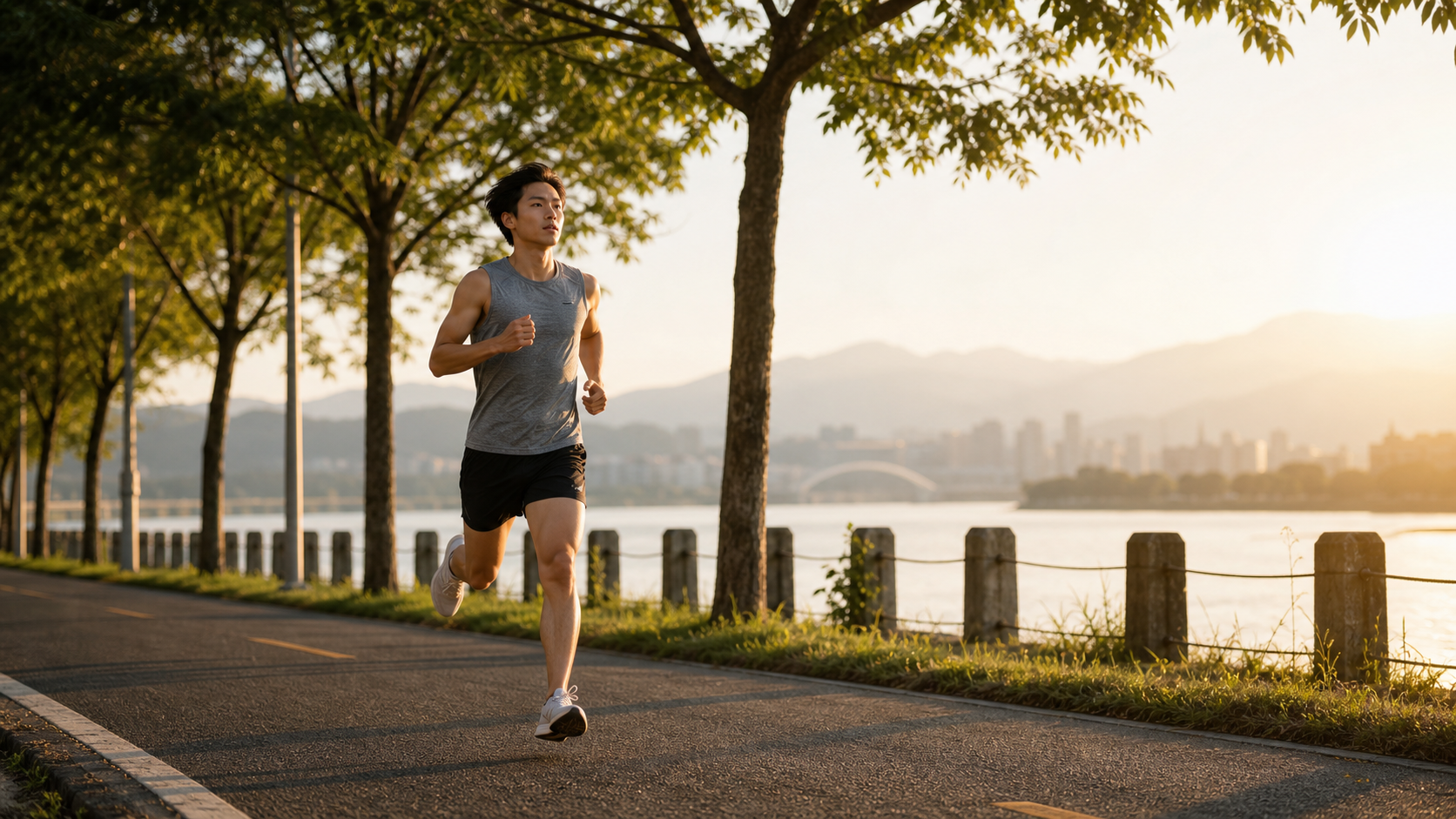
Flow State and Running: How to Reach the Best Mental State of Effortless Running
Introduction
Have you ever had a running experience like this: you head out feeling heavy-hearted, but as you run, suddenly everything clicks—your stride feels light, your breathing is smooth, and time passes without you noticing. By the time you snap back to reality, you’ve covered a longer distance than planned, and you still feel like you could keep going.
Psychologist Mihaly Csikszentmihalyi calls this state “Flow”—an optimal experience where you are fully absorbed, and action and awareness merge into one. Flow doesn’t just make running more enjoyable; research shows it can also improve running efficiency, delay the perception of fatigue, and make the same training produce better results.
The 9 Characteristics of Flow
Csikszentmihalyi’s research identified 9 core characteristics of the flow experience. Here is how they manifest in running:
| Flow Characteristic | Manifestation in Running |
|---|---|
| Balance of challenge and skill | Current pace sits right at the edge of comfort but isn’t overly difficult |
| Merging of action and awareness | Running movements feel “automatic,” requiring no deliberate thought |
| Clear goals | Knowing the purpose of this run, e.g., holding a steady 5:30 pace |
| Immediate feedback | Bodily sensations, or real-time data from your watch |
| Total concentration | Daily worries temporarily disappear; only the present moment of running remains |
| Sense of control | Feeling that your body is under your command |
| Loss of self-consciousness | No longer worrying about “Do I look good running?” or “What do others think of me?” |
| Distorted sense of time | Time feels like it passes faster (or slower) than it actually does |
| Autotelic experience | Running itself is the reward; no external reason is needed |
The Trigger Conditions for Flow
Condition 1: An Appropriate Level of Challenge
Flow occurs in the narrow band where “skill and challenge are in perfect balance.”
- Too easy → boredom (e.g., a pace far slower than your ability)
- Too difficult → anxiety (e.g., a pace beyond your ability)
- Just right → highest flow potential
Practical advice: Flow most easily occurs around lactate threshold pace (roughly the pace at which you can speak in full sentences but with some effort). The moment during interval training “when recovery between sets ends and the next set is about to begin” is also a high-frequency trigger point for flow.
Condition 2: Clear and Immediate Goal Feedback
Flow needs an “anchor” to focus your awareness. An aimless “casual run” with no goal at all actually makes it harder to enter flow.
But note: Goals should be simple technical or rhythm-based goals, not high-pressure performance goals. For example:
- “Keep a metronome-like cadence of 180 on this stretch”
- “Follow the rhythm of the runner ahead of me”
- “Let my breathing fully drive my body’s rhythm”
Condition 3: Reduce External Distractions
Flow requires a certain amount of attentional resources. External distractions (phone notifications, overly complex music, thinking about things unrelated to running) divide your attention and hinder flow.
Advice: Choose a familiar running route (reducing the cognitive load of navigation), turn off phone push notifications, and choose music with a steady rhythm—or no music at all.
Condition 4: An Appropriate External Focus
Research shows that an external focus (focusing on the external environment or the outcome of your movements, rather than bodily sensations) more easily triggers flow, because it allows the automatic motor system to take over and reduces interference from excessive conscious awareness.
Practical Strategies for Actively Creating Flow
The “Flow Starter” Training
Many runners report that certain specific sensory stimuli can trigger a flow state:
- Sound: Specific music (usually songs whose rhythm matches your cadence)
- Scenery: Specific running routes (usually in natural environments)
- Sensation: A specific feeling of physical warmth-up (usually occurring 15 to 20 minutes into a run)
Identify your personal flow triggers, and deliberately replicate these conditions in your training.
The “Flow Memory” Technique
After you’ve had a flow run, immediately record:
- The environmental conditions at the time (time of day, weather, route)
- Your mental state before the run
- What triggered that feeling
- The details of that feeling (physical sensations, state of mind)
Before your next run, re-read this record and use imagery techniques to recreate that feeling—it can help you enter a flow state more quickly.
The “Don’t Force It” Principle
Flow’s most ironic characteristic is this: the harder you try to “enter” flow, the harder it is to enter. It requires a mental state of “being engaged but not attached.”
If you simply can’t get into a good state during a particular run, accept it and don’t force it. Flow won’t appear on every run—its rarity is part of what makes it precious.
Conclusion
Flow is not a myth, nor is it a special state that only elite runners can experience—any runner, under the right conditions, can enter this state of effortless absorption.
Cultivating the ability to enter flow doesn’t just make your running more enjoyable; it also allows you to keep discovering the deeper appeal of this sport throughout your many years of running. Every flow run is one of the purest gifts running has to offer.
Related Reading
- Flow State in Running: How to Enter the “Effortless” Zone of Peak Performance
- The Flow Experience in Road Running: How to Enter the Optimal Competitive State of Effortlessness
- Flow State in Road Running: How to Create the Best Running Experience
- The Trigger Conditions and Maintenance Methods of Flow State in Running
西進武嶺 免費訓練分析服務 Intervals | 練不夠還是練過頭?你哪一種類型選手?AI模型告訴你! | 備戰神器 | 公路車 訓練 | CT Yeh
4 年前
2018 田中馬拉松 全程健跑 VR 360 環景錄影 體驗現場狂野加油氣氛! Insta 360
7 年前
水金九不厭五分 10度寒流冷到不願停!feat. 卡卡 / 公路車 / CT Yeh
6 個月前
JE22 百里任務體驗,心跳不能過150,三小時內有可能...? 沒有天時地利難度有多高? / 公路車 / CT Yeh
1 年前
2025 海鷗團體繞圈賽 網路直播 超激烈裁判長視角 / EIPC 李廷威、Waypoint 等眾多高手競爭 / feat. 卡密兒主持 / 海鷗繞圈賽
9 個月前
2025 紫南宮99.9K環縣自行車挑戰賽 直播 / 第一集團跟了20K / CT動態數據直播系統 / 公路車 / CT Yeh
1 年前
Live) 備戰2019彰化經典百K 賽前攻略 (已完賽請看新影片
7 年前
3D 列印車褲墊 / 舒適改善? / 無痕 x 分區壓縮 / ATK & Decider系列 / JE22黑科技 / #公路車 #CTYEH
11 個月前