The Psychological Dynamics of Team Running: The Mechanisms Behind Performance Enhancement When Running with Companions
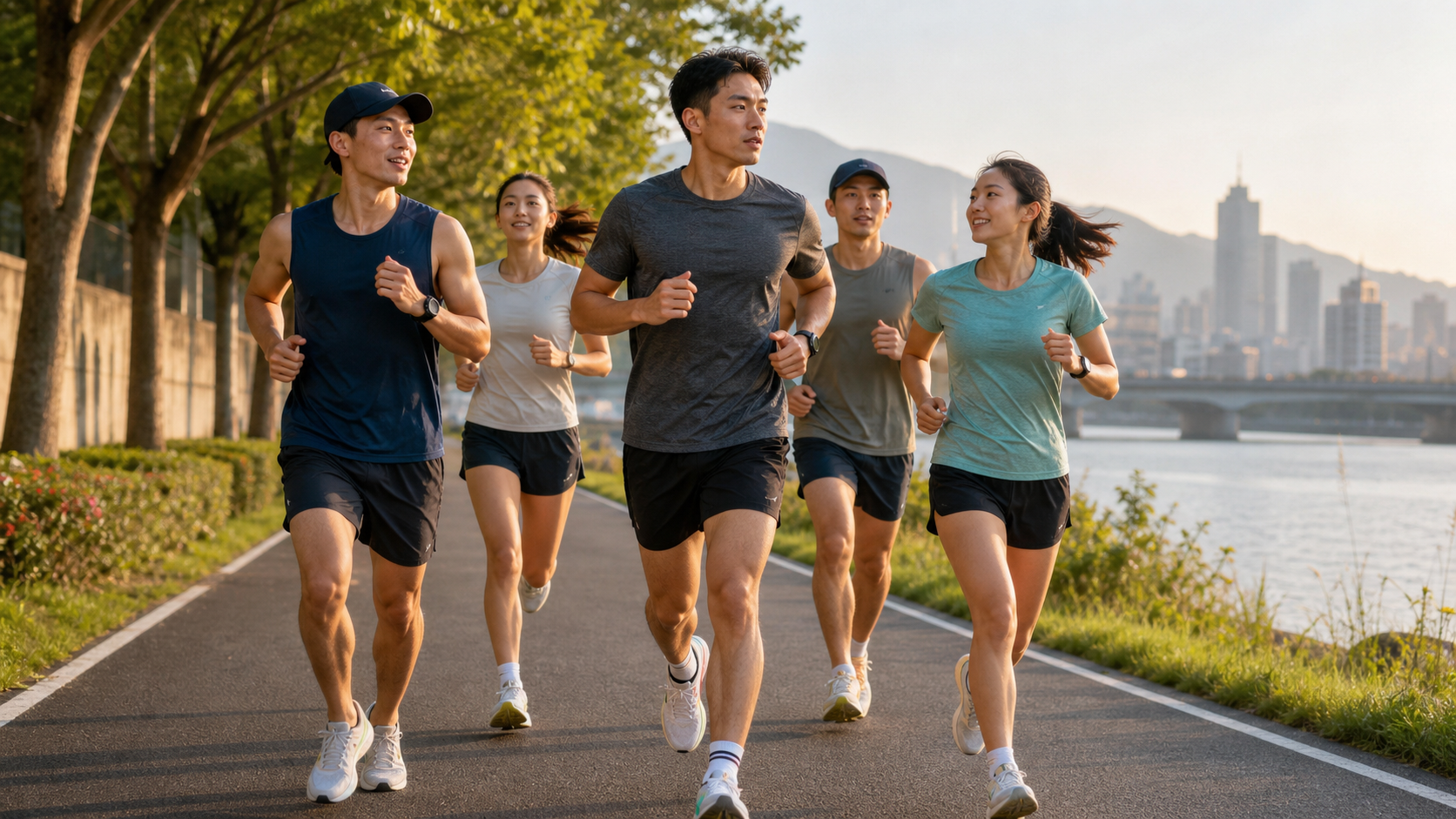
The Psychology of Team Racing: The Mental Mechanisms Behind Improved Performance When Running with Companions
Introduction
Why is it that during running club training, you can often hit a faster pace than when training alone? Why is it that in a race, having someone running beside you often helps you grit your teeth and push through a little longer? These phenomena are no coincidence—they are backed by clear psychological mechanisms.
Understanding these mechanisms allows you to use the power of community more intelligently in your training, and to make better decisions in your race strategy.
Key Psychological Mechanism 1: Social Facilitation Effect
In 1898, psychologist Norman Triplett discovered that cyclists raced faster when competing against opponents than when riding alone against the clock, opening up the field of research on “Social Facilitation.”
Robert Zajonc’s subsequent research revealed the mechanism: the presence of others raises an individual’s physiological arousal level, which is typically positive for well-learned actions (such as running for experienced runners)—boosting pace and extending endurance.
What this means for runners:
- On sections of a course with spectators (such as cheering zones in races), you will almost automatically run faster
- In a running club, the mere presence of others can raise training intensity
- The race environment itself is a powerful “arousal booster”
Key Psychological Mechanism 2: Social Comparison Theory
Psychologist Leon Festinger’s social comparison theory states that humans have a fundamental need to evaluate their own abilities and tend to compare themselves with similar others.
In the running context:
| Comparison Type | Psychological Effect | Best Application Scenario |
|---|---|---|
| Upward comparison (with someone stronger) | Provides motivation and direction, but may also cause pressure | Pacing with someone slightly faster than you during training |
| Lateral comparison (with someone similar) | Provides competitive drive and a sense of support | A “pace rabbit” or running partner in a race |
| Downward comparison (with someone weaker) | Short-term self-satisfaction, but no long-term benefit | Use with caution: may reduce motivation to improve |
Key Psychological Mechanism 3: Team Cohesion and Accountability
Psychological research shows that commitment to others is one of the most effective tools for maintaining training consistency. When you know a running buddy is waiting for you on Thursday morning, the resistance to crawling out of bed immediately drops.
This mechanism works through the “accountability effect”:
- We don’t want to let down people who have expectations of us
- The cost of skipping a workout witnessed by running partners (the social cost) is higher than when training alone
- Sharing a sense of accomplishment with others after completing a difficult workout reinforces positive behavior
Empirical data: Research from Stanford’s Behavior Design Lab (BJ Fogg’s Lab) shows that people with an accountability partner see their long-term adherence rate to an exercise program increase by approximately 40%.
How to Use the Power of Community Wisely
Find Your “Optimal Pacing Partner”
The most effective training partners are usually 10 to 15 seconds per kilometer faster than you. This gap provides enough pull without leaving you completely unable to keep up and feeling frustrated.
Establish a “Running Accountability Agreement”
Clearly agree with your running partner on:
- Fixed training times and locations
- Rules for last-minute cancellations (e.g., requiring 24 hours’ notice)
- How you will share training data with each other
Make Good Use of “Temporary Pacing Partners” in Races
During a race, find a stranger running at a similar pace and mentally designate them as your “temporary partner”:
- Follow their rhythm and let their steadiness help you maintain your pace
- But don’t force yourself to chase them when you’re depleted—keep your own judgment
Beware of the “Social Interference” Effect
The presence of others is not always positive. Watch out for the following situations:
- Running too fast with a group in a race (a common cause of going out too hard at the start)
- Ignoring fatigue signals because you care about what others think
- Over-comparing data in a community, leading to anxiety
Conclusion
Running may be an individual sport, but humans are inherently social animals. Smart runners know how to harness the power of community—not letting it control their pace, but letting it provide energy, motivation, and support at the right moments.
Find your running tribe, and it won’t just make you run faster—it will make you run longer and happier.
Related Reading
- The Psychological Benefits of Group Running: How Companionship Improves Performance
- The Psychology of Road Running Communities: The Impact of Support and Competition from Fellow Runners on Training Motivation
- Psychological Support in Running Communities: Why Running Alone vs. Running with a Group Makes All the Difference
- Positive Psychology in Road Running Communities: How Running Companions Improve Race Completion Rates
戰略) Zwift Race 如何咬在第一集團 如何評估自己要開多少推力 (請開1.5倍速看)
7 年前
CT 喇低賽) 單車 比賽總是沒照片? 攝影師的觀點大公開 姿勢就是力量! 請加速1.25倍收看
7 年前
一日北高/長距離團騎 常見問題補充篇 / 組團或跟團的眉角 / 壯車友容易被瘦車友慢性拉爆 / 原來屁股痛可能是這個原因...? / 風場配速法 / 公路車 / CT Yeh
2 年前
西進武嶺 免費訓練分析服務 Intervals | 練不夠還是練過頭?你哪一種類型選手?AI模型告訴你! | 備戰神器 | 公路車 訓練 | CT Yeh
4 年前
福隆鐵人團練隨拍
8 年前
Live) 備戰2019彰化經典百K 賽前攻略 (已完賽請看新影片
7 年前
#雙崎部落 單車挑戰賽 心跳破200 #公路車 Neko's Fun
6 年前
2021 96聯賽 桃園市長盃 4K多視角實況 當天選手瓦數/推力比/均速/時間 即時數據分析 | 公路車 | CT Yeh
5 年前