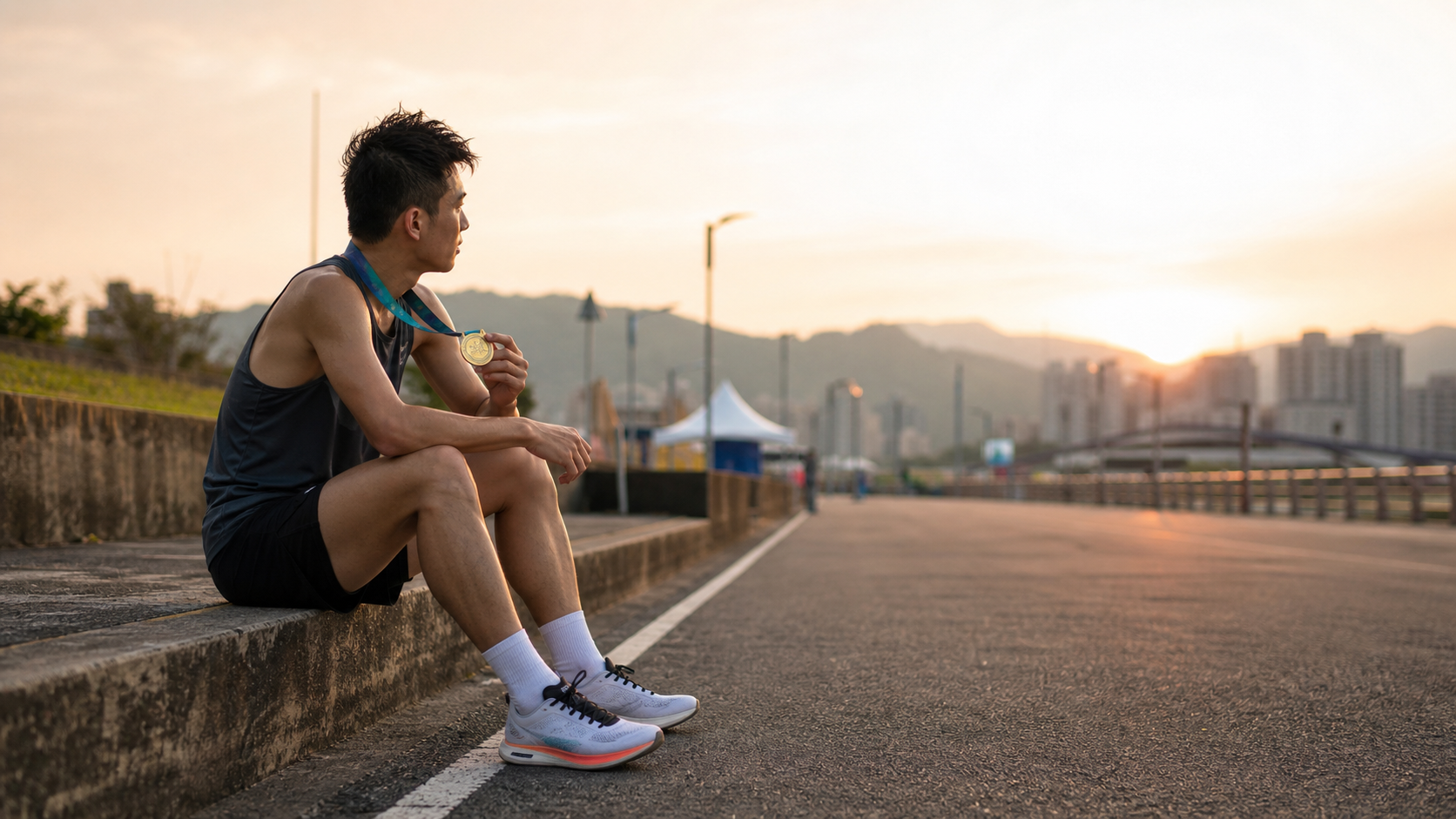
Post-Race Mental Adjustment: The Emptiness After Achieving a Major Goal and Setting New Goals
Introduction
The marathon you had been looking forward to for an entire year finally came to an end on the course one morning. You crossed the finish line, tears flowing uncontrollably, as a volunteer placed the finisher’s medal around your neck—in that moment, everything felt worth it.
But what about a few days later? Or even a few weeks later?
Many runners describe feeling a strange emptiness for a period of time after completing a major goal: less training, a lost sense of direction, and an indescribable feeling of letdown quietly seeping into daily life. This phenomenon is known in sports psychology as the “Post-Race Blues,” and it is more common than you might think—and more deserving of serious attention than you might expect.
The Psychological Roots of Post-Race Emptiness
1. A Vacuum of Purpose
A high-intensity training cycle lasting several months provides powerful structure and purpose to life—what time to wake up for training, how much mileage to run each week, when to go to bed early. When the race ends, this structure abruptly disappears, and daily life can feel strangely “empty.”
2. Dopamine System Reset
Long-term goal pursuit and training progress provide a continuous source of dopamine stimulation. After the race ends, this ongoing source of stimulation disappears, and the brain needs time to find other sources of meaning.
3. Identity Turmoil
“Marathon runner in training” is a clear identity. After the race ends, this identity temporarily loses its urgency, potentially triggering the implicit question, “Who am I now?”
4. The Gap Between Expectation and Reality
Even after a successful finish, the real-life “feeling of crossing the finish line” can differ from what you imagined—there may not be the complete sense of fulfillment you expected, or the feeling fades faster than anticipated.
Common Timeline and Manifestations of Post-Race Blues
| Period | Common Psychological State |
|---|---|
| 0 to 3 days after the race | Joy, excitement, muscle soreness, continuously reliving race memories |
| 3 to 7 days after the race | Emotions begin to settle; mild emptiness may appear |
| 1 to 3 weeks after the race | Emptiness deepens, reduced motivation to train, possible temporary loss of interest in running |
| 3 to 6 weeks after the race | Integration typically begins; motivation gradually returns if a new goal is in place |
| Still feeling depressed beyond 6 weeks | Consider whether deeper mental health issues are at play; seeking support is recommended |
Seven Post-Race Mental Adjustment Strategies
1. Allow the “Empty Period” to Exist
Don’t rush to set the next goal to fill the emptiness. First, allow yourself a period of “mental vacation”—run without purpose, or don’t run at all, just rest. This blank period is necessary, not a problem to be eliminated.
2. Complete Race Review
Once your emotions have settled (usually 1 to 2 weeks after the race), conduct a full race review:
- What did I learn during this preparation process?
- Which strategies worked? Which ones need to change?
- What did this race mean to me (beyond the result itself)?
Write down your review—it will become an important reference for the next training cycle and help you psychologically “close this chapter” completely.
3. The Ritual of Celebration
Many runners switch into “next mode” too quickly after completing a race, without giving themselves enough room to celebrate. Design a meaningful celebration ritual:
- Share the achievement with important people (not just by posting on social media)
- Buy something commemorative
- Write a letter to yourself from during the training process
- Re-read your training log and feel the completeness of the journey
4. Diversified Recharging During Recovery
Use the post-race “training-free window” to restore aspects of life that may have been neglected during training:
- Spend more time with family and friends
- Explore interests outside of running
- Complete things that were put aside during training
This is not “wasting time”—it is a necessary replenishment of psychological resources.
5. Gradually Re-engage with Running
During the first 1 to 2 weeks after the race, allow yourself to run “without purpose”—no pace requirements, no distance goals, based entirely on how your body feels. The purpose of this phase is to reconnect with your love of running, not to train.
6. Explore Rather Than Immediately Set the Next Goal
The post-race empty period is a good time to re-question “why do I run?” Don’t rush to fill the void with the next goal. First ask:
- “What parts of this training journey did I enjoy?”
- “What does running mean to my life?”
- “If I could do anything running-related, what would I want to do?”
The answers to these questions will point you toward your next goal.
7. Set “Meaning-Based Goals” Rather Than Only “Performance-Based Goals”
When you’re ready to set the next goal, try setting not only a performance goal but also a “meaning-based goal”:
- Help a friend who has never run a half marathon complete their first one
- Run in all 20 cities and counties of Taiwan before turning 50
- Enter a trail race known for its scenery, without caring about the result
Meaning-based goals can provide lasting motivation during frustrating periods (when performance plateaus) that performance goals cannot offer.
Conclusion
Completing a major goal is not the end of the story, but the preface to a new chapter. The emptiness after a race is your mind making room for the next journey—not telling you that the meaning of running is over, but inviting you to rediscover it somewhere deeper.
Give yourself some time, feel that sense of completeness, and then head toward the next course with a richer understanding of yourself. Every finish line is the best starting point for the next start.
Related Reading
- Post-Race Emotion Management: The Emptiness After Finishing and Setting the Next Goal
- The Void After Finishing: A Psychological Analysis of Post-Marathon Depression
- The Emptiness After Finishing: How to Avoid an Exercise Slump After Achieving a Goal
- Post-Race Low: Where the Sense of Loss Comes From After Achieving a Major Goal, and When to Seek Professional Help
#公路車 #Vo2Max #最大攝氧量 測驗 體驗 | 心肺測試
6 年前
摔車後補裝備: 好市多新款單車安全帽& Specialized Romin 北高整路屁股都不痛的坐墊 | 一千元居然有MIPS | CT Yeh | 公路車
4 年前
西進武嶺 免費訓練分析服務 Intervals | 練不夠還是練過頭?你哪一種類型選手?AI模型告訴你! | 備戰神器 | 公路車 訓練 | CT Yeh
4 年前
一日北高/長距離團騎 常見問題補充篇 / 組團或跟團的眉角 / 壯車友容易被瘦車友慢性拉爆 / 原來屁股痛可能是這個原因...? / 風場配速法 / 公路車 / CT Yeh
2 年前
一日北高前的高裝檢 | 北高 360 | 挑戰11小時的裝備 | 一日雙塔 | 補給
6 年前
2016 桐花飛舞 單車挑戰 精華片段
10 年前
#公路車 #Fitting 靠人工智慧APP 幫你調整單車
6 年前
單車元宇宙新霸主?TrainingPeaks Virtual 實測 / Zwift 完美平替? 還是超越?/ 有台灣國旗!前身 indieVelo / 公路車 / CT Yeh
1 年前