Complete Guide to When to Use Racing Swim Caps: Differences Between Training and Competition Caps, Plus Proper Care and Washing Methods
Introduction
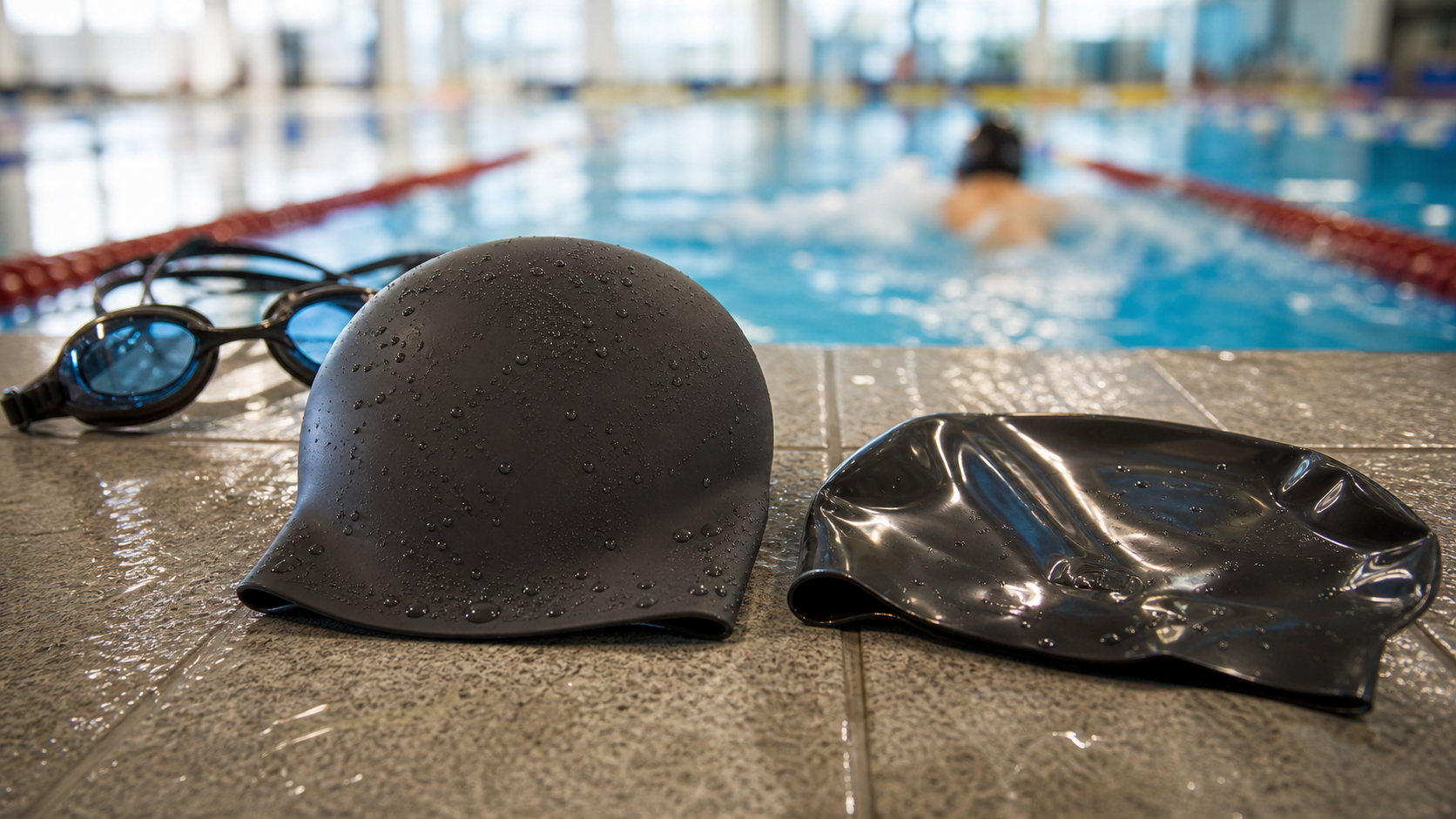
Walk into a swimming competition venue, and you’ll notice athletes often wear two caps—a silicone training cap underneath, topped with a thin latex cap. This “double cap” technique isn’t just a habit; it has scientific backing. However, for most swimmers, understanding the core differences between training caps and racing caps, along with proper maintenance, is a fundamental step toward ensuring race-day performance.
Core Differences Between Training Caps and Racing Caps
| Comparison Item | Training Cap | Racing Cap |
|---|---|---|
| Primary Material | Silicone | Latex or high-quality silicone |
| Thickness | 0.6–1.2 mm | 0.3–0.6 mm |
| Water Resistance | Moderate | Minimal |
| Durability | High (2–4 years) | Low to moderate (6–18 months) |
| Chlorine Resistance | Excellent | Moderate (latex ages more easily) |
| Weight | Approx. 40–70 g | Approx. 15–35 g |
| Identification Function | Usually has brand printing | Usually has athlete number or team colors |
| Market Price | NT$200–600 | NT$80–300 (latex), NT$300–800 (racing silicone) |
Training Swim Caps
Why Choose a Standard Silicone Cap
The primary requirement for a training cap is durability. With potential use 4–5 times per week and heavy exposure to chlorinated water, silicone’s stability far surpasses that of latex. Characteristics of standard training silicone caps:
- Slightly thicker cap surface with greater tear resistance
- Uniform color throughout, resistant to fading
- Slightly wider brim design to prevent slipping during swimming
- Most come in universal sizing, with M fitting most adults
Functions of Swim Caps in Training
- Reducing hair drag: Though not the primary purpose, it still effectively improves swimming efficiency
- Protecting hair: Reduces direct contact with chlorinated water, slowing color fading from dyed or permed hair
- Identification purposes: Different groups wear different colored caps, allowing coaches to quickly identify swimmers
- Ear protection: Some training caps extend to cover the ears, reducing water entry (though less effective than earplugs)
Racing Swim Caps
Characteristics of Latex Racing Caps
Thin latex caps (approx. 0.3–0.4 mm) are the traditional choice for competitive swimmers:
- Minimal water resistance: Thin and fully contouring to the head, with a small surface area that barely disrupts water flow
- Lightweight feel: Nearly imperceptible weight in the water
- Race atmosphere: The psychological cue of putting on a thin cap—“race mode begins”
Double Cap Technique
A common racing technique among advanced swimmers:
- Put on goggles first (confirm a snug seal around the eyes)
- Wear the silicone cap as the inner layer, tucking the goggle straps beneath the cap
- Put the latex cap on top, so the goggle straps are “sandwiched” between the two caps
Benefits of this approach:
- Goggle straps stay hidden, reducing water resistance
- Goggles are less likely to shift during a race
- The latex cap provides minimal outer-layer water resistance
Race-Day Cap Selection Recommendations
- Short sprints (50 m–200 m): Latex double cap to maximize speed advantage
- Middle to long distances (400 m–1500 m): Racing silicone cap suffices—durable and less likely to shift during turns
- Triathlon swim leg: Racing silicone cap; race organizers typically issue designated cap colors, so wear your own cap underneath
- Open water: Racing silicone cap in bright colors (yellow/orange) for higher visibility on the water
Swim Cap Care and Washing Methods
Silicone Swim Caps
- Rinse immediately with clean water after each use: Removes chlorine, salt, and sweat
- Do not use dish soap or strong detergents: Use mild cleansers or none at all
- Dry inside out: Ensure the cap interior is completely dry to prevent mildew
- Store in a cool, shaded place: Avoid prolonged folding or contact with sharp objects
- Keep white silicone caps away from dark-colored items: Silicone surfaces easily absorb pigments
Latex Swim Caps
- Rinse gently, avoid stretching: Latex caps are thin and brittle; forceful stretching can cause tearing
- Sprinkle a small amount of talcum powder (baby powder): Prevents latex from sticking together and extends its lifespan
- Store away from direct sunlight: UV rays are the biggest enemy of latex aging
- Do not store in sealed containers: Needs adequate ventilation to prevent moisture from damaging the material
- Replace immediately upon discovering cracks: Once a tear appears, even repairs cannot maintain integrity
Troubleshooting Common Issues
- Cap slips off during swimming: The size may be too large or the brim has loosened; try a smaller size or use the double cap method
- Headache after wearing a cap: The size is too small; switch to a larger size or try a Lycra cap
- Latex cap is difficult to open and put on: Wet your hands and the cap surface with water, or sprinkle a small amount of talcum powder for assistance
Conclusion
Understanding the functional differences between training caps and racing caps, and choosing correctly based on the occasion, is part of a swimmer’s attention to detail. Use durable silicone caps for daily training, upgrade to latex caps or the double cap technique on race day, and pair them with proper care so every cap delivers maximum value.
Related Reading
- Comprehensive Comparison of Swim Cap Materials: Drag and Durability of Silicone, Latex, and Fabric Caps
- Training Swimwear vs. Racing Swimwear: Material Comparison of Chlorine Resistance and Elasticity
- Swim Cap Material Comparison: Suitable Scenarios for Silicone vs. Latex vs. Fabric Caps
- Racing Swimwear Buying Guide: Speed Differences and Suitable Scenarios of Bonded Seams vs. Sewn Seams
RAMP FTP Test 直播 究竟能撐到幾瓦 訓練台 Gravat Zwift
6 年前
洗單車神器 吹水機! 實際洗車用用看 暴力洗鍊條大法 | 公路車 | CT Yeh
4 年前
FTL 與 SYB 車隊專訪 西進武嶺 實用攻略分享! 2小時 如何練?!你不知道的眉角!新手準備武嶺必看 EP1 | 實力派女車友 | 精華版 | 公路車 | CTYeh
4 年前
一日北高前的高裝檢 | 北高 360 | 挑戰11小時的裝備 | 一日雙塔 | 補給
6 年前
免費UCI指定競賽騎乘軟體 Mywhoosh 概覽初體驗 / 畫質的天花板!? 用鈔能力做出來的 / 公路車 / CT Yeh
2 年前
西進武嶺 自製新版AI配速表產生器 x 賽前攻略 抱佛腳! 沒有功率計也可以產生配速表嗎?有什麼其他眉角賽前要注意的呢? | 西進武嶺 / 東進武嶺 KOM 攻略 | 公路車 | CT Yeh
4 年前
碟煞公路車 銑面器 !? 原來銑完差這麼多! 降低蹭碟機率! | TIME 公路車 保養小記錄 | CT Yeh
3 年前
3D 列印車褲墊 / 舒適改善? / 無痕 x 分區壓縮 / ATK & Decider系列 / JE22黑科技 / #公路車 #CTYEH
11 個月前