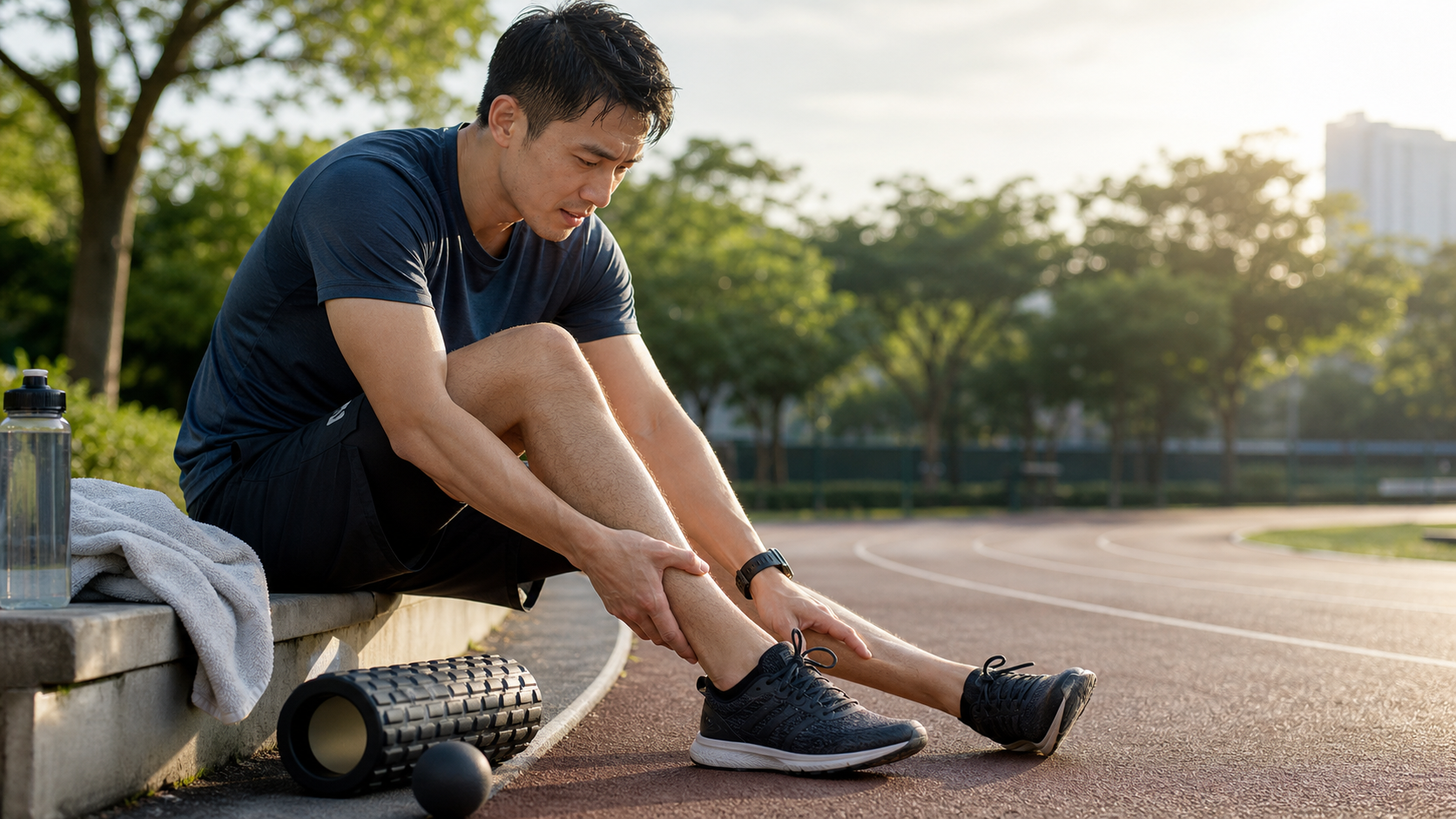
Post-Run Muscle Soreness Management: The Causes of DOMS and How to Speed Up Recovery
Introduction
You’ve definitely experienced this: after your first long-distance run, an increase in training volume, or trying a new downhill workout, you feel fine on the day of the run, but the next day—or even two days later—walking down the stairs feels like torture. This is Delayed Onset Muscle Soreness (DOMS).
DOMS is an experience almost every runner repeatedly encounters throughout their training career. It isn’t dangerous, but it is certainly uncomfortable and affects subsequent training plans. Understanding its causes is the key to finding truly effective management methods.
The Real Causes of DOMS
Myth-Busting: It’s Not Lactic Acid Buildup
For a long time, “muscle soreness is caused by lactic acid buildup” has been one of the most widespread exercise myths. In reality, the lactic acid produced during exercise is almost completely cleared within 30 to 60 minutes after exercise, while DOMS peaks 24 to 72 hours after exercise. The timelines simply don’t align—lactic acid cannot be the cause of DOMS.
The Correct Understanding: Muscle Micro-Damage and Inflammatory Response
The consensus in modern sports science is that DOMS is primarily caused by the following mechanisms:
1. Micro-tears in muscle fibers from eccentric contractions
Eccentric contractions (when muscles generate force while lengthening, such as foot strike during running, downhill running, or walking down stairs) produce greater mechanical tension than concentric contractions, causing micro-tears in muscle fibers. These tears trigger a subsequent inflammatory response.
2. Inflammatory response and chemical irritation
After muscle damage, immune cells (particularly neutrophils and macrophages) flood into the damaged area, releasing chemical substances such as prostaglandins and bradykinin. These substances stimulate pain nerve endings, producing the soreness sensation.
3. Fascial swelling and nerve compression
The accumulation of tissue fluid and inflammatory mediators causes local swelling, increasing pressure within the fascial compartment, compressing sensory nerves, and intensifying pain.
The “Protective Adaptation” Effect of DOMS
After experiencing DOMS once, training at the same intensity typically does not trigger DOMS of the same severity, a phenomenon known as the Repeated Bout Effect. This is because after the first session, both muscle structure and neural control have adapted, making them better able to withstand the same stimulus. This also explains why runners are most prone to severe DOMS during the initial phase of increasing training volume.
Scientifically Validated DOMS Management Methods
Method 1: Active Recovery (Effectiveness: Moderate, No Side Effects)
Low-intensity aerobic activity (easy running, swimming, or cycling below 60% of maximum heart rate) promotes blood circulation, accelerates the clearance of inflammatory factors, and temporarily reduces pain perception through a sensory competition mechanism.
Best timing: On days 2 to 3 when DOMS is most severe, perform 20 to 30 minutes of active recovery activity.
Method 2: Contrast Water Therapy (Effectiveness: Moderate, Immediate Results)
Start with 10 to 15 minutes in cold water (10 to 15°C), followed by 10 minutes in hot water (38 to 40°C), repeating the cycle 2 to 3 times. The vasoconstriction and vasodilation effects accelerate the clearance of metabolic waste and inflammatory mediators. Studies show this can reduce DOMS ratings by approximately 20%.
Method 3: NSAIDs (Non-Steroidal Anti-Inflammatory Drugs)—Use and Limitations
NSAIDs such as ibuprofen can effectively relieve DOMS pain, but they are not recommended as a routine recovery tool for the following reasons:
- NSAIDs suppress the inflammatory response, yet moderate inflammation is a necessary process for muscular adaptation
- Long-term NSAID use may affect gastrointestinal health and kidney function
- Studies show that runners who regularly use NSAIDs have poorer long-term muscular adaptation compared to those who don’t
Recommendation: Use cautiously and only short-term when DOMS interferes with daily functioning. They should not be taken routinely just to “push through” training faster.
DOMS Severity Assessment and Corresponding Strategies
| DOMS Severity | Pain Description | Recommended Strategy |
|---|---|---|
| Mild (1–3 out of 10) | Slight tightness, does not affect activity | Active recovery run, light stretching |
| Moderate (4–6) | Noticeable soreness, walking slightly affected | Active recovery + contrast water therapy + massage |
| Severe (7–9) | Difficulty walking, restricted joint range of motion | Complete rest, monitor for muscle tear |
| Caution (accompanied by swelling or heat) | Not typical DOMS | Seek medical attention to rule out sports injury |
Strategies for Preventing DOMS
Prevention is more effective than treatment:
- Increase running volume gradually: Do not increase weekly mileage by more than 10% (the “10% rule”)
- Pay special attention to eccentric training when increasing volume: Do preparatory training before downhill running or descending stairs
- Consume protein immediately after training: Promotes repair protein synthesis and may reduce subsequent DOMS severity
- Consume antioxidant-rich foods (anthocyanins, turmeric): Reduces inflammation triggered by oxidative damage
- Get adequate sleep: Growth hormone is secreted during sleep, accelerating repair and reducing soreness
When DOMS Requires Special Attention
DOMS typically peaks within 48 to 72 hours and fully subsides within 5 to 7 days. Seek medical evaluation in the following situations:
- Pain persists for more than 7 days without improvement
- Noticeable swelling or bruising appears in a specific area
- Accompanied by limb weakness or restricted movement
- Urine color becomes darker (may be a sign of rhabdomyolysis, requiring immediate medical attention)
Conclusion
DOMS is an old companion on every runner’s training journey. Accept its presence while learning to manage it wisely. It signifies that your training has provided sufficient stimulus and that your body is adapting and growing. Use scientific methods to accelerate recovery, turning every bout of soreness into long-term fitness gains rather than letting it become a stumbling block that hinders your continued training.
Related Reading
- The Complete Guide to Preventing and Managing Running-Related Delayed Onset Muscle Soreness (DOMS)
- Muscle Damage and Repair After Road Running: A Scientific Analysis of DOMS
- The Real Causes of Muscle Soreness (DOMS) and How to Treat It
- The Science of Post-Run Muscle Recovery: The Mechanisms of DOMS (Delayed Onset Muscle Soreness)
一日北高/長距離團騎 常見問題補充篇 / 組團或跟團的眉角 / 壯車友容易被瘦車友慢性拉爆 / 原來屁股痛可能是這個原因...? / 風場配速法 / 公路車 / CT Yeh
2 年前
一日北高常見問題大集合 | 攻略 | 路線 | 訓練 | 補給 | 自行車 單車 | 一日雙城 | 雙塔 | TWB北高360 | 屁股痛
6 年前
西進武嶺 免費訓練分析服務 Intervals | 練不夠還是練過頭?你哪一種類型選手?AI模型告訴你! | 備戰神器 | 公路車 訓練 | CT Yeh
4 年前
Never Stop 西進武嶺 前後雙機 完整全程錄影 訓練台 實境
8 年前
摔車後補裝備: 好市多新款單車安全帽& Specialized Romin 北高整路屁股都不痛的坐墊 | 一千元居然有MIPS | CT Yeh | 公路車
4 年前
2019 夏季KOM 5小 完賽心得 準備攻略 東進武嶺 夏季登山王之路 Taiwan KOM Challenge
7 年前
2019 柯P 超越北高 第一集團實錄 (11小時實錄請參考另一部影片) 一日雙城 一日北高 NeverStop Taiwan Long Distance Cycling Challenge
7 年前
#公路車 #Fitting 靠人工智慧APP 幫你調整單車
6 年前