Introduction
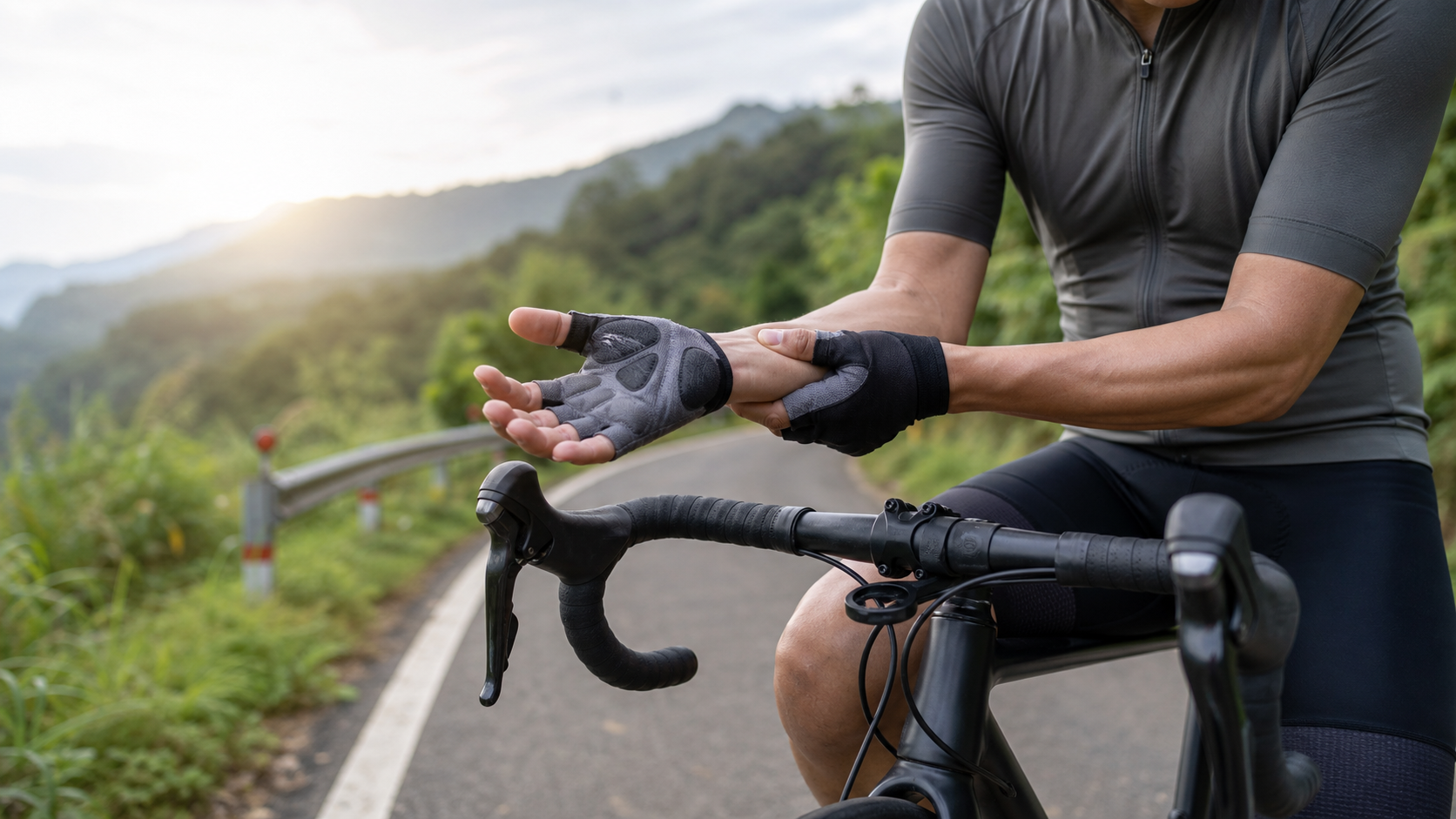
“After riding a hundred kilometers, my hands were so numb I couldn’t grip the brake levers” — this is a familiar complaint among many long-distance cyclists in Taiwan. Numbness, tingling, and even weakness in the hands are collectively known as “Cyclist’s Palsy,” and the core cause is repeated compression of the hand nerves against the handlebars. Understanding the exact location of the compression is essential for targeted improvement.
Nerve Anatomy: Two Key Nerves
Hand sensation and motor function are primarily governed by two nerves:
- Ulnar Nerve: Passes through Guyon’s Canal at the wrist, innervating the little finger, the outer half of the ring finger, and the motor function of the intrinsic hand muscles (such as the interosseous muscles)
- Median Nerve: Passes through the Carpal Tunnel, innervating the thumb, index finger, middle finger, and the inner side of the ring finger, as well as the motor function of the thenar muscles
Compression Mechanism While Cycling
When cycling, the base of the palm rests against the handlebars for extended periods, with part of the body weight continuously pressing on the wrist. Combined with road vibration, this creates sustained mechanical compression. The specifics are as follows:
Ulnar Nerve Compression (Most Common)
- Compression point: The hypothenar eminence (little finger pad) near the wrist
- Symptoms: Numbness in the little and ring fingers; in severe cases, weakness of the intrinsic hand muscles (decreased grip strength after riding)
- Characteristics: Symptoms are worst when riding on the drops, as the wrist is more likely to be in a hyperextended position
Median Nerve Compression (Carpal Tunnel Syndrome)
- Compression point: Center of the palm, beneath the transverse carpal ligament
- Symptoms: Numbness from the thumb to the middle finger, worsening at night
- Characteristics: Aggravated by wrist flexion or hyperextension (positive Phalen’s test)
Contributing Factors and Risk Assessment
| Risk Factor | Description |
|---|---|
| Riding posture | Excessive wrist extension or flexion both increase pressure |
| Handlebar height | Handlebars set too low force the upper body’s center of gravity forward, increasing hand loading |
| Glove thickness | Thin gloves or no gloves directly compress the nerves |
| Handlebar width | Handlebars that are too narrow or too wide both affect wrist position |
| Riding distance and time | Risk increases significantly with continuous riding exceeding 3 hours |
| Handlebar vibration | Rough surfaces increase cumulative microtrauma |
Prevention Strategies
Equipment
- Use gel gloves or padded gloves: Absorb vibration and reduce ulnar nerve pressure
- Add extra handlebar wrap: Use multiple layers of bar tape or a gel tape underlay
- Install a vibration-damping stem or handlebar: Carbon fiber handlebars absorb high-frequency vibration better than aluminum alloy
- Adjust handlebar height: Raising the handlebar appropriately shifts the center of gravity rearward, reducing hand loading
Posture and Technique
- Change hand positions regularly: Alternate between the tops, hoods, and drops, switching every 15–20 minutes
- Maintain a neutral wrist position: Avoid prolonged wrist extension beyond 15 degrees
- Relax your grip: You don’t need to grip the handlebars tightly while riding; a light hold is sufficient to maintain control
- Do hand exercises when stopped: Move your wrists and fingers during hourly breaks
Training and Rehabilitation
- Strengthen the core and upper back muscles: Reduce the proportion of body weight supported by the upper limbs
- Neural gliding exercises: Improve nerve mobility within the soft tissues
- Wrist stretching: Perform daily stretching for the median and ulnar nerves
Symptom Grading and When to Seek Treatment
- Mild (numbness after riding, resolving within 1–2 hours of rest): Adjusting equipment and posture is sufficient
- Moderate (numbness lasting more than 24 hours, worsening at night): Stop riding and consult an orthopedic or neurology specialist
- Severe (hand muscle atrophy or persistent grip strength loss): Electrophysiological testing (EMG/nerve conduction velocity) is required, and carpal tunnel release surgery may be necessary
Practical Advice
- Before and after each ride, perform 20 repetitions of a “make a fist—open hand” cycle to promote blood circulation in the hands
- When purchasing gloves, prioritize products with hypothenar padding
- If symptoms do not improve within 48 hours after stopping cycling, seek medical attention promptly — do not delay
Conclusion
Numb hands are a signal that something is wrong in your body. In most cases, “Cyclist’s Palsy” is entirely preventable through equipment upgrades, posture adjustments, and regular rest. Keeping your hands sensitive and responsive is not just a comfort issue — it is fundamental to cycling safety.
Related Reading
- Causes and Solutions for Cyclist’s Hand Numbness: Differentiating Ulnar vs. Median Nerve Compression
- Numb or Weak Hands While Riding? Understanding Common Causes and Adjustments for Ulnar and Median Nerve Compression in Cyclists
- Cycling Wrist and Elbow Numbness: Causes of Nerve Compression and Handlebar Height Adjustments
- Numb Hands and Feet While Cycling: Causes of Nerve Compression and Saddle Position Adjustments
Canyon 公路車斷把手 五年老車特規還能修嗎? 維修保養全記錄 feat. 501單車監理站 | 公路車 | CT Yeh
4 年前
CT 喇低賽) 武嶺牽車 才是王道 西進牽車四小時內秘訣 攝手位置 如何判斷 防抽筋小秘訣
7 年前
Never Stop 西進武嶺 前後雙機 完整全程錄影 訓練台 實境
8 年前
2024 如來神掌 百人約騎挑戰!feat. 秘境單車社團 / 神人們太可怕 / 全程錄影 x 完整坡度解析 / 公路車 / CT Yeh
2 年前
Insta 360 One 超級防手震技術實測
7 年前
#公路車 #Fitting 靠人工智慧APP 幫你調整單車
6 年前
CT 喇低賽) 單車 比賽總是沒照片? 攝影師的觀點大公開 姿勢就是力量! 請加速1.25倍收看
7 年前
多到選擇障礙... 換個單車把帶想一個小時 / BTP / 編織&軟木特有材質超吸睛! / 公路車 / CT Yeh
1 年前