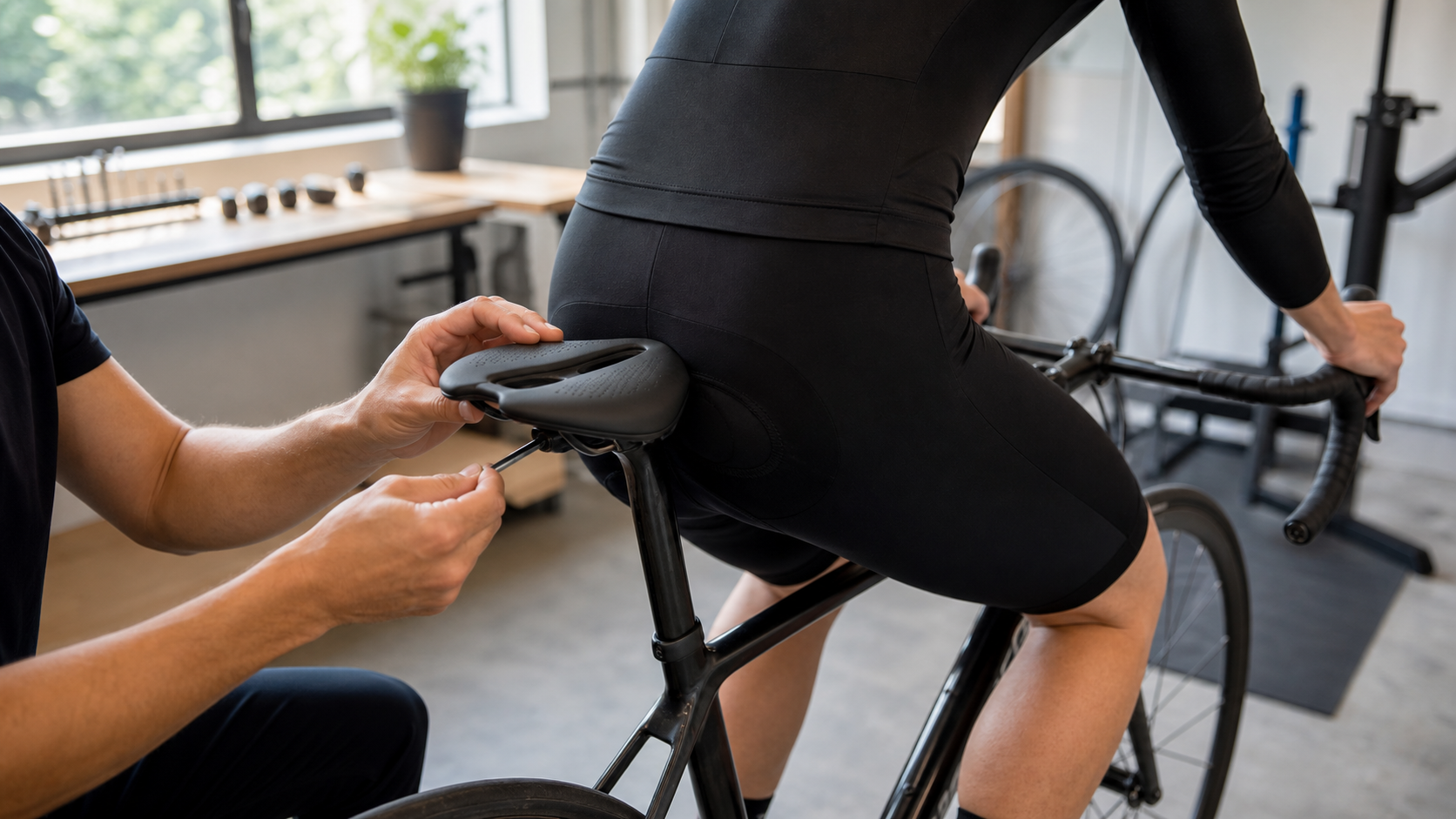
Introduction
“I lose feeling down there after a ride” — this is a familiar complaint among cyclists, yet it is rarely discussed seriously. Perineal numbness is an underappreciated health issue in cycling. In male riders, its potential link to erectile dysfunction has been examined in multiple academic studies; in female riders, compression of the pudendal nerve can also lead to chronic pelvic pain. This is not a “normal phenomenon” but a medical warning sign that deserves serious attention.
Anatomical Basis: Why Is the Perineum Vulnerable?
The perineum lies between the ischial tuberosities and contains a dense concentration of nerves and blood vessels:
- Pudendal Nerve: Responsible for sensation in the perineum and genitals, as well as sphincter control
- Pudendal Artery and Vein: Supply blood flow to the external genitalia
- Cavernous Nerve: Involved in the erectile response (in males)
Traditional bicycle saddle designs cause a large portion of the rider’s body weight to be concentrated on the perineum. Studies show that pressure on the perineum while riding a standard saddle can reach 20–60 mmHg, far exceeding the threshold for tissue ischemia (approximately 32 mmHg).
Pressure Distribution Across Different Saddle Designs
| Saddle Type | Perineal Pressure Characteristics | Suitable For |
|---|---|---|
| Traditional solid saddle | Highest pressure at the center of the perineum | Short-distance recreational riding |
| Central cutout design | Significantly reduces pressure on perineal soft tissue | Long-distance riders |
| Noseless saddle | Nearly eliminates perineal pressure | Commuters, recreational riders |
| Anatomical pressure-relief saddle | Distributes pressure to the ischial tuberosities | Competitive and amateur long-distance riding |
| Women-specific saddle (wider rear) | Matches female pelvic shape, distributes ischial pressure | Female riders |
Research Summary
Multiple studies (including Schwarzer et al., 2002; Lowe et al., 2004) compared cutout saddles with solid saddles, and the conclusions consistently show: saddles with a central cutout design can increase pudendal artery blood flow by 30–70%, significantly improving perineal blood circulation during riding.
Symptom Recognition
- Mild: Brief numbness during or after riding, quickly resolving with rest
- Moderate: Numbness lasting more than 1 hour, accompanied by tingling; reduced morning erections in men
- Severe: Chronic perineal pain, persistent paresthesia, changes in urinary function (frequent urination, leakage)
Improvement Strategies
Saddle Selection
- Prioritize central channel or cutout designs: The channel must be deep enough (at least 5mm) to effectively relieve pressure
- Avoid saddles with hard noses: Especially during descents or intense riding, when you are more likely to slide forward onto the nose
- Female riders should pay attention to saddle width: Ischial width is the key factor in saddle selection; you can have your sit bone distance measured at a bike shop
Saddle Position Adjustment
- Saddle tilt: A slight downward tilt (1–3 degrees) can effectively reduce perineal pressure, while excessive tilt causes pelvic instability
- Saddle height: Proper height keeps the rider’s center of gravity on the sit bones rather than sliding toward the nose
- Saddle fore-aft position: Excessive forward positioning shifts body weight onto the saddle nose, increasing perineal pressure
Riding Behavior
- Stand up and pedal regularly: Every 10–15 minutes, stand and pedal for 30–60 seconds to restore perineal blood flow
- Take proper rest stops: On long rides, get off the bike every 45–60 minutes and rest for 5 minutes
- The importance of cycling shorts: High-quality shorts with seamless construction and padding are a necessary investment
Cycling Short Selection
- Prioritize designs with medical-grade antibacterial, pressure-relieving pads
- Avoid wearing underwear under cycling shorts (double seams increase friction and pressure)
- For long-distance events, consider using chamois cream in combination
Practical Advice
- If numbness persists for more than 30 minutes after getting off the bike, seriously review your saddle setup
- Male riders who notice a significant reduction in morning erections (lasting more than 2 weeks) should consult a urologist
- Female riders experiencing chronic pelvic pain can seek help from a gynecologist or a pelvic floor physical therapist
- Keep your saddle clean to avoid bacterial infections from wet cycling shorts
Conclusion
Perineal health is a long-term investment for cyclists. A saddle that fits you, combined with proper posture and riding habits, is not just about riding longer and more comfortably — it is a key line of defense against long-term damage to nerves and blood vessels. Don’t dismiss numbness as the “normal price” of cycling. With early intervention, these issues can all be resolved.
Related Reading
- Saddle Pressure and Pudendal Nerve Damage: A Complete Prevention Guide for Cyclists
- Bicycle Saddle Soreness: The Science of Perineal Compression and Saddle Selection
- Urinary Tract Health in Cycling: Prevention of Saddle Compression and Numbness
- Genital Numbness in Cycling: The Relationship Between Saddle Choice and Pelvic Tilt
單車胎壓觀察到的有趣現象,SRAM Quarq TyreWiz 2.0 無內胎胎壓計 / 裝了有哪些幫助? / Tubeless / 公路車 / CT Yeh
1 年前
#公路車 #Fitting 靠人工智慧APP 幫你調整單車
6 年前
Nepest NOVA 碳條輪組:輕量、空力、舒適一次滿足!/ 公路車 / CT Yeh
7 個月前
3D 列印車褲墊 / 舒適改善? / 無痕 x 分區壓縮 / ATK & Decider系列 / JE22黑科技 / #公路車 #CTYEH
11 個月前
摔車後補裝備: 好市多新款單車安全帽& Specialized Romin 北高整路屁股都不痛的坐墊 | 一千元居然有MIPS | CT Yeh | 公路車
4 年前
靠單車減肥35公斤 心得分享與整理
7 年前
單車 重低音 藍芽喇叭 音質實測 SoundBot SB525 Real Sound Test
8 年前
全台首發!邁金P715踏板功率計!市場價格撼動者再出招 / 功率對比實測 / FAVERO ASSIOMA 可參考! / 公路車 / CT Yeh
1 年前