Preventing Heat Exhaustion While Cycling: Thermoregulation and Hydration Strategies for Summer Rides
Introduction
Every summer, heat-related injuries from cycling occur across Taiwan. Heat Stroke is the most severe heat-related illness, with a mortality rate exceeding 50% if not treated promptly. However, most heat injuries are actually preventable. Understanding the body’s physiological responses to high temperatures and establishing proper hydration and cooling strategies are essential lessons for every summer cyclist.
The Physiological Mechanisms of Body Temperature Regulation
The human body maintains a core temperature of around 37°C, primarily through four heat-dissipation mechanisms:
- Evaporation: Sweating and breathing—this is the primary cooling method during high-intensity exercise (accounting for over 80%)
- Radiation: Heat dissipating from the skin to the environment
- Convection: Airflow carrying away body heat (the wind from cycling speed helps)
- Conduction: Cooling through direct contact with cold objects (relatively minor)
The Danger of High Heat and Humidity: Taiwan’s summer average relative humidity reaches 70–90%. The abundant environmental moisture prevents sweat from evaporating effectively, significantly reducing cooling efficiency. When core body temperature rises above 38°C, heat exhaustion begins to appear; above 40°C, heat stroke may set in.
Classification and Recognition of Heat Injuries
| Severity | Name | Core Symptoms | Urgency |
|---|---|---|---|
| Mild | Heat Cramps | Muscle cramping, heavy sweating | Low |
| Moderate | Heat Exhaustion | Weakness, dizziness, cool clammy skin, rapid heartbeat, nausea | Medium |
| Severe | Heat Stroke | Core temperature ≥40°C, hot dry skin, confusion or unconsciousness | High (emergency medical care) |
Hydration Strategy: Scientific Calculation and Practical Application
Estimating Sweat Loss Rate
- Hourly sweat volume during exercise: 1–2.5 liters (varies by individual, temperature, and intensity)
- A 2% body weight loss begins to impair athletic performance; 4–5% loss constitutes moderate dehydration; over 7% loss is life-threatening
Timing and Amount of Hydration
- 2 hours before departure: Drink 500–600 mL of water
- Every 15–20 minutes during the ride: Consume 150–250 mL (don’t wait until you’re thirsty—thirst is already a sign of mild dehydration)
- Post-ride recovery: For every 1 kg of body weight lost, replenish with 1.5 liters of fluid (including electrolyte losses from sweat and urine)
Electrolyte Supplementation
Consuming large amounts of plain water without replacing electrolytes can lead to hyponatremia (exercise-associated hyponatremia), which has symptoms similar to heat stroke (headache, nausea, confusion) but requires completely opposite treatment, making it extremely dangerous.
Recommendations:
- Rides exceeding 1 hour: use electrolyte sports drinks or salt tablets
- Per 500 mL replenishment target: 200–400 mg sodium, 50–100 mg potassium
- DIY electrolyte water: 500 mL water + 1/4 teaspoon table salt + a little fruit juice for flavor
Cooling Techniques and Equipment
Pre-Cooling Before the Ride
- Stay in a cool indoor environment for 30 minutes before departure to lower core body temperature
- Drink cold beverages (4–10°C): can lower initial core temperature by approximately 0.2–0.5°C
- Ice vests or ice neck wraps: some studies show they can extend effective riding time in high heat
Cooling During the Ride
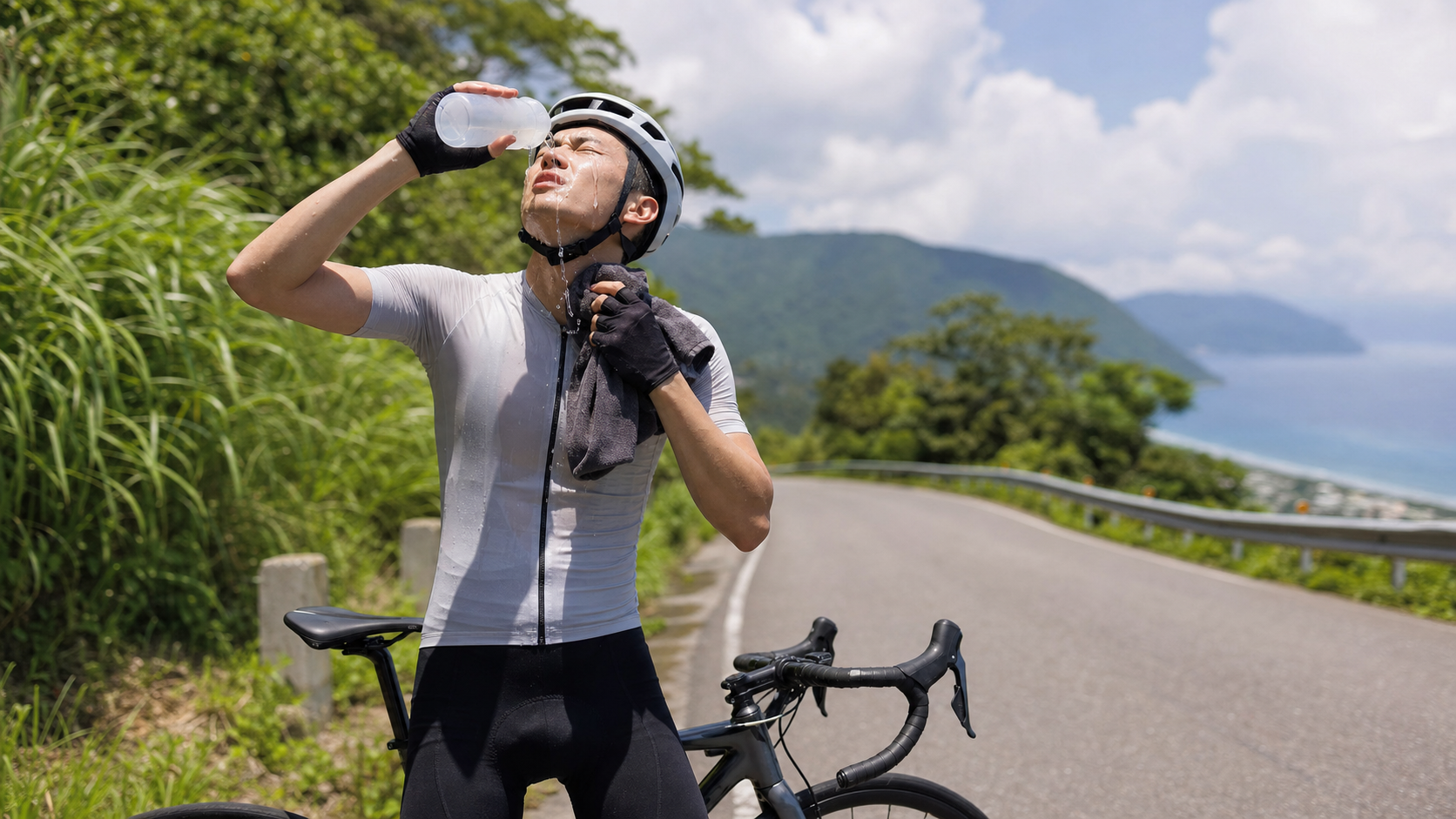
- Pour ice water or room-temperature water over the head, neck, and wrists (areas where major blood vessels pass)
- Take breaks on shaded sections of the route (but don’t stop in stuffy, windless areas)
- Appropriately reduce intensity (keep HR in a lower intensity zone)
Equipment Selection
- Breathable jerseys: Polyester or Merino Wool materials; prioritize mesh ventilation designs
- Ventilated helmets: Helmets with more vents provide significantly better cooling than poorly ventilated models
- Sun protection design: Some helmets feature extended brims that effectively block direct sunlight
Special Attention for High-Risk Groups
- Age >50: Body temperature regulation capacity declines with age
- Individuals with cardiovascular disease: The heart cannot adapt to the high-output demands under heat stress
- Diabetics: Sweating mechanisms may be impaired
- Those taking diuretics or antihistamines: These affect fluid balance and cooling capacity
- Those who consumed alcohol the previous day: Alcohol’s diuretic effect results in insufficient baseline hydration
Emergency Response: On-Site First Aid for Suspected Heat Stroke
- Immediately stop exercise and move the victim to a shaded, well-ventilated area
- Rapid cooling: Apply cold water (ice water is better) as wet compresses or pour over the entire body, while fanning to accelerate evaporation
- Do not give solid food or drinks (when the person is unconscious)
- Call 119 immediately—heat stroke is a medical emergency
- Continuously monitor consciousness and breathing
Practical Recommendations
- In Taiwan’s summer, when temperatures exceed 35°C and humidity exceeds 80%, consider switching to indoor training
- Carry salt-sugar packets (DIY: sugar-to-salt ratio of approximately 6:1)
- Inform riding companions or family of your route and estimated return time
Conclusion
Heat exhaustion and heat stroke are preventable. The key lies in preparation beforehand, monitoring during the ride, and not “toughing it out.” Listening to your body’s signals and stopping immediately to rest when something feels wrong is more important than any training plan. When riding in summer, safety comes first.
Related Reading
- Preventing Heat Injury in Cycling: Heat Stroke and Heat Exhaustion Risks for Taiwan Summer Rides
- Hot Weather Riding Survival Guide: Cooling Strategies and Heat Stroke Prevention for Summer Training
- Physiological Adaptation to Hot Weather Riding: The Science of Cooling and Hydration in Summer Training
- Hydration Strategies for Hot Weather Riding: The Complete Guide to Preventing Dehydration and Heat Injury
CT暗黑廚房) 車友必備 宇宙無敵鮮蚵湯 幫助訓練恢復 天然食補 好市多 超肥鮮蚵 破PR
7 年前
單車 一日北高 ( 雙城 ) 肥宅雙人瘋狂行 紀錄片 REACTO
10 年前
靠單車減肥35公斤 心得分享與整理
7 年前
5 ℃ 櫻花之旅 / 75萬單車直接雨中洗車.../ 平菁街 / 北迴歸小隊 / 公路車 / CT Yeh
5 個月前
水金九不厭五分 10度寒流冷到不願停!feat. 卡卡 / 公路車 / CT Yeh
6 個月前
#公路車 #Fitting 靠人工智慧APP 幫你調整單車
6 年前
Insta360/DJI做不到的!如何製作「騎士頭頂瓦數特效」單車影片?CycleDash 完整教學 / 超強批次影片數據疊加軟體
14 天前
一日北高常見問題大集合 | 攻略 | 路線 | 訓練 | 補給 | 自行車 單車 | 一日雙城 | 雙塔 | TWB北高360 | 屁股痛
6 年前