The Science of Water Resistance in Swimming: The Ratio of Form Drag vs. Frictional Drag and Drag-Reduction Strategies
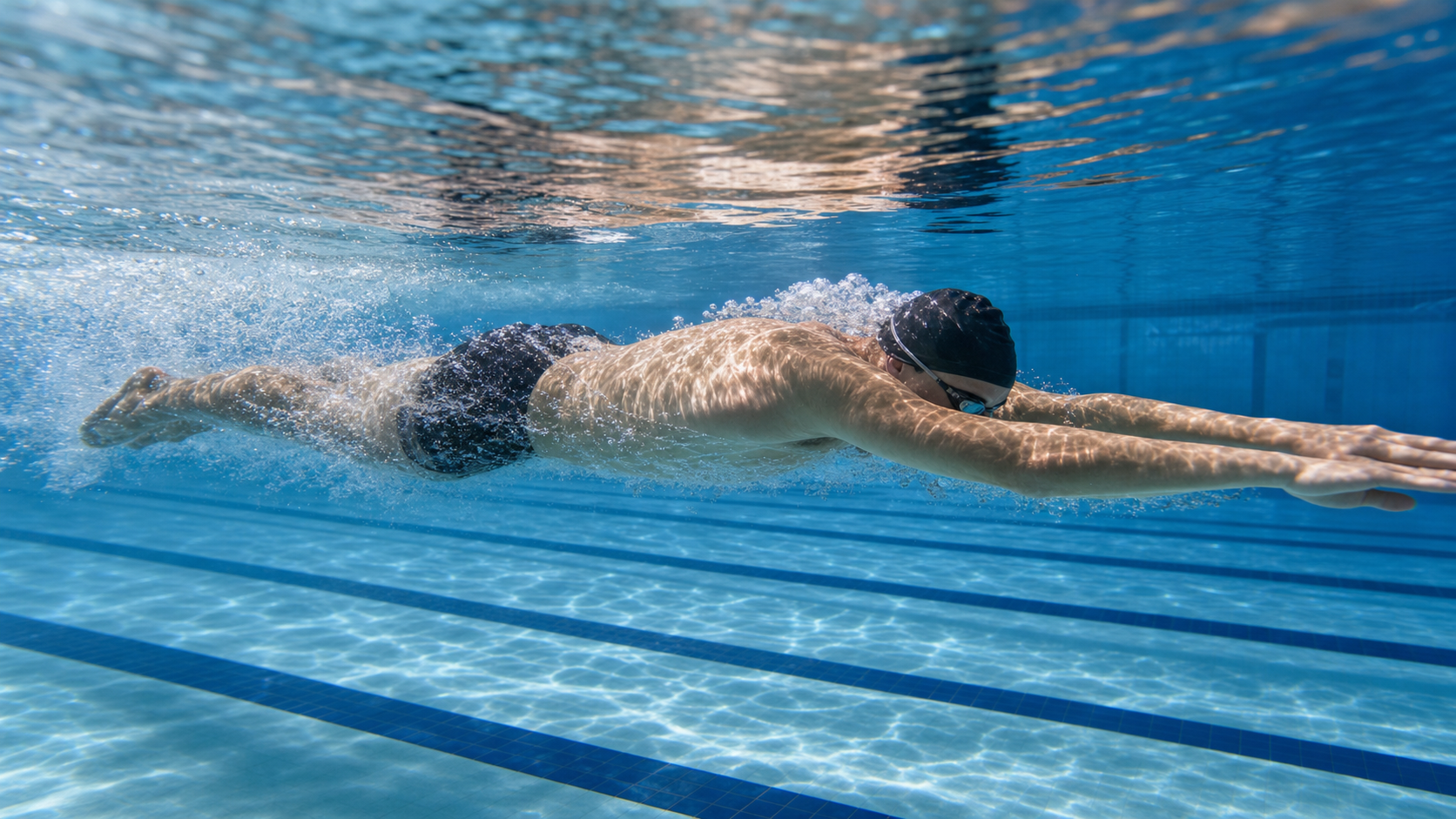
Water Resistance Is the Biggest Enemy of Swimming Speed
Water has a density of about 1000 kg/m³, roughly 800 times that of air. This means that when a swimmer moves through water, the resistance encountered is far more severe than when running or cycling on land. According to fluid dynamics research, up to 90% of the energy a swimmer expends goes toward overcoming water resistance rather than actually propelling the body forward. Therefore, understanding the components of water resistance and drag reduction strategies is core knowledge that every swimmer—whether competitive or fitness-oriented—should master.
The Three Main Components of Water Resistance
Water resistance is not a single force but is made up of three main parts:
| Drag Type | Percentage of Total Drag | Main Cause | Influencing Factors |
|---|---|---|---|
| Shape Drag (Pressure Drag) | Approx. 60–70% | Pressure difference between the front and rear of the body | Posture, cross-sectional area |
| Friction Drag | Approx. 20–25% | Contact between water and skin/swimsuit | Skin roughness, body hair, swimsuit material |
| Wave Drag | Approx. 5–15% | Waves generated by the swimmer at the water surface | Swimming speed, depth in the water |
1. Shape Drag (Pressure Drag)
Shape drag is the most dominant source of resistance, originating from the pressure difference between the front and rear of the swimmer’s body. When fluid (water) flows around an object, high pressure builds at the front and low pressure at the rear, creating a pressure differential that pulls the object backward. The larger the body’s cross-sectional area, or the poorer the streamlining, the higher the shape drag.
Key Concept: Frontal Cross-Sectional Area
- Research shows that shape drag is directly proportional to frontal cross-sectional area
- For every 1 cm the swimmer’s head position rises in the water, the frontal cross-sectional area increases by approximately 3–5%
- The alignment of the neck, shoulders, and hips directly determines the body’s streamlining
2. Friction Drag
Friction drag arises from the shear forces generated as water flows along the skin or swimsuit surface. Although its proportion is smaller than shape drag, the absolute value of friction drag is considerable at high swimming speeds.
- Laminar Flow vs. Turbulent Flow: If the water flow close to the skin remains laminar, friction drag is lower; once it transitions to turbulent flow, drag increases significantly
- Surface Roughness: Body hair causes the water flow to transition to turbulent flow earlier, which is the scientific basis for competitive swimmers shaving before races
- Swimsuit Material: LZR swimsuits that mimic the micro-structure of shark skin can guide laminar flow, reducing friction drag by 6–8%
3. Wave Drag
When swimming at the surface, the body’s movements generate waves. These waves carry energy away from the swimmer, creating wave drag. The faster the swimming speed, the more rapidly wave drag increases (proportional to the cube of speed), which is one of the reasons swimming speed has a physical upper limit.
The Scientific Basis of Drag Reduction Strategies
Strategy 1: Optimize Body Streamlining (Reduce Shape Drag)
This is the most cost-effective drag reduction method because shape drag accounts for the largest proportion of total resistance.
- Head Position: Eyes looking downward, with the back of the head level with the water surface. Do not look forward, as this will cause the hips to sink
- Core Muscle Engagement: Stabilize the spine and maintain the body in a straight line (referred to as the “body line” or “streamline”)
- Hand Entry Angle: Fingers pointing directly forward and slightly downward, avoiding elbow bending upon entry to reduce side-to-side body sway
- Roll After Entry: Moderate shoulder rotation (approximately 45° per side) to reduce the frontal area of the shoulders
Research data shows that swimmers with well-optimized posture can experience 20–40% less shape drag at the same speed compared to those with poor posture.
Strategy 2: Reduce Friction Drag
- Wearing Competitive Swimsuits: PBT material and compression design can reduce skin wrinkles and lower friction
- Shaving Before Races: Research shows that full-body shaving can reduce swimming drag by approximately 3–7% and also helps improve proprioception
- Wearing a Swim Cap: The head is one of the largest body surface areas and receives the most water flow; silicone swim caps can effectively reduce friction drag on the head
- Well-Sealed Goggles: Avoid goggle edges disrupting the flow field near the face
Strategy 3: Reduce Wave Drag
- Swimming Below the Surface: The first few meters of underwater dolphin kicks in breaststroke and butterfly have nearly zero wave drag, allowing for greater speed
- Using the Middle of the Lane: In races, the water in the middle of the lane is calmer, resulting in less wave drag
- Steady Kicking Rhythm: Avoid the feet breaking the water surface excessively to reduce wave generation
The Nonlinear Relationship Between Speed and Drag
This is key to understanding swimming physics:
- Swimming drag is proportional to the square (or even higher power) of speed
- A 10% increase in speed results in approximately a 21–25% increase in drag
- This is why elite athletes’ training must place extreme emphasis on “efficiency” rather than simply “exerting more force”
Practical Training Recommendations
For swimming enthusiasts and competitive athletes in Taiwan, here are concrete ways to apply drag science to training:
- Film Underwater Footage: Ask a coach or use a waterproof camera to capture side and front views of your swimming to examine body streamlining
- Compare with Resistance Tools: Time yourself wearing a resistance parachute or ankle band and compare with unassisted times to quantify your own drag
- Refine Entry Technique: Dedicate at least 10 minutes of each practice to entry technique, reducing entry impact and splash
- Time Streamline Push-offs: Time the distance of your streamline push-off after each turn, aiming to reach at least 7 meters before starting to pull
Conclusion
The science of water resistance tells us that in swimming, “how you move” matters far more than “how hard you move.” The fact that shape drag accounts for 60–70% of total resistance means that every minute invested in improving posture yields far greater returns than simply increasing physical training volume. Whether you are a competitive athlete chasing a personal best or a fitness swimmer hoping to swim more easily and enjoyably, understanding and applying the science of water resistance can lead to significant improvement.
Related Reading
- The Science of Water Resistance in Swimming: Streamlining Technique and Energy Expenditure
- The Science of Water Resistance in Swimming: How Streamlined Posture Reduces Drag
- The Science of Water Resistance: Why Swimming Consumes More Oxygen Than Running
- Swimming Drag Analysis: Wave Drag, Friction Drag, and Form Drag
3D 列印車褲墊 / 舒適改善? / 無痕 x 分區壓縮 / ATK & Decider系列 / JE22黑科技 / #公路車 #CTYEH
11 個月前
西進武嶺 8000名單車友數據分析 PART1 | 從新手到高手數量/瓦數/推力比/FTP推力比/功率計使用率 大解析 | 公路車 | CTYeh
5 年前
一日北高前的西濱集訓 | 跟著11小時軍團 | 300W踩不動的大逆風 | 輪車破風差幾瓦?
6 年前
一日北高/長距離團騎 常見問題補充篇 / 組團或跟團的眉角 / 壯車友容易被瘦車友慢性拉爆 / 原來屁股痛可能是這個原因...? / 風場配速法 / 公路車 / CT Yeh
2 年前
靠單車減肥35公斤 心得分享與整理
7 年前
西進武嶺 免費訓練分析服務 Intervals | 練不夠還是練過頭?你哪一種類型選手?AI模型告訴你! | 備戰神器 | 公路車 訓練 | CT Yeh
4 年前
一日北高常見問題大集合 | 攻略 | 路線 | 訓練 | 補給 | 自行車 單車 | 一日雙城 | 雙塔 | TWB北高360 | 屁股痛
6 年前
CT 喇低賽) 武嶺牽車 才是王道 西進牽車四小時內秘訣 攝手位置 如何判斷 防抽筋小秘訣
7 年前